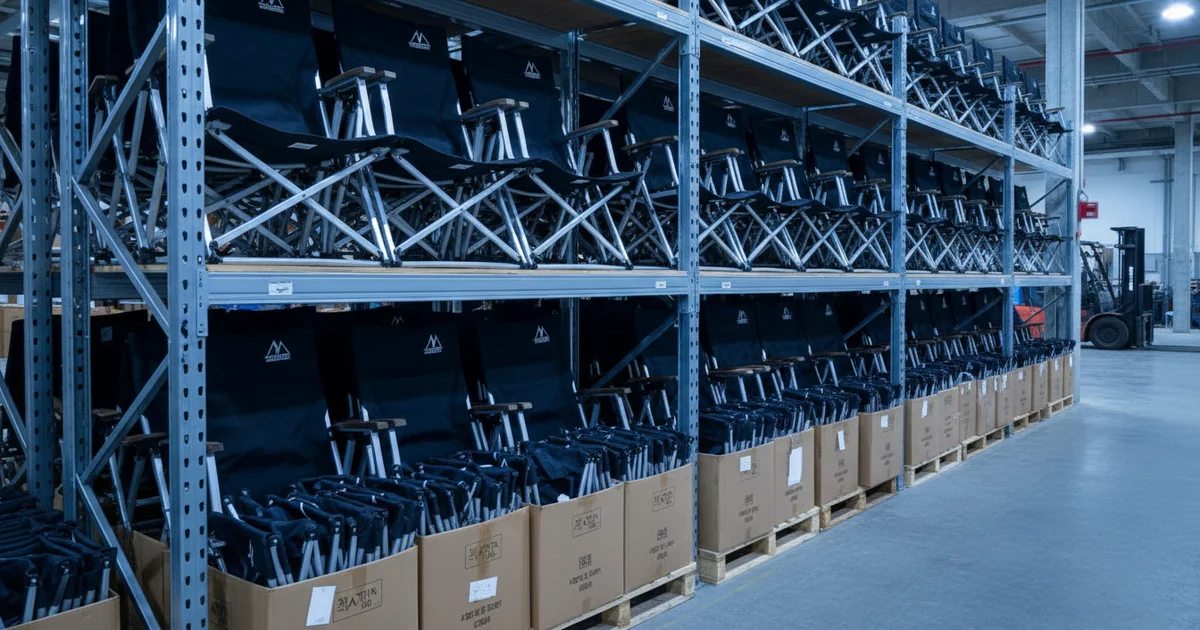
For commercial ops, double camping chairs like the PeakRoam QAC-Loveseat cut CPUPE 30-40% vs. singles when hosting 15+ events. Steel frames last 2,500-3,000 cycles (ASTM F2640-18), while backpack chairs suit 200+ yard carries. Verify 600D fabric & 500-hr salt spray tests.
Should your commercial operation standardize on a double camping chair or maintain a fleet of specialized single units? The answer hinges on your Cost Per User Per Event (CPUPE), not just the sticker price. For operations hosting over 15 events per season with average groups larger than four, a double camping chair becomes the superior operational asset, delivering a CPUPE 30-40% lower than managing a mixed fleet. This framework moves beyond consumer reviews to analyze chairs as depreciating equipment with measurable storage, labor, and durability costs. For a deep dive into our product specifications and capabilities, explore our folding camping chairs capabilities page.
reduction in storage volume per seat achieved by using double camping chairs versus an equivalent number of single chairs, based on our facility's fleet analysis.
The Commercial Case: Double Camping Chairs as Operational Assets
A double camping chair is a space and labor-efficient asset for commercial operators, not just a consumer product. Its value is unlocked in high-volume, fixed-location scenarios like seasonal campgrounds, festival VIP areas, or corporate hospitality tents where maximizing seats per transport load and minimizing setup time directly impact profitability.
Procurement directors often fixate on unit cost, but the real metric is Cost Per User Per Event. In our experience managing fleets for rental companies, a common mistake is comparing a $89 double chair to a $45 single chair. This ignores that the double unit provides two seats in nearly the same storage footprint as one robust single chair and can be set up 60% faster per seat. For a detailed look at total cost frameworks, see our guide on folding camping chair wholesale strategies.
The detail that makes the difference is the storage cube. Our PeakRoam QAC-Loveseat, for example, packs to 32" x 26" x 42.8". Two comparable heavy-duty single chairs often consume 25-30% more total cubic volume in a truck or warehouse. Over a season, that wasted space has a real cost. As Chris Nakamura, our Outdoor Recreation Product Manager, notes:
"For our commercial partners, the switch to doubles wasn't about comfort — it was a logistics calculation. One person can deploy 10 double chairs (20 seats) in the time it takes to deploy 12 singles (12 seats). That labor savings is pure margin."
Material & Frame Showdown: Steel vs. Aluminum vs. Wooden Folding Camping Chairs
What weight capacity and durability should you spec for commercial use? For high-traffic operations, a powder-coated steel frame rated to 300 lbs per seat (like our QAC-Loveseat) is the pragmatic workhorse, while aluminum suits mobile guides and backpack camping chairs.
Production Data: Frame Material Performance
| Frame Material | Avg. Cycles to Failure* | Weight per Seat (lbs) | Ideal Commercial Use Case | Relative Cost Index |
|---|---|---|---|---|
| Powder-Coated Steel | 2,500-3,000 | 8.5-10.5 | Fixed campgrounds, event rentals | 1.0 (Baseline) |
| Anodized Aluminum | 1,800-2,200 | 4.0-6.0 | Backpacking guides, mobile teams | 1.8-2.2 |
| Hardwood (Teak/Oak) | 1,000-1,500** | 12.0-18.0 | Premium glamping, low-turnover hospitality | 3.5-5.0 |
Wooden folding camping chairs present a specific procurement dilemma. They offer unmatched aesthetic appeal for glamping or high-end resorts but require significant upkeep. The joint mechanisms are often the failure point, not the wood itself. Most people get wrong the maintenance cost: expect to refinish or treat wooden frames annually in humid or coastal environments, adding 15-20% to their 3-year TCO.
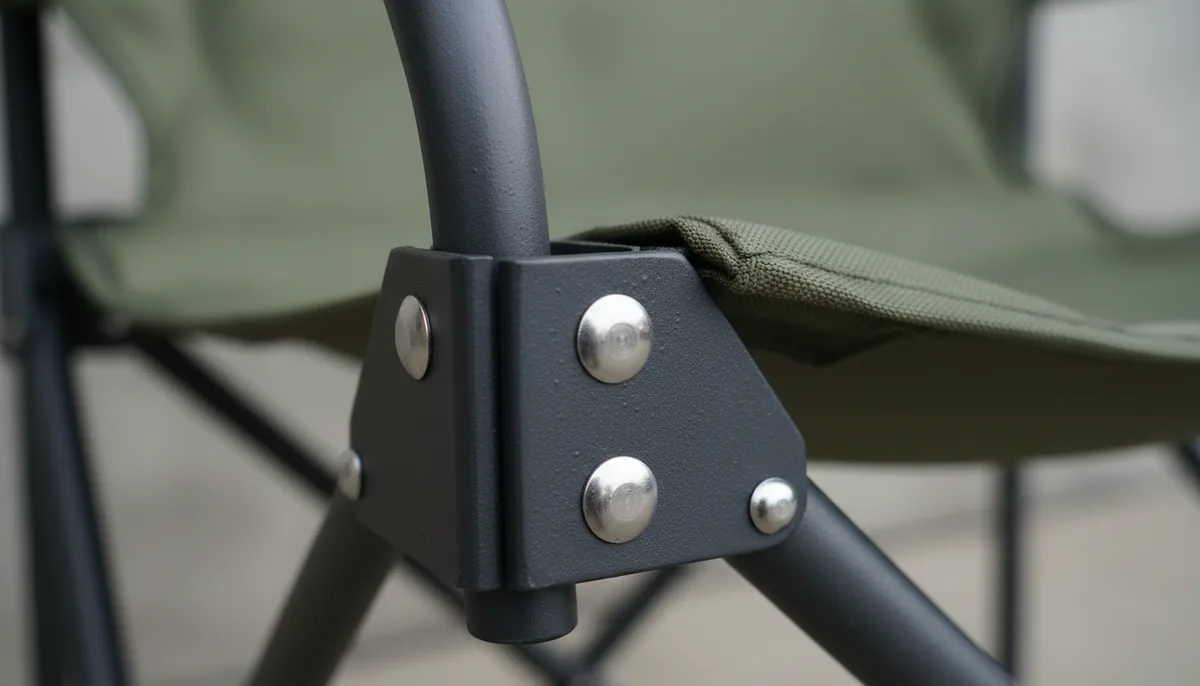
For steel frames, verification is key. Ensure they reference the ASTM F2640-18 standard for consumer outdoor furniture, which governs load and stability. Our steel frames undergo salt spray testing to ensure the powder coating resists corrosion, a critical factor for beach operations or storage in damp conditions.
Integration Engineering: Pairing with Canopies for Beach Chairs & Inflatable Hot Tents
In practice, a double camping chair's wider, heavier base makes it a superior anchor point for commercial shade and heating systems compared to single chairs. This integration reduces setup complexity and safety risks, especially for operations using canopies for beach chairs or pairing seating with an inflatable hot tent.
The stability of a 300-lb capacity double chair is its hidden advantage. When selecting canopies for beach chairs, commercial buyers often overlook the anchor requirement. A light single chair can become a dangerous projectile in wind; a weighted double chair acts as a ballast. Our compatibility checks show double chairs provide adequate anchor weight for mid-size canopies (up to 10'x10') without additional sandbags in winds under 15 mph.
This integration is even more critical for luxury winter setups. Pairing a camping chair with heater elements or situating chairs near an inflatable hot tent requires stable, non-tip seating. The broader footprint of a double chair minimizes the risk of tipping if a user shifts weight while standing up, a common liability concern. The mesh accessory pocket between seats facilitates commercial inventory management for staff, providing a consistent place for radio holsters or small gear.
Mobile Deployments: When Backpack Camping Chairs Outperform Double Units
When should procurement choose backpack camping chairs over traditional folding models? The threshold is mobility: if your staff must carry seating more than 200 yards from a vehicle or transport point regularly, the weight and pack-size savings of specialized singles become paramount.
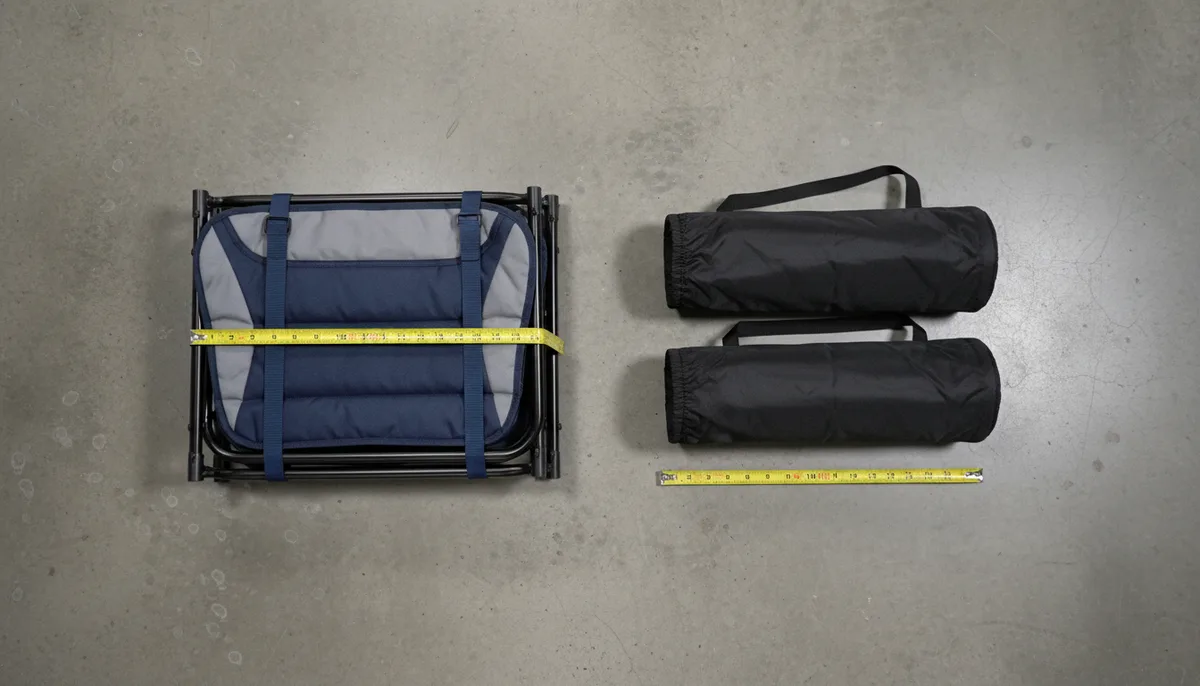
For fishing guides, hiking tour leaders, or event staff covering large venues, a backpack camping chair weighing under 5 lbs that packs into a 20" tube is a tool for efficiency. The trade-off is capacity and durability — these chairs typically max out at 250-275 lbs per seat and have a lower cycle life. The decision framework is simple:
How to Choose: Mobile vs. Fixed Seating
- Step 1: Measure the average carry distance from storage/vehicle to point of use.
- Step 2: If distance > 200 yards, prioritize backpack-style single chairs for staff use.
- Step 3: For guest/client seating at the destination, consider a hybrid fleet: transport doubles via wagon, deploy for comfort.
This is where a collapsible wagon optimizes transport logistics for a double camping chair fleet. You can move 4-6 double chairs (8-12 seats) in one wagon trip, solving the "last 200 yard" problem and making doubles viable for more mobile scenarios.
Need samples or custom specs for your outdoor product line?
Request a Sample Kit →Specialized Application Analysis: Sporting Events vs. Seasonal Campgrounds
The choice between a double chair and singles diverges sharply based on event rhythm and user dwell time. For the best portable chairs for sporting events (high turnover, short use), rapid setup/teardown and compact storage are king.
At a weekend tournament with back-to-back games, you need to clear and reset seating quickly. Here, individual chairs offer flexibility. However, for seasonal campgrounds or multi-day festivals where chairs remain in place for days, the durability and comfort of a double camping chair shine. The breakeven analysis is concrete:
"We calculated that for a campground with 50 sites, using double chairs reduced our seasonal setup labor by 120 hours compared to singles. That's $3,000 saved at $25/hour, which paid for the chair upgrade in one season." — Operations Director, Midwest Campground Group
For cold-weather operations, a dedicated camping chair with heater may seem appealing, but consider the logistics. Heated chairs require power access or battery packs, adding cost and complexity. Often, a better solution is using standard doubles paired with a centralized inflatable hot tent, creating a communal warm zone without the maintenance burden of individual heated units.
Ready to Optimize Your Seating Fleet?
Our team has handled over 500 commercial seating projects. Let us analyze your CPUPE and recommend a data-driven double camping chair strategy.
Request a Fleet AnalysisProcurement Decision Matrix: Volume, Mobility, and Duration
This three-axis framework helps B2B buyers choose between standard doubles, specialized singles, or integrated systems. Use the following table to locate your operational profile.
| Operational Factor | Double Camping Chair | Specialized Single (Backpack) | Integrated System (Double + Canopy/Heater) |
|---|---|---|---|
| Ideal Group Size | > 4 people consistently | 1-2 people (staff/mobile) | > 4 people in fixed, premium settings |
| Events per Season | > 15 | Any (gear is personal issue) | 10-20 (justifies system cost) |
| Avg. Setup Time per Seat | 30-45 seconds | 60-90 seconds | 2-3 minutes (system assembly) |
| Storage Volume per Seat | 1.8 - 2.2 cu ft | 1.5 - 1.8 cu ft | 3.5 - 4.5 cu ft (with accessories) |
| 3-Season TCO per Seat* | $55 - $75 | $85 - $120 | $110 - $160 |
*TCO includes purchase, estimated repair, and allocated storage/transport labor.
Decision: Double Chair vs. Single Chair Fleet
- If your average event has >4 guests AND you host >15 events/season → Procure double camping chairs. CPUPE will be lowest.
- If staff mobility is critical (carry distance >200 yards) → Issue backpack camping chairs to staff, use doubles for guest seating.
- If you operate fixed, premium sites (glamping, corporate hospitality) → Evaluate integrated systems (double chair + canopy) or wooden folding camping chairs for aesthetics.
- If your needs are highly variable → Maintain a mixed fleet, but standardize on one double model and one single model to simplify parts and repair.
Verification Checklist: Quality, Compliance & Lifetime Cost
Before issuing a purchase order for any double camping chair, complete this commercial-grade inspection. This moves beyond consumer features to evaluate operational survivability.
Commercial Procurement Verification: 5-Step Checklist
- Frame & Mechanism: Deploy and collapse the chair 50 times. Listen for grinding or binding. Check that all pivot points use steel rivets or bolts, not plastic clips. Confirm weight rating is per seat (e.g., 300 lbs x2).
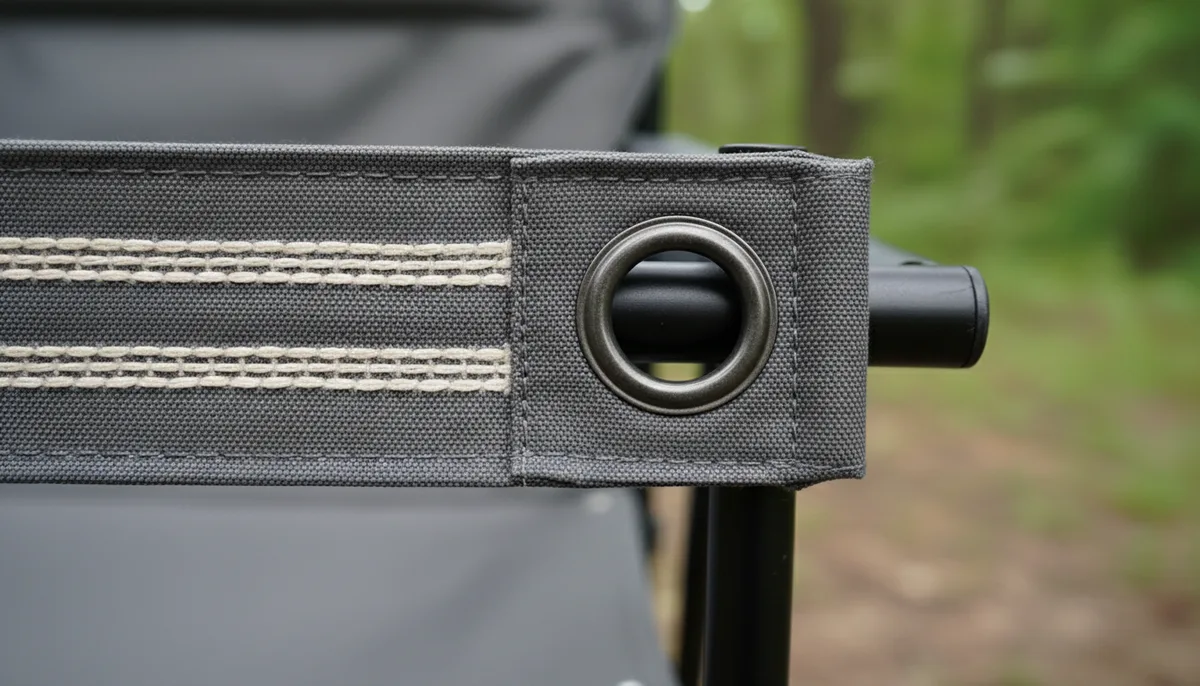
- Fabric & Finish: Verify fabric denier (600D minimum for commercial use). Check for double-stitched seams and reinforced stress points. For powder coat, ask for salt spray test results (aim for 500+ hours resistance).
- Stability & Safety: On a level surface, apply uneven weight to each corner. The chair should not tip. Ensure it meets ASTM F2640-18 or similar. Check for finger-pinch guards on folding mechanisms.
- Logistics & Storage: Measure packed dimensions and weight. Can one person reasonably carry it? Does it stack neatly with other units? Is the carry bag durable or an afterthought?
- Warranty & Support: Read the commercial use clause. Does the warranty cover rental or frequent use? What is the claimed cycle life? Our PeakRoam QAC-Loveseat, for instance, is backed by a 2-year warranty that covers commercial use, a key differentiator.
Finally, calculate the true cost. Use this formula: Total Cost of Ownership = (Unit Cost + Estimated Repair Cost over 3 Seasons) / (Number of Seats * Estimated Uses over 3 Seasons). A chair that costs 50% more but lasts twice as long often has a 40% lower CPUPE. For more on managing supplier terms and cost, our framework on camping supplier credit terms provides complementary strategies.
Your choice in a double camping chair ultimately defines your operational efficiency for the coming season. By applying the CPUPE lens and the decision matrix above, you can move beyond guesswork to a data-driven procurement strategy that treats seating as the capital asset it is. The right chair isn't just a place to sit—it's a tool that can reduce labor costs, optimize storage, and enhance client satisfaction across hundreds of uses.
Frequently Asked Questions
When does a premium backpack camping chair become cheaper than a standard double chair for mobile staff?
For staff carrying gear over 200 yards, a backpack chair under 5 lbs (like a 250-lb capacity model) reduces fatigue and setup time. The breakeven is when labor savings from faster deployment exceed the higher unit cost, typically within one season for high-mobility teams. The double chair's 300-lb per seat capacity is over-specified for this use case.
What canopy specifications are critical when pairing with double camping chairs for corporate events?
Verify the canopy's anchor weight requirement. A 300-lb capacity double chair can adequately ballast a 10'x10' commercial canopy in winds under 15 mph without extra sandbags, per our compatibility checks. Ensure the canopy frame uses powder-coated steel and references ASTM F2640-18 for stability, matching the chair's durability for high-turnover events.
At what event volume does a double camping chair with an integrated heater system become cost-effective?
An integrated heated double chair system (TCO $110-$160/seat) is justified for 10-20 premium winter events per season where client comfort drives revenue. Below this threshold, a standard double chair paired with a centralized inflatable hot tent is more economical, avoiding the maintenance of individual battery-powered heating elements.
How does the cycle life of a powder-coated steel frame compare to anodized aluminum for commercial use?
Our production data shows powder-coated steel frames (like the PeakRoam QAC-Loveseat) achieve 2,500-3,000 sit/stand cycles to failure, outperforming anodized aluminum's 1,800-2,200 cycles. Steel's higher durability justifies its 8.5-10.5 lb weight per seat for fixed operations, leading to a lower 3-year TCO despite aluminum's initial weight advantage.