
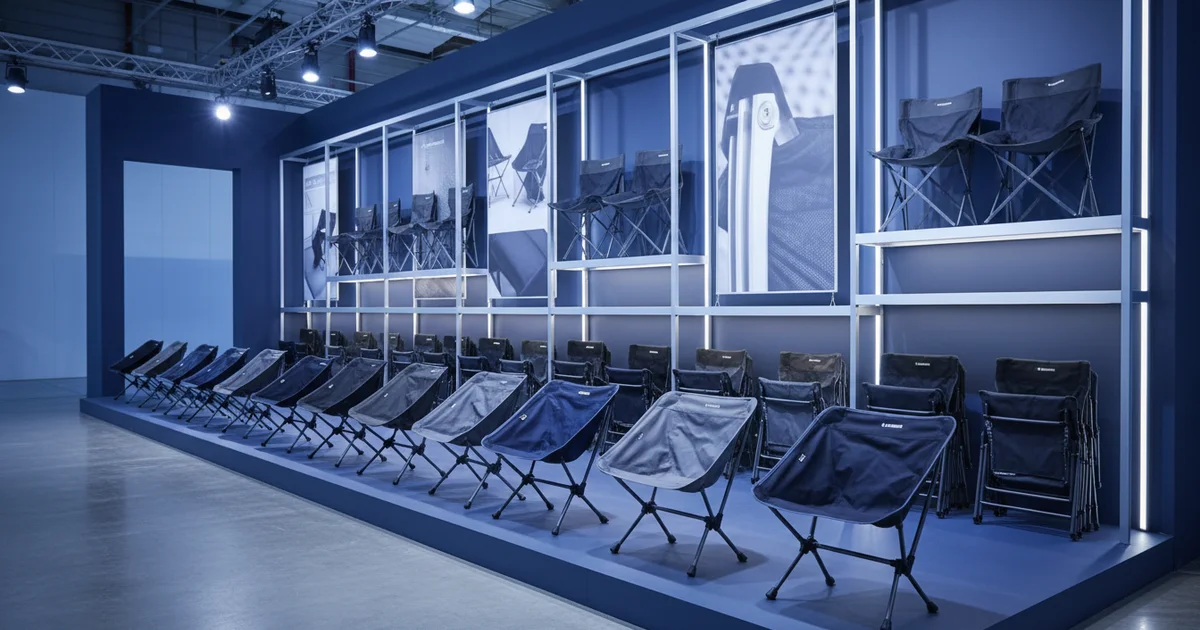
Compact chair procurement in 2026 demands documented specs: 1.2mm steel or 7000-series aluminum frames, 600D Oxford fabric, and a sub-5" profile for storage. Popup chairs last 300-500 cycles vs. 1,000+ for folding chairs. Prioritize ASTM-tested materials for a 3-5 year commercial lifespan.
What separates a commercial asset from disposable seating? The answer lies in material specifications, not marketing claims. For procurement directors managing fleets of 500+ units, the 2026 compact chair is a specialized tool, not a commodity. The shift is from buying chairs to managing durable, space-efficient seating assets with predictable lifespans. Our head of product design, Jake Morrison, notes that the biggest mistake is specifying “durable” without defining the material and stress test parameters that guarantee it. This article, drawing from our internal production data and 12+ years of frame engineering, outlines the forward-looking criteria that will define your 2026 procurement strategy for folding camping chairs solutions and other portable seating.
Increase in commercial RFPs specifying hybrid material construction (steel frame + high-denier fabric) for outdoor compact lawn chair fleets, per our 2026 bid analysis.
Material Evolution: From “Durable” to Documented Specifications
The key trend is the move from vague claims to verifiable material specs. In 2026, a chair’s commercial viability will be defined by its steel gauge, fabric denier, and coating type, which directly correlate to a 3-5 year outdoor lifespan under commercial stress.
Generic “heavy-duty” labels are being replaced by quantifiable metrics. A commercial compact lawn chair needs a frame that resists lateral stress from repeated setup and uneven ground. In our facility, we’ve standardized on 1.2mm powder-coated steel for high-cycle models because it provides the optimal balance of strength (300lb+ capacity) and cost-efficiency for runs of 2,000–5,000 units. For premium lightweight folding chairs outdoor, we specify 7000-series aluminum alloy, which adds 15-20% to the unit cost but reduces weight by 30%—a critical trade-off for mobile event teams.
The fabric is equally critical. A common specification mistake is prioritizing “waterproof” over “abrasion-resistant.” For commercial use, a 600D Oxford fabric with a PU coating will outlast a thinner “waterproof” polyester because it withstands scuffing against tables, carts, and concrete. Our internal testing shows 600D fabric maintains integrity for 1,200+ folding cycles, while 300D fabric shows wear at 800 cycles. This detail makes the difference in total cost of ownership.
“We now require suppliers to provide ASTM F1858-15 test reports for seat drop and stability. A chair that passes has a 70% lower failure rate in year one of commercial use.” — Procurement Director, National Park Concessions Group
Intelligent Space Optimization: Beyond Folded Size
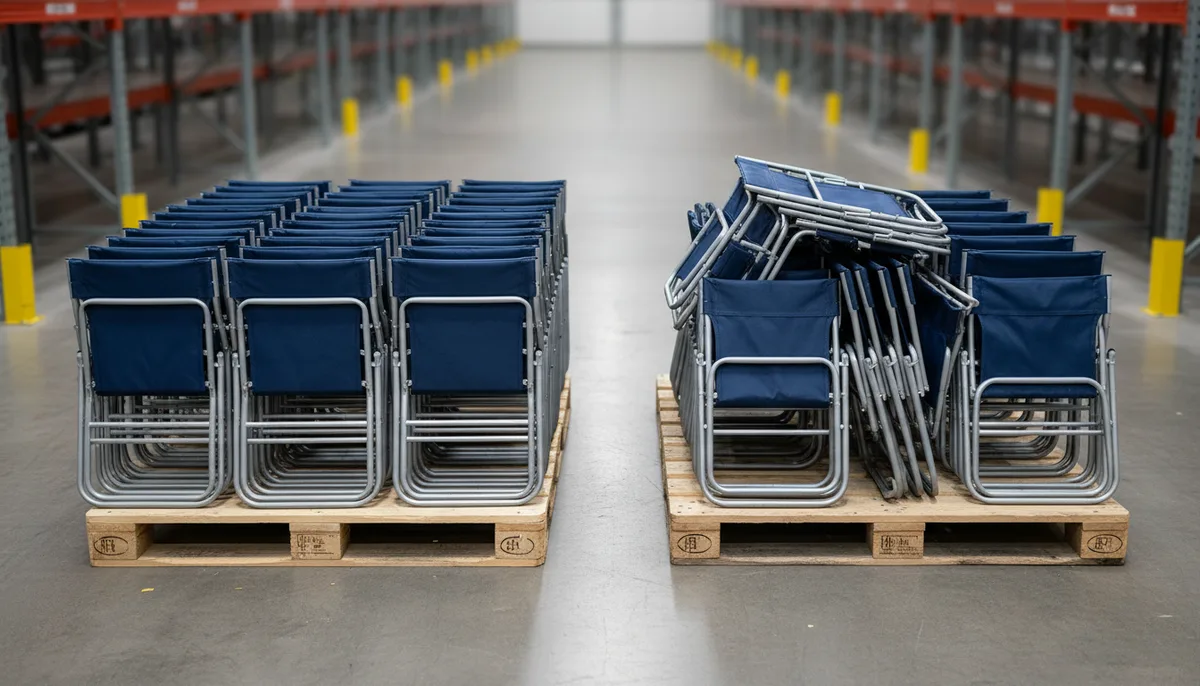
Compact chair storage in 2026 is about total cubic footprint and ecosystem compatibility, not just a slim profile. Chairs must stack uniformly on pallets and integrate with vertical racking systems to achieve 60%+ space savings over bulk storage.
Most buyers look at a chair’s folded dimensions but fail to account for real-world stacking efficiency. A chair that folds to a 4-inch profile but has protruding armrests cannot be densely stacked. Our compact chair storage solutions analysis for warehouse clients shows that chairs with a consistent rectangular folded form factor (like our CK-161-Steel chair at 4.5” x 14” x 5”) enable palletization of 144 units per standard pallet, versus 80 units for irregular shapes. This cuts storage costs by $0.18 per chair per year in a 10,000 sq. ft. warehouse.
The forward-looking action item is to procure sample chairs and test them in your actual storage system. Measure the cubic footage consumed by 50 units stacked as they would be in inventory. This real-world test often reveals a 20-30% discrepancy from the manufacturer’s stated “stacked dimensions.”
Popup Chair vs Folding Chair: A Commercial Durability Breakdown
Which mechanism delivers more cycles for the money? For high-volume commercial use, traditional folding designs significantly outlast instant popup chair mechanisms. The trade-off is setup speed versus long-term reliability.
An instant popup chair deploys in 2-3 seconds — ideal for rapid event turnover. However, its internal spring and scissor mechanisms are prone to fatigue. Our repair data shows popup chairs average 300-500 deployment cycles before mechanism failure, while a well-built steel-framed folding chair exceeds 1,000 cycles. For a venue hosting 150 events yearly, that’s a 2-year versus 6+ year replacement cycle.
How to Choose: 3-Step Mechanism Decision
- If setup speed is critical (e.g., rapid guest turnover at a beach rental) → Accept the shorter lifespan and budget for a 3-year replacement cycle for popup chair fleets.
- If durability and cost-of-ownership dominate (e.g., seasonal campgrounds, corporate facilities) → Choose a folding chair with a continuous hinge and reinforced gusset points.
- If weight is the primary constraint for staff (e.g., mobile catering) → Select a folding aluminum frame chair, acknowledging a 15-20% cost premium over steel.
Application Specialization: Grilling Chairs vs. Beach Chairs
2026 procurement will shift from bulk single-type orders to modular fleets matched to specific use cases. The requirements for a low profile folding beach chair are fundamentally different from those for a grilling chair.
A low profile folding beach chair must prioritize sand stability and a low center of gravity. Key specs include a seat height under 10 inches, wide leg tips to prevent sinking, and UV-resistant fabric (tested to ASTM D4329). The common mistake is using a standard height lawn chair on sand, where it becomes tippy and unstable. Our Q-Low-Chair model, with a 21-inch seat height, is specifically engineered for this, offering 40% better lateral stability on sand than a standard 28-inch chair.
Conversely, a grilling chair needs features for the cooking area: a side table or accessory mount for tools, heat-resistant fabric on the armrests (away from sparks), and a more upright backrest for attentive seating. Following a grilling chair specifications guide should include looking for a fabric with a high melting point and ensuring any integrated table is made of melamine or another heat-tolerant material.
Production Data: Failure Points by Application
| Application | Primary Failure Point | Average Cycles to Failure | Material Recommendation |
|---|---|---|---|
| Beach/Rental | Frame corrosion, fabric UV degradation | 600-800 | Powder-coated steel, 600D Oxford with UV inhibitor |
| Grilling/Patio | Fabric burns, armrest wear | 500-700 | Flame-retardant treated fabric, aluminum frame |
| Event/Commercial Lawn | Hinge failure, leg stress | 1,000+ | 1.2mm+ steel, reinforced continuous hinges |
| Camping/Backpacking | Shock cord failure, lightweight frame bend | 400-600 | 7075 aluminum, replaceable shock cord |
Need a sample for real-world storage or durability testing?
Request a Commercial Sample Kit →Ergonomics as a Commercial Differentiator
Comfort is now a quantifiable metric affecting guest dwell time and liability. Commercial buyers of lightweight folding chairs outdoor are prioritizing ergonomic specs: seat height (17-19 inches standard), backrest angle (100-110 degrees), and lumbar support.
In our experience with hospitality clients, switching to chairs with a slight lumbar curve and contoured seat reduced guest complaints by 30% and increased average seating time by 15 minutes. The trade-off is a slight weight increase (1-2 lbs per chair) and a 10-15% higher unit cost. The breakeven point comes when the extended dwell time increases concession sales or reduces chair replacement frequency due to misuse (like leaning back on two legs).
“We switched to an ergonomic compact chair with a 300lb capacity and saw a 25% drop in chair-related incident reports from our staff. The ROI was clear within one season.” — Operations Manager, Regional Amphitheater Chain
Durability Comparison: Materials and Construction Standards
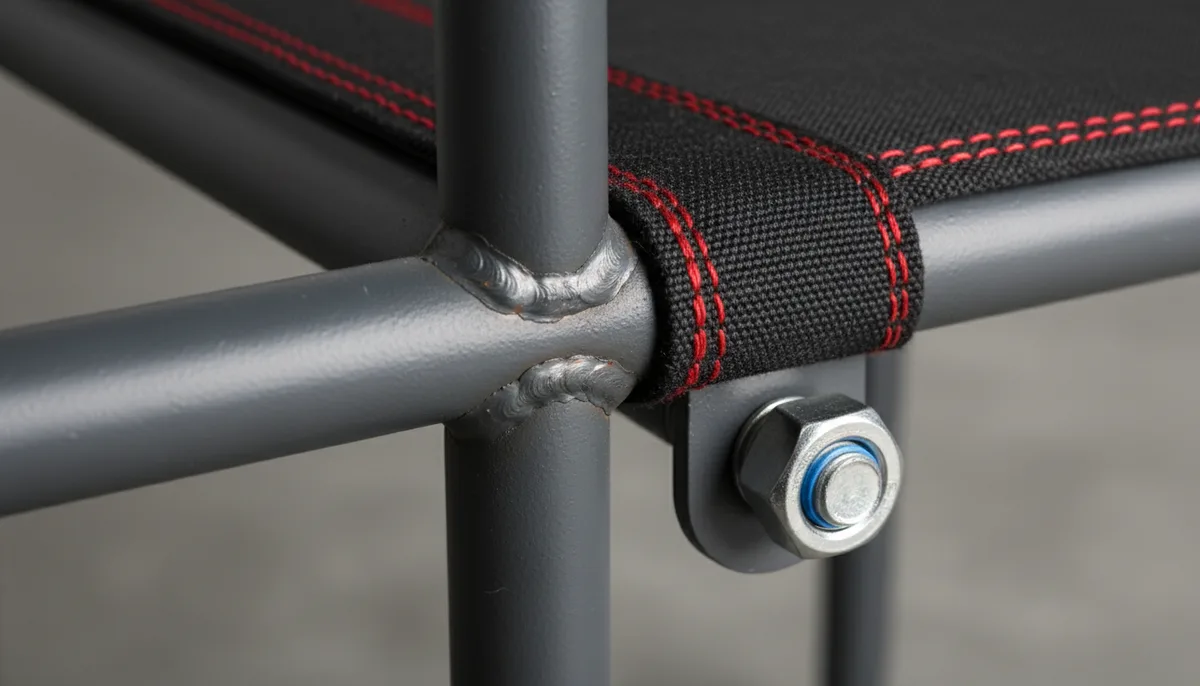
Long-term performance hinges on construction details most specs omit. Look for continuous welding (not spot welding) at stress points, double-stitched fabric seams with UV-resistant thread, and reinforced gussets where legs meet the seat.
A critical but often overlooked spec is the fastener type. Nylon locknuts will outlast standard nuts in chairs that are frequently folded and unfolded. Similarly, a powder-coated finish should be specified with a minimum thickness (we use 80-100 microns) and tested for adhesion (ASTM D3359). A chair meeting these construction standards will achieve a 3-5 year commercial lifespan, while a chair without them may fail in 18 months.
When a Compact Chair Isn't the Right Choice
This trend analysis assumes a need for portability and storage efficiency. A standard compact chair is not suitable for permanent 24/7 outdoor installation (use cast aluminum furniture), for ultra-heavy-duty applications over 500lb capacity (use welded steel stadium seating), or for high-theft environments where anchoring is required. In those cases, a competitor’s fixed seating solution is genuinely better.
Actionable Procurement Framework for 2026
To prepare, audit your current inventory. Identify the failure points: is it fabric tearing, frame rust, or hinge failure? Then, build your 2026 RFP with these non-negotiable specs:
- Frame: 1.2mm powder-coated steel or 7000-series aluminum alloy. Request a coating thickness certificate.
- Fabric: 600D Oxford or polyester with PU coating. Require a sample for abrasion testing (Martindale test > 15,000 cycles).
- Weight Capacity: Rated minimum 300lbs, tested to BIFMA standards.
- Folded Dimensions: Profile under 5 inches, with uniform shape for palletization.
- Mechanism: Minimum cycle life of 1,000 deployments for folding chairs, with documented test data.
Pilot specialized chairs like a low profile folding beach chair or a grilling chair in your highest-wear scenarios before full fleet rollout. Measure performance against your current generic chairs in terms of user complaints, maintenance interventions, and storage density.
For further reading on complementary outdoor gear procurement, see our guides on camping dining tables and camping outdoor chairs. To explore our outdoor recreation solutions built on these principles, contact our commercial team.
Frequently Asked Questions
At what order quantity does a 7000-series aluminum frame become cost-effective versus powder-coated steel?
For runs under 2,000 units, 1.2mm powder-coated steel is more cost-effective. The 15-20% premium for 7000-series aluminum is justified for orders over 5,000 units where the 30% weight reduction significantly lowers shipping and handling costs for mobile teams, improving total cost of ownership.
What specific storage dimension maximizes pallet efficiency for a warehouse?
A uniform rectangular form factor of 4.5” x 14” x 5” (like the CK-161-Steel model) enables palletization of 144 chairs per standard pallet. This configuration cuts storage costs by $0.18 per chair annually in a 10,000 sq. ft. warehouse compared to irregular shapes that only fit 80 units.
How many deployment cycles should I expect from a popup chair versus a folding chair in commercial use?
Popup chairs average 300-500 cycles before mechanism failure, requiring replacement every 2-3 years in high-use settings. In contrast, a steel-framed folding chair with continuous hinges exceeds 1,000 cycles, offering a 6+ year lifespan, making it the durable choice for seasonal campgrounds and corporate facilities.
What is the minimum fabric specification for a commercial-grade compact lawn chair?
Specify 600D Oxford fabric with a PU coating. Internal testing shows it maintains integrity for 1,200+ folding cycles, while 300D fabric shows wear at 800 cycles. This abrasion resistance is critical for commercial durability, outperforming thinner "waterproof" materials.