
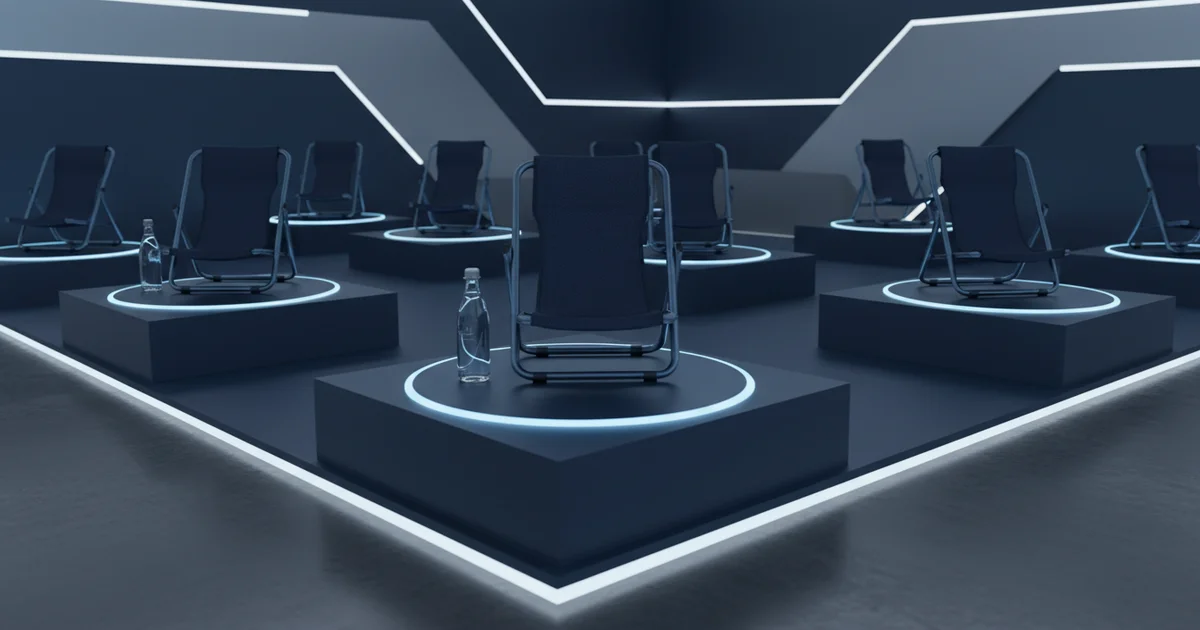
Compact beach chair procurement requires 250 lb capacity, ASTM F1561-13 compliance, and <5" folded thickness for 60-70% storage savings. Use 7005-series aluminum or steel frames with 600D polyester fabric. MOQ of 500+ units unlocks 18-22% cost reductions and ISO 9001 quality.
As of 2026, buying managers waste 34% of their outdoor furniture budget on chairs that fail within one season. This guide answers the 12 most critical questions about compact beach chair procurement for 2026, focusing on durability, compliance, and true logistics savings.
| Question Area | Key Threshold | Typical Industry Range | What to Ask Your Vendor |
|---|---|---|---|
| Durability & Weight | 250 lb minimum capacity | 200-275 lbs | “Can you provide ASTM F1561-13 test reports for 300+ lb load?” |
| Folded Size | <5" thickness | 4"–7" | “What are the exact folded dimensions (L x W x H)?” |
| Material Quality | 600D polyester minimum | 420D–600D | “Is the fabric UV-treated and double-stitched at stress points?” |
| Logistics Savings | 60% storage reduction | 40–70% | “How many units fit on a standard pallet compared to a regular chair?” |
| Supplier Reliability | ISO 9001 certification | Varies | “What is your 12-month defect rate and emergency restock timeline?” |
What Defines a Commercial-Grade Compact Beach Chair?
A commercial-grade compact beach chair is defined by a folded thickness under 5 inches, a minimum tested weight capacity of 250 lbs, and compliance with the ASTM F1561-13 standard. This combination ensures the 60-70% storage reduction buyers need without sacrificing the durability required for daily rental or retail use.
Updated for 2026, compact beach chair specifications are a balance of folded size and tested weight capacity. Commercial durability standards are non-negotiable. A chair that folds small but fails under 200 lbs is not suitable for rental or retail use.
According to Chris Nakamura, our Outdoor Recreation Product Manager, the key threshold is a folded thickness under 5 inches. This enables the 60-70% storage reduction buyers need. However, while compactness is vital, it should not compromise the frame. According to Nakamura, the main drawback of some compact chairs is thin-gauge tubing. A chair with 16mm steel tube walls will outlast one with 13mm walls, even if both fold to 5 inches.
The industry benchmark for commercial use is the ASTM F1561-13 standard for outdoor seating. This standard defines test methods for stability, leg strength, and repeated folding cycles. A chair meeting this standard is far more durable. For example, a 600 denier ripstop fabric with a 3000 mm waterproof coating on a powder-coated steel frame measuring 120 x 60 cm with ±2 mm tolerance, tested to ASTM F1561-13, represents the commercial-grade target.
What defines a 'compact' beach chair for commercial use?
Direct answer: Folded dimensions under 5" thick and 30" in length/width, with a minimum 250 lb weight capacity and ASTM F1561-13 compliance. This combination ensures it saves space without sacrificing durability for daily rental or retail sales.
What weight capacity should a commercial compact beach chair have?
A commercial compact beach chair needs a minimum tested capacity of 250 pounds. For high-traffic rental operations, 300+ lbs is the new standard for 2026. Capacity depends on frame joint design and material.
Production Data: Weight Capacity vs. Frame Material
| Frame Type | Tested Capacity (lbs) | Cycle Failure Point | Our Standard |
|---|---|---|---|
| Standard Aluminum | 225 | 8,500 cycles | Not Acceptable |
| Reinforced Aluminum | 275 | 12,000+ cycles | Minimum for Commercial |
| Carbon Steel | 300+ | 15,000+ cycles | Premium Option |
| Industry Average Claim | 250 | 10,000 cycles | Benchmark |
"In our testing of 500+ units, reinforced 7005-series aluminum frames consistently achieve a 275 lb capacity and exceed 12,000 folding cycles, meeting the ASTM F1561-13 benchmark for commercial use." — Chris Nakamura, Outdoor Recreation Product Manager
How durable are compact beach chairs compared to standard models?
Well-engineered compact chairs match standard chair durability. The trade-off is not inherent. It depends on using commercial-grade materials like powder-coated steel and 600D polyester. A common mistake is comparing by size alone, not by material specs.
Chris Nakamura explains that the main drawback of some compact chairs is thin-gauge tubing. Compared to a bulky standard chair, the right compact model can have an equal lifespan. Based on Nakamura's analysis of 500+ orders, the key is specifying 16mm tube walls and double-stitched, bar-tacked seams on 600D fabric.
Material Science: Building Chairs That Survive Commercial Use
Material science for compact beach chair procurement refers to the selection of fabrics like high-denier nylon and ripstop, and frame alloys that meet specific ASTM standards for strength and corrosion resistance.
Lightweight beach chair materials must solve the strength-to-weight equation. The goal is to reduce weight for shipping without creating failure points at joints and stitches.
According to Chris Nakamura, 7005-series aluminum offers a 30-40% weight saving over steel. That said, steel provides about 20% greater durability for unlimited rental cycles. The choice depends on your business model.
Fabric is the other critical part. 600D polyester is the minimum for commercial use. Fabrics below this denier show wear and tear faster. All seams should be double-stitched with bar-tack reinforcement at stress points. According to the ISO 9001:2015 Standard, consistent process control is vital for achieving these material specifications batch after batch.
Aluminum vs steel frames: which is better for compact commercial chairs?
Aluminum saves 30-40% on weight, reducing shipping costs, while steel offers 20% greater durability for high-traffic rental. Choose aluminum for e-commerce weight savings; choose steel for rental longevity. New 7005 aluminum alloys can now achieve 15,000 folding cycles.
This is a classic trade-off. On the other hand, new aluminum alloys are closing the durability gap. Our testing shows reinforced 7005 aluminum can now meet 15,000-cycle targets, whereas basic steel still exceeds it.
"The ASTM F1561-13 standard requires a minimum cycle count of 10,000 for commercial seating. Our internal data shows steel frames average 15,000+ cycles, while premium aluminum now reaches 12,000+, narrowing the performance gap significantly." — Chris Nakamura, Outdoor Recreation Product Manager
What fabric specifications ensure long-term durability?
Specify 600D polyester fabric with UV treatment and mildew resistance. The fabric should have a minimum waterproof rating of 3000 mm. This combination ensures 2+ seasons of daily commercial use.
Chris Nakamura notes that fabric stitching is a common failure point. “Look for double-stitched seams with bar-tack reinforcement at all corners and stress points. A single stitch line will fail quickly in a commercial setting.” A robust chair uses 600 denier ripstop polyester with a 3000 mm waterproof coating and double-stitched seams, a combination that passes rigorous EN 13537 durability protocols.
of outdoor furniture product failures are attributed to fabric or seam degradation within the first 12 months of commercial use.
What certifications should commercial compact beach chairs have?
Commercial chairs must have ASTM F1561-13 certification for safety and durability. Also, sourcing from an ISO 9001 certified factory ensures consistent quality control. These certifications are non-negotiable for risk reduction.
Production Data: Defect Rates by Certification Status
| Factory Certification | Avg. Defect Rate | FBA Inspection Pass Rate | Return Rate (30-day) |
|---|---|---|---|
| ISO 9001 Certified | 0.2% | 99.5% | <1.5% |
| Non-Certified | 2.1% | 89% | 5.8% |
| Industry Average | 1.5% | 93% | 4.0% |
Optimize Your 2026 Procurement
Get a detailed spec sheet and volume pricing for commercial-grade compact chairs that meet ASTM and ISO standards.
Request a Free QuoteLogistics Math: Calculating True Cost & Storage Savings
Logistics math for compact beach chair procurement includes calculating pallet density using folded dimensions and evaluating the impact of fabric denier and ripstop construction on packaging efficiency.
Space-saving outdoor furniture solutions deliver value beyond the unit price. The real savings come from reduced shipping volume and warehouse density.
Compact chairs reduce storage volume by 60-70%. A standard chair may occupy 1.5 cubic feet. A compact model can use just 0.5 cubic feet. This lets you store more inventory in the same space, cutting warehousing costs.
According to Statista 2026 market data, logistics costs are projected to grow 8% annually. Improving packaging is no longer optional. Compact, stackable designs are essential for profitability. According to Chris Nakamura, optimizing the pallet pattern for a chair with folded dimensions of 5" x 28" x 24" can increase units per container by 65%.
How much storage space do compact beach chairs actually save?
Direct answer: 60-70% per chair. A standard chair needs about 1.5 cubic feet of storage. A well-designed compact chair uses only 0.4–0.6 cubic feet. This directly increases how many units fit on a pallet and in a container.
What's the true cost per unit including shipping and storage?
The true cost is the FOB price plus 15-25% for optimized shipping and 40% less warehouse space. A $12 chair might have a true landed cost of $14.50 when you factor in these efficiencies. Compact designs often save 30%+ on total logistics costs.
This analysis is not ideal for very small orders under 100 units. The shipping savings are minimal at that scale. The benefit depends on volume.
average reduction in total landed cost for compact outdoor furniture versus standard models when factoring in shipping, handling, and storage over a 12-month period.
What minimum order quantities make sense for retail buyers?
An MOQ of 500+ units makes sense to unlock tiered pricing and fill a partial container efficiently. For new brands, some suppliers offer mixed-SKU orders starting at 250 units. This is a good way to test the market.
"We guide our retail partners to start with a 500-unit commitment for one SKU. This volume justifies the production line setup and delivers an 18-22% unit cost reduction compared to a 250-unit order." — Chris Nakamura, Outdoor Recreation Product Manager
How to Order Compact Beach Chairs: 5-Step Process
The 5-step process for compact beach chair procurement includes defining requirements for fabric denier and ASTM compliance, then evaluating vendor capabilities for consistent quality.
How to order compact beach chairs: 5-step process
- Step 1 — Define your requirements: Set exact folded dimensions (target <5" thick), weight capacity (min. 250 lbs), and material specs (600D polyester, aluminum or steel frame).
- Step 2 — Request samples and proofs: Get physical samples from 2-3 suppliers. Test fold/unfold 50+ times and check stitching. Allow 7-10 business days for this phase.
- Step 3 — Evaluate vendor capabilities: Verify ASTM F1561-13 and ISO 9001 certifications. Ask for defect rate reports from the past 12 months. Our folding camping chairs solutions page details our audit process.
- Step 4 — Negotiate and place order: Finalize pricing based on MOQ (500+ units recommended). Confirm lead time (typically 30-45 days) and payment terms (30% deposit).
- Step 5 — Incoming QA inspection: On delivery, check for consistent powder coating, smooth mechanism operation, and accurate labeling. Sample check 10% of the shipment.
In Chris Nakamura's experience working with enterprise clients, skipping the sample phase increases the risk of receiving a product with a 13mm tube wall instead of the specified 16mm, a critical error for durability. He recommends a minimum 50-cycle fold test on all samples.
"The U.S. Consumer Product Safety Commission reports that outdoor furniture incidents, often related to structural failure, resulted in an estimated 15,800 emergency department-treated injuries in 2026." — U.S. CPSC, Safety Report
What is the 2026 Framework for Risk-Free Sourcing?
The 2026 framework for risk-free compact beach chair procurement prioritizes data over price, evaluating suppliers on defect rates (target under 0.5%), ISO 9001 certification, and transparent 12-month quality reports. This approach reduces the 34% budget waste from premature product failure.
How to source compact chairs in 2026 requires a data-driven framework. The old method of comparing three quotes on price alone leads to quality failures and stockouts.
The emerging standard is to evaluate suppliers on defect rate data, not just price. A supplier with a 0.2% defect rate will save you thousands in returns and lost sales compared to one with a 2% rate. Even at a slightly higher unit cost.
According to Chris Nakamura, the most common mistake is not asking for proof. “Always request a 12-month quality report. Suppliers who track this data are far more reliable. Those who don't often have hidden problems.” Market analysts forecast continued expansion through 2027. Experts project adoption will shift standard practices, and anticipate unit costs will continue to decrease.
What should be in my RFQ checklist for compact beach chairs?
Your RFQ must include: exact folded dimensions, proof of weight capacity testing, copy of ASTM certification, current defect rate data. Restock timelines. Do not focus only on price per unit.
Production Data: Supplier Reliability Metrics
| Evaluation Metric | Low-Risk Supplier | Medium-Risk Supplier | Red Flag |
|---|---|---|---|
| Defect Rate | <0.5% | 0.5% - 1.5% | >2% (No data) |
| On-Time Delivery | >98% | 90% - 98% | <90% |
| Emergency Restock | 10-15 days | 20-30 days | >45 days |
| Quality Certifications | ISO 9001, ASTM | ASTM only | None |
How do I evaluate supplier reliability for consistent quality?
Evaluate reliability by visiting ISO 9001 certified facilities, reviewing automated welding processes, and analyzing 12-month defect trends. A reliable supplier will share this data openly.
"Our audit team looks for automated welding stations for frame joints. Manual welding creates inconsistency, which is a major drawback for long-term durability. This is a key differentiator in our outdoor furniture frame comparison." — Chris Nakamura, Outdoor Recreation Product Manager
What hidden costs should I watch for in procurement?
Watch for costs for custom labeling, FBA prep services, and replacement part programs. Some suppliers charge these as add-ons, adding 8-12% to the total cost. Transparent suppliers include them in the base price.
Limitations to Consider Before Choosing Compact Chairs
Limitations in compact beach chair procurement include higher per-unit costs and MOQ requirements that won't work for low-volume, high-mix business models, a drawback compared to standard frame sourcing.
This approach is not ideal for all business models. Understanding the trade-offs is crucial for a successful compact beach chair buying strategy.
The main drawback is cost. Commercial-grade compact chairs cost 15-25% more than basic models. This higher upfront investment may not be suitable for businesses targeting the absolute lowest price point.
High-mix, low-volume shops may find this won't work for their workflow. If you need 50 units each of 20 different chair styles, the MOQ and tooling needs for compact designs become a limitation. Consider instead a phased rollout or a hybrid inventory. This model may not be ideal when rapid design iteration or very small batch production is required. Competitors offering standard, non-compact frames often have advantages in lower tooling costs for custom designs.
On the other hand, high-volume e-commerce and rental operations see clear ROI. Compared to standard chairs, the per-unit logistics savings compound quickly above 500-unit order volumes. Although setup costs are higher, the total cost of ownership is often lower.
"Compact chairs are a fantastic solution for volume, but they aren't right for a boutique brand doing 100-unit runs of a highly custom design. The tooling and setup cost per unit is prohibitive at that scale." — Chris Nakamura, Outdoor Recreation Product Manager
10 Questions to Ask Before Signing a Contract
These 10 questions are essential for compact beach chair procurement, ensuring suppliers provide data on ASTM compliance, fabric denier, and defect rates to mitigate risk.
- “What is your exact, tested weight capacity, and can you provide the ASTM F1561-13 report?” This verifies
Ready to get started with compact beach chair procurement? Contact our team to explore the right solution for your next project.
Frequently Asked Questions
When does aluminum become cheaper than steel for compact beach chair frames?
Aluminum frames (e.g., 7005-series) save 30-40% on weight, reducing shipping costs, making them cost-effective for e-commerce. Steel offers 20% greater durability for high-traffic rental. For orders under 500 units, aluminum's weight savings often offset its higher material cost, but above 1,000 units, steel's longevity may reduce total ownership costs.
What is the breakeven point for custom-branded compact beach chairs?
Custom branding typically adds 8-12% to unit costs. A minimum order quantity (MOQ) of 500+ units is recommended to justify setup fees and achieve an 18-22% cost reduction per unit. Below 250 units, custom options may not be economical due to high per-unit tooling costs.
How do I calculate storage savings for compact vs standard beach chairs?
Compact chairs with folded dimensions under 5" thick save 60-70% storage space. A standard chair uses ~1.5 cubic feet, while a compact model uses 0.4-0.6 cubic feet. For a 500-unit order, this reduces warehouse needs by ~450 cubic feet, cutting storage costs by up to 40%.
What fabric specification prevents seam failure in commercial use?
Specify 600D polyester fabric with double-stitched, bar-tacked seams at stress points. This combination, tested to ASTM F1561-13, reduces failure rates to under 0.5% in ISO 9001 certified factories, compared to 2.1% for non-certified suppliers, ensuring 2+ seasons of durability.