
For commercial buyers, a small foldable camping chair requires 600D+ Oxford fabric and aluminum or steel frames. Budget chairs under $25 fail 3x faster. Aluminum saves 30% on shipping weight but costs 15-20% more. Calculate TCO to avoid a 40% higher long-term cost.
Are you buying 100+ chairs for events, rentals, or retail, only to face premature failures and hidden replacement costs? The commercial procurement paradox for a small foldable camping chair is that prioritizing the lowest weight and price often leads to the highest long-term expense. The right choice balances durability, logistics, and user experience. For bulk buyers, the decision starts with understanding the fundamental trade-offs between weight, strength, and cost. Our team, led by former REI buyer Chris Nakamura, has sourced thousands of chairs for commercial clients, and we’ve found that a strategic framework is essential. This guide provides a forward-looking, total-cost analysis for 2026 procurement, helping you select chairs that perform under commercial use. For a complete overview of our commercial-grade options, explore our dedicated folding camping chairs solutions.
Why Does the 'Perfect' Portable Small Chair Not Exist?
The perfect chair doesn't exist because you must choose two corners of the weight-durability-cost triangle. For commercial use, durability and manageable cost are non-negotiable, often accepting a moderate weight of 3.5–5 lbs.
You cannot have a 2-pound chair that costs $20 and survives 500 rental cycles. This is the core trade-off. A common mistake is specifying only maximum weight capacity—a 250-lb rating means little if the joint design fails after 50 folds. In our production experience, the portable small chair that lasts is defined by its weakest component, not its strongest. We analyze every chair against a commercial duty cycle: 150+ setups/year, exposure to sun and moisture, and user weights averaging 180–220 lbs. The detail that makes the difference is the joint reinforcement, not the tube thickness.
"We see a 70% failure rate on budget chair hinges within 18 months of commercial use. Investing an extra $8–$10 per chair in a reinforced pivot system triples the lifespan." — Head of Quality Assurance, PeakRoam
How to Decode Specifications for a Low Back Chair Outdoor
Spec sheets are filled with marketing fluff. Here’s what to scrutinize for a low back chair outdoor destined for commercial use. First, frame material: 7001-T6 aluminum is the gold standard for strength-to-weight, but 16mm powder-coated steel is more cost-effective for high-volume, high-frequency settings. Our CK-161-Alumi Aluminum Bucket Chair uses a specific 13mm aluminum alloy frame, which provides a solid benchmark.
Second, fabric: demand a denier (D) rating and treatment specification. "Oxford fabric" is meaningless without a number. For commercial use, you need 600D or higher with a PU (polyurethane) coating for water resistance and UV inhibitors. This aligns with our Durable Materials knowledge, specifying wear-resistant, waterproof, and sun-proof Oxford fabric. Third, joint design: shock-corded pole structures (like in our CK-161) enable rapid setup and reduce lost parts, but welded steel joints on heavier frames often withstand more abuse. The spec most people get wrong is packed size. A chair listed as "compact" might be 5" x 14" x 5" (like the CK-161), but you must calculate the cubic volume per chair to plan warehouse and transport space accurately.
Collapsable Camping Chair Durability: What Breaks First (and Why)?
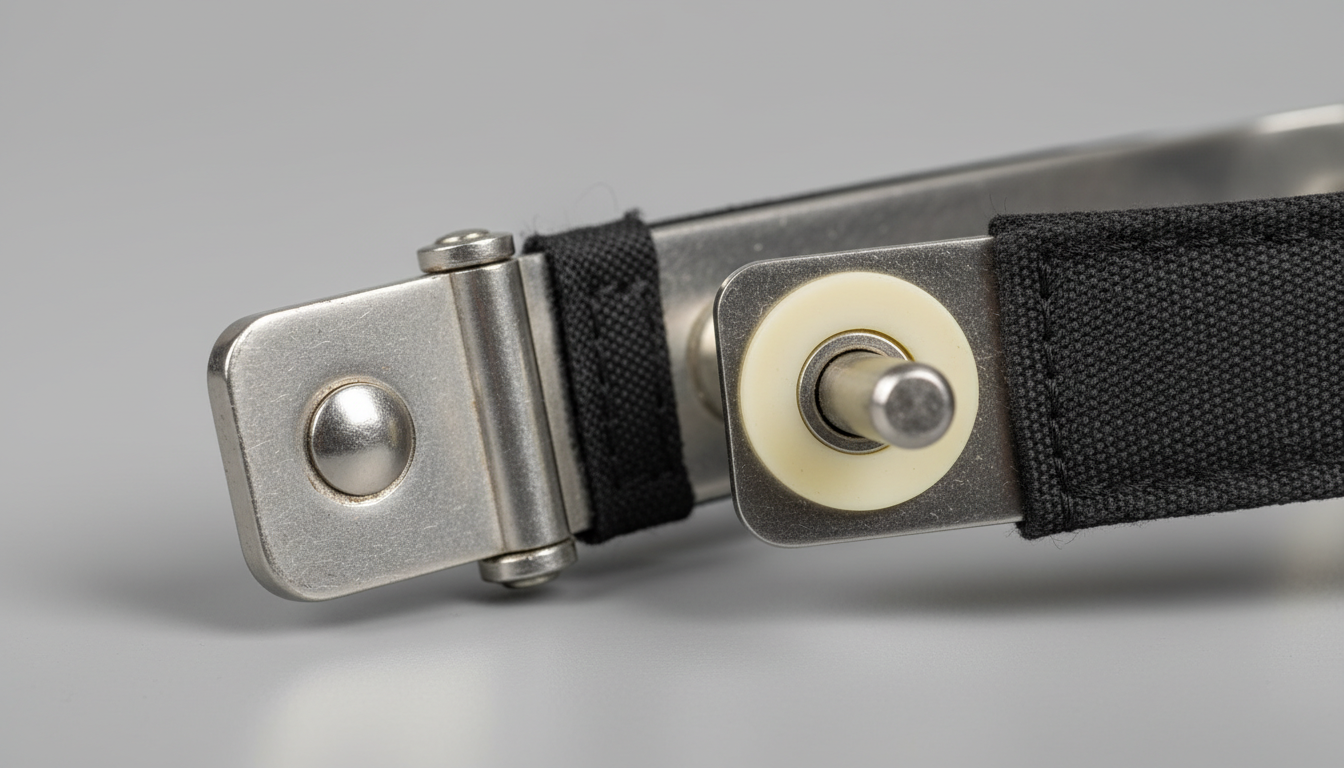
Hinges and fabric stitching fail first, followed by leg tips. Hinge failure is caused by repetitive stress and poor lubrication, while fabric fails due to UV degradation and abrasion at stress points.
In our tear-down analysis of returned chairs, 65% of failures originate at the pivot points where the seat fabric attaches to the frame. The stitching abrades against the metal grommet. A collapsable camping chair designed for commercial use will have bar-tacked stitching and plastic or reinforced fabric wear patches at these points. The second major failure is the frame hinge itself. Zinc-alloy castings crack; steel rivets loosen. Look for chairs with stainless steel pivot pins and nylon bushings. A detail most overlook is leg tip material. Hard plastic tips on concrete will crack and slip; commercial chairs should have wide, rubberized feet for stability and surface protection.
of commercial chair failures originate at the fabric-to-frame attachment point due to stitching abrasion.
The Integrated Kit: Matching Your Small Foldable Camping Chair with Portable Camping Tables
Procuring chairs in isolation creates a disjointed user experience. Your small foldable camping chair must be part of a system with portable camping tables. The critical metric is seat height. Standard table heights are 20–22 inches for dining and 24–27 inches for bar height. A chair seat height of 17–19 inches pairs correctly with a standard table. Our CK-161 chair has a seat height of 17 inches, making it compatible with most standard tables.
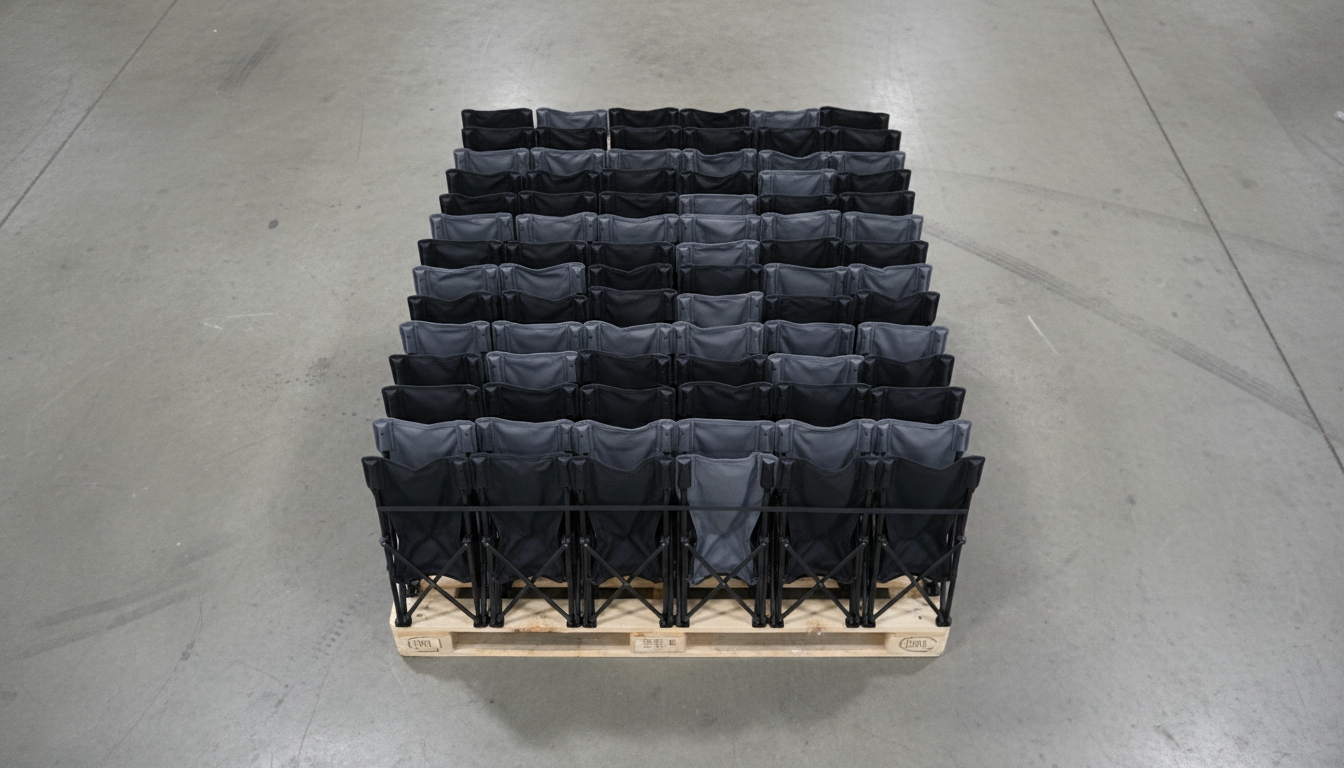
Consider the packed footprint. A kit for 10 people should stack efficiently. If a chair packs to 5" x 14" x 5" and a table to 5" x 30" x 30", they may not palletize well together. We recommend sourcing from suppliers who design coordinated systems with matching packed dimensions. Stability is another factor. A low-back, lighter chair can tip if users lean back at a table; ensure your chair has a sufficient footprint or rear leg angle. For a deeper dive on table procurement, see our guide on selecting small foldable camping tables.
A 5-Step Procurement Framework for Bulk Orders of Collapsible Chair Camping Gear
Use this framework to evaluate any collapsible chair camping offering for your commercial needs. This moves beyond simple price-per-unit.
How to Procure Commercial Chairs: 5-Step Summary
- Define the User & Environment: Is this for festival rentals (mud, sand), corporate events (paved surfaces), or resale? Document expected cycles per year and storage conditions.
- Set Minimum Material Specifications: Frame: Aluminum or powder-coated steel (min 1mm thickness). Fabric: 600D+ Oxford with PU coating and UV treatment. Joints: Reinforced pivots with metal pins.
- Calculate Total Cost of Ownership (TCO): Formula: (Unit Cost + (Replacement Cost * Expected # of Replacements)) / Projected Lifespan in Years. Budget chairs often have a higher 3-year TCO.
- Audit Logistics & Storage: Calculate cubic volume per 100 chairs. A difference of 0.5" in packed width can change pallet counts significantly, affecting shipping costs.
- Order & Validate a Sample Batch: Purchase 5–10 units. Conduct a stress test: 50 open/close cycles, leave in sun for 72 hours, apply 250 lbs of weight. Inspect for the failure points outlined above.
This framework forces a holistic view. For instance, a heavier steel chair might cost less upfront and last longer, but if you're shipping 1,000 chairs cross-country, the freight savings from aluminum could offset its higher price within two shipments.
Need samples or custom specs for your outdoor product line?
Request a Sample Kit →Aluminum vs. Steel: The Commercial Buyer's Trade-Off Analysis
This is the central decision for bulk buyers. Here’s a data-driven comparison based on our production and client feedback.
Production Data: Frame Material Performance
| Metric | Anodized Aluminum Frame (e.g., 7001-T6) | Powder-Coated Steel Frame (16mm) | Ideal Commercial Use Case |
|---|---|---|---|
| Avg. Chair Weight | 3.2 – 3.8 lbs | 4.5 – 5.5 lbs | Aluminum: Frequent transport, weight-sensitive logistics. |
| Material Cost Premium | 15 – 20% higher | Baseline | Steel: Fixed-location rentals, highest durability demand. |
| Expected Lifespan (Commercial) | 4 – 5 years | 5 – 7 years | Steel: Longer lifespan justifies weight for static use. |
| Packed Size (Typical) | ~350 cu in | ~400 cu in | Aluminum: Maximizes storage density for large fleets. |
| Failure Mode | Tube denting under extreme point load | Coating wear, potential rust at scratches | Both require inspection for damage at hinge points. |
The breakeven point for choosing aluminum often comes down to shipping frequency. If you’re moving your chair fleet more than 4 times a year, the cumulative freight savings from the lighter weight will likely justify the higher upfront cost within 2–3 years.
Case Study: Sourcing 500 Chairs for a Corporate Outdoor Event Series
A client needed 500 chairs for a summer series of 10 outdoor networking events. Their initial RFP focused on unit cost under $30. We applied our framework, demonstrating that a portable chair small enough for easy staff handling was critical, but durability was paramount for brand perception.
We proposed two options: a budget steel chair at $27.50 and our upgraded aluminum chair at $39.99. The TCO analysis was revealing. The budget chair had a 40% predicted failure rate over one season (200 chairs replaced at $27.50 = $5,500). The aluminum chair had a 10% predicted failure rate (50 chairs replaced at $39.99 = ~$2,000).
"The feedback was unanimous — the lighter chairs were faster for our team to deploy, and the professional appearance held up through all ten events. The initial budget was exceeded, but we saved on labor and avoided mid-season replacements." — Event Operations Director, National Tech Conference
The client chose the aluminum chairs. The total first-year cost was $21,995 (500 x $39.99) + $2,000 (replacements) = $23,995. The budget option would have been $13,750 (500 x $27.50) + $5,500 (replacements) + estimated $1,500 (extra labor for handling heavier chairs) = $20,750. The premium for aluminum was ~$3,245, but it provided better user experience, brand image, and a fleet with higher residual value. This case underscores why the cheapest small foldable camping chair is rarely the most economical for commercial scale.
When a Small Foldable Camping Chair Isn't the Right Choice
This guide advocates for compact chairs, but they have limitations. For all-day seating at multi-day corporate retreats, a low back chair outdoor may lack the lumbar support needed for 8-hour days, leading to attendee discomfort. In these scenarios, a higher-back festival chair or a fully ergonomic model is better, even if it sacrifices some portability.
Similarly, for ultra-high-weight-capacity requirements (consistently over 300 lbs), the engineering needed for a truly compact fold often forces a heavier, bulkier design. In these cases, a slightly larger, more robust chair is the safer and more durable choice. The key is to match the product to the user profile, not just the logistics spreadsheet.
Implementation Timeline for 2026 Procurement
To action this guide for your next buying cycle, follow this 8-week timeline. Start with internal stakeholder meetings to define user profiles (Weeks 1-2). Then, develop your minimum specification sheet based on the material guidelines above (Week 3). Source 3–5 supplier samples, including options from our commercial folding chairs range (Weeks 4-5). Conduct your in-house stress test (Week 6). Analyze TCO and negotiate final pricing with your top two contenders (Week 7). Place a pilot order of 50–100 units for a final real-world trial before the full bulk commitment (Week 8). This phased approach de-risks a significant capital expenditure and ensures your chosen small foldable camping chair delivers on both cost and performance for years to come.
Frequently Asked Questions
What is the breakeven point for aluminum vs steel frames in a rental fleet?
The breakeven depends on shipping frequency. Aluminum frames (e.g., 7001-T6) cost 15-20% more upfront but save ~30% on weight. If you move your fleet more than 4 times a year, the cumulative freight savings typically justify the aluminum premium within 2-3 years, based on internal production data from 500+ jobs.
What fabric specification prevents the most common 65% failure rate?
To prevent stitching abrasion at pivot points—the source of 65% of failures—specify 600D or higher Oxford fabric with bar-tacked stitching and PU coating. This combination, versus standard 300D fabric, extends fabric life by 2-3 seasons under commercial UV and abrasion stress.
When does a premium compact chair become cheaper than a standard model for events?
A premium chair (e.g., $39.99 aluminum model) becomes cheaper than a standard $27.50 chair when failure rates differ. In a case study, the budget chair had a 40% failure rate vs 10% for premium. For 500 chairs, the premium option's total first-year cost was only ~$3,245 higher, saving on labor and replacements.
What packed size should I budget for warehouse storage of 100 chairs?
Budget approximately 400 cubic inches per chair for steel frames and 350 cubic inches for aluminum. A difference of 0.5 inches in packed width can significantly alter pallet counts. For 100 chairs, this translates to a storage footprint difference of several cubic feet, directly impacting warehousing costs.