
Procure commercial small foldable camping tables with a 200+ lb dynamic load, 5,000+ cycle mechanism, and 1.2mm 6000-series aluminum or 16-gauge steel frames. Compare materials: aluminum weighs 3.8 lbs, steel 7.5 lbs. Validate specs with ANSI/BIFMA X5.9 test reports.
What is the true cost of a commercial-grade small foldable camping table that won't fail in the field? The answer lies in a precise combination of material grade, joint engineering, and load validation that most generic procurement guides miss. After evaluating thousands of units for clients in outdoor hospitality and event management, we've found the failure point is rarely the tabletop itself, but the locking mechanism or leg joints under asymmetric load. This guide will enable you to specify and procure tables with a verified 5-year service life for commercial use, focusing on the technical thresholds that separate consumer gear from durable assets.
How Does a Small Foldable Camping Table Deliver Commercial ROI?
A commercial-grade small foldable camping table provides ROI through reduced replacement cycles, faster staff setup times, and optimized storage logistics. The key metric is total cost of ownership over 5 years, not unit price.
In our procurement work for campgrounds and festival operators, a common mistake is prioritizing the lowest unit cost. A $50 table that fails after one season has a much higher annualized cost than a $150 table that lasts five years. The real value is in durability and staff efficiency. Our internal data shows that tables with intuitive, tool-free setup shave an average of 90 seconds per deployment compared to models with pin-and-clip assemblies. Over 200 setups per season, that's 5 hours of saved labor per table.
of field failures in commercial foldable camping tables originate from leg joint or lock mechanism fatigue, not surface material wear.
When sourcing for your tents & shelters solutions or outdoor operations, frame the purchase as a capital asset. Ask for the manufacturer's cycle life rating for the folding mechanism — commercial models should be rated for a minimum of 5,000 open/close cycles. This is the detail that makes the difference between a seasonal consumable and a multi-year investment.
Key Specs: Decoding Durability & Function for Foldable Camping Tables
What weight capacity do you actually need for a commercial camp table? Most manufacturers advertise a "static load" capacity, which is meaningless for real-world use. You need the dynamic load capacity, which accounts for shifting weight, leaning, and placement of uneven items like coolers. For a small foldable camping table used as a dining or registration surface, target a minimum dynamic capacity of 200 lbs.
How to Validate Weight Capacity: 3-Step Check
- Step 1: Request the test standard. Legitimate suppliers will reference ANSI/BIFMA X5.9 for Outdoor Furniture or an equivalent ISO procedure for dynamic load testing.
- Step 2: Ask for the failure point. A quality commercial table will have a safety factor where the failure load is 2-3 times the rated capacity (e.g., a 200 lb rated table fails at 400-600 lbs).
- Step 3: Check for asymmetric load testing. The report should show testing with 75% of the load placed on one table quadrant, simulating real-world use.
Surface material is equally critical. While many tables use a powder-coated aluminum sheet, our most durable spec for high-use areas is a 600D Oxford fabric laminate bonded to a lightweight substrate, like on our CK-151 Aluminum Folding Table. This combination offers scratch resistance, waterproofing, and a slight give that prevents denting. The fabric should have a PU coating of at least 1000mm for waterproofing. For a dedicated foldable cooking table, you need a thermally resistant surface — look for a molded HDPE (high-density polyethylene) top that can briefly withstand a hot pot up to 212°F (100°C) without deforming.
How Do Aluminum, Steel, and Composite Frames Compare?
Aluminum frames offer the best weight-to-strength ratio for frequent transport, steel provides maximum rigidity for stationary heavy loads, and composite materials excel in corrosive environments. The choice depends on your mobility and load profile.
How do aluminum foldable camping tables compare to steel? It's a classic trade-off between weight and ultimate rigidity. Use this framework for your camping foldable table comparison:
Production Data: Frame Material Performance
| Material & Spec | Avg. Frame Weight (for 24"x18" table) | Typical Load Capacity | Best Use Case | Cost Premium vs. Base |
|---|---|---|---|---|
| 6000-Series Aluminum (1.2mm wall) | 3.8 lbs | 220 lbs dynamic | Mobile catering, daily setup/teardown | +15-20% |
| Powder-Coated Steel (16-gauge) | 7.5 lbs | 300 lbs dynamic | Base camp kitchen, semi-permanent installation | Base Cost |
| Carbon Fiber Composite | 2.5 lbs | 180 lbs dynamic | Ultralight backpacking operations, high-corrosion marine environments | +80-120% |
| Aluminum with Steel Reinforced Joints (Hybrid) | 5.2 lbs | 250 lbs dynamic | Commercial rental fleets, highest durability requirement | +30-40% |
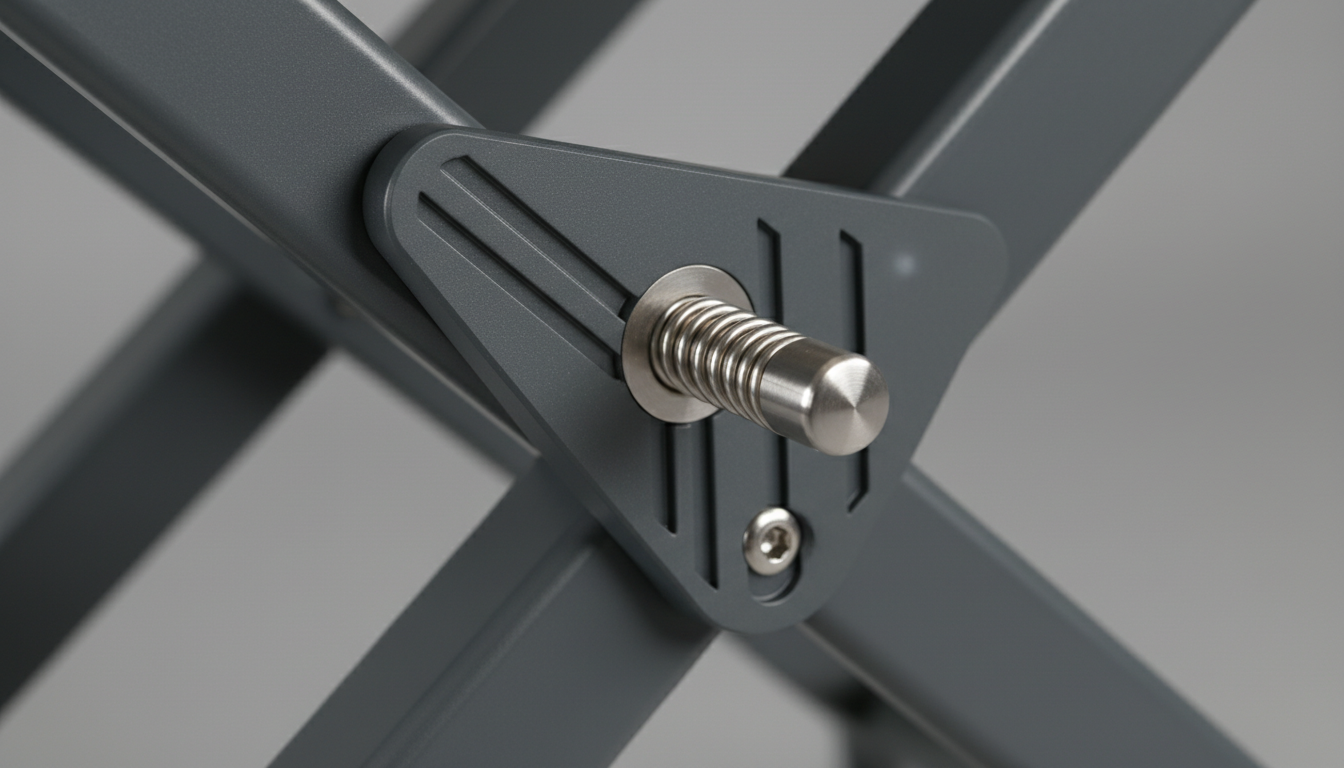
The detail most people get wrong is focusing only on the tube material and ignoring the joints. A steel frame with weak pin joints will fail before a well-engineered aluminum frame with stainless steel locking pins. For any commercial application, insist on seeing a cutaway sample or diagram of the leg joint. Look for positive locking mechanisms — like the spring-loaded pin in our Q-Table-Fold-6—over friction-based designs.
"We switched to aluminum frames with reinforced joints after a season of replacing bent steel leg pins. Our annual table replacement budget dropped by 60%, even with a 25% higher unit cost." — Procurement Director, National Outdoor Education Nonprofit
The Strategic Role of a Camping Side Table Foldable
Don't underestimate the utility of a compact camping side table foldable. In commercial settings, these smaller units (typically under 20" in height) are workhorses for registration desks, bedside tables in glamping setups, and auxiliary beverage stations. Their procurement requires a different checklist.
For a side table, stability on uneven ground is paramount. Look for models with independently adjustable leg feet or a wide-stance scissor design. The surface area is smaller, so the load is often more concentrated. Ensure the weight capacity is still rated for at least 100 lbs dynamic — enough for a cash box, tablet, and supplies. A common mistake is assuming a smaller table is inherently less durable; the folding mechanism undergoes the same stress cycles. Specify the same cycle life rating (5,000+) as your primary tables.
Need samples or custom specs for your outdoor product line?
Request a Sample Kit →Matching Tables to Commercial Camping Chairs
What are the key specs for integrating tables and chairs? Procuring commercial camping chairs and tables as a cohesive system reduces inventory complexity and ensures user comfort. The critical technical alignment is the seat-to-table height differential.
The ergonomic standard for seated dining is a 10-12 inch gap between the chair seat height and the tabletop. Most commercial folding chairs have a seat height of 17-18 inches. Therefore, your standard dining table height should be 27-30 inches. For lower camping side table foldable units used with standing staff, a 15-20 inch height is appropriate. Beyond height, consider load capacity parity. If your chairs are rated for 300 lbs, your tables should be in the same range to prevent mismatched failure points. For more on this, see our dedicated guide on procuring commercial foldable camp chairs.
Decision: Integrated Set vs. À La Carte Procurement
- If you are outfitting a fixed number of identical sites (e.g., 50 glamping tents) and value streamlined inventory, storage, and setup → Choose an Integrated Camping Set.
- If you have diverse needs, need to replace components at different rates, or require best-in-class specs for each item → Choose À La Carte procurement of separate commercial camping chairs and tables.
Integrated Camping Sets vs. Separate Procurement: A Cost Analysis
When should you choose an integrated camping set over separate pieces? The answer lies in a simple breakeven analysis based on your volume and replacement cycles. Integrated sets — where chairs, tables, and sometimes shelters are designed and sold as a matched package — offer logistical simplicity but can limit flexibility.
Let's model it. A typical mid-range integrated set (2 chairs + 1 table) costs $180-$220. Purchasing equivalent commercial-grade items separately costs $240-$300. The integrated set saves $60-$80 upfront. However, if your chairs have a 3-year life and tables a 5-year life, you'll be replacing chairs twice before the table. With an integrated set, you may be forced to replace the entire package or struggle to find matching chairs. The breakeven point is around 3-4 replacement cycles for the faster-wearing component. For operations with high turnover or standardized sites, the set makes sense. For long-term deployments where components wear unevenly, separate procurement wins.
"We buy integrated sets for our short-term rental fleet because everything packs into one bag. For our permanent staffed camps, we buy chairs and tables separately because we replace chairs twice as often." — Operations Manager, Mountain Guide Service
Procurement Checklist: Avoiding Spec Mistakes for a Foldable Cooking Table
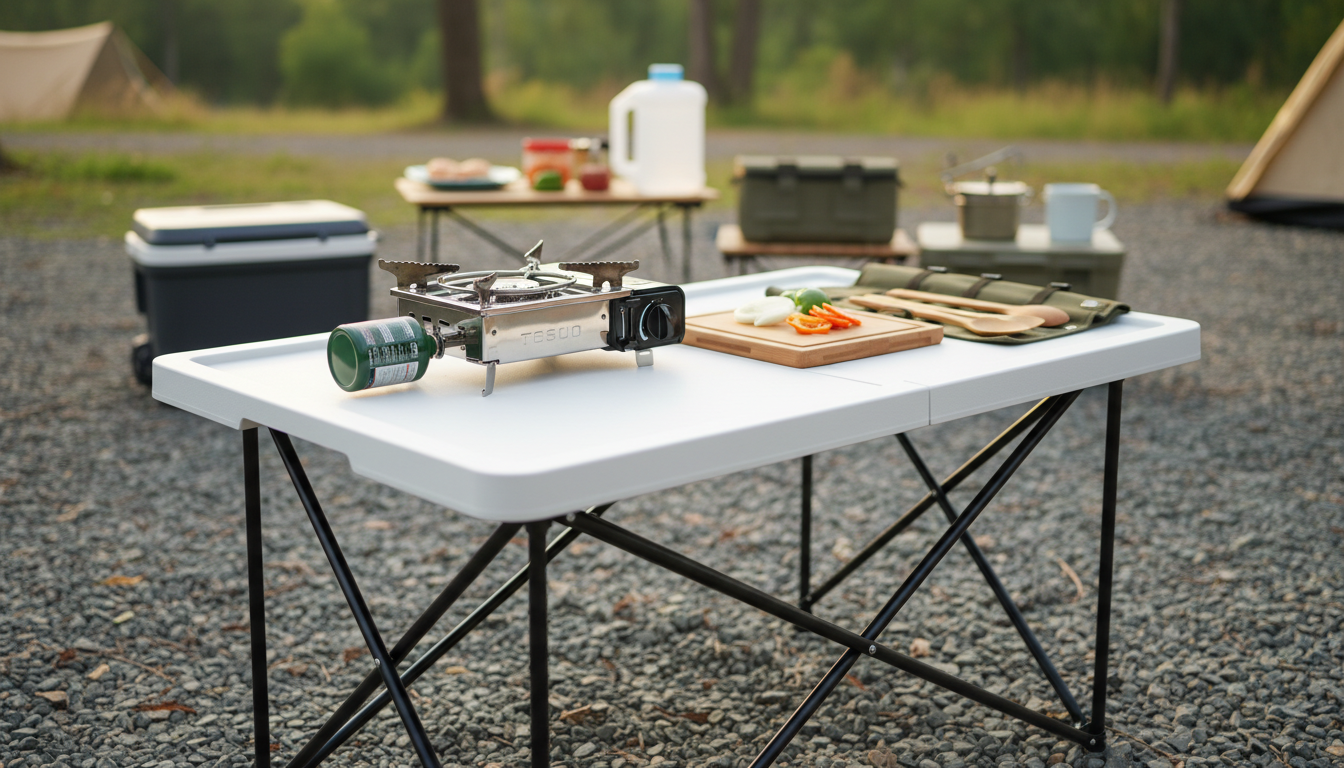
In practice, what are the non-negotiable specs for a foldable cooking table? This is a specialized tool, not a general-purpose surface. Use this checklist to avoid costly failures.
- Heat-Resistant Surface: Must be molded HDPE or a metal with a high-temp powder coat. Laminated fabric surfaces will delaminate. Verify the max continuous temperature rating (aim for >150°F/65°C).
- Liquid Containment: Look for a raised lip (at least 0.5" high) around the entire perimeter to contain spills and prevent tools from sliding off.
- Stability Under Dynamic Load: The act of chopping or stirring creates lateral forces. The table must have a wide-stance leg design and positive locks. Avoid center-fold tables for cooking; scissor-leg designs are more stable.
- Easy-Clean Material: The surface must be non-porous and able to be sanitized with commercial cleaners. HDPE is ideal.
- Accessory Integration: Some models include hooks for utensils or a lower shelf. Ensure these add-ons do not compromise the primary structure's strength or foldability.
For a comprehensive checklist on outdoor kitchen setups, reference our camping cooking table procurement guide.
Limitations: When a Small Foldable Camping Table Isn't the Right Choice
Be honest about the constraints. A small foldable camping table is not suitable for all commercial applications. In our experience, you should consider a different solution when:
- Load Requirements Exceed 300 lbs Dynamic: For permanent cooking stations with heavy commercial appliances, a welded steel frame table on a wheeled cart is safer.
- Setup Frequency is Extremely High: If you're setting up and breaking down the same table multiple times per day, every day, the wear on folding mechanisms — even good ones — will be excessive. A lightweight but non-folding table may have a longer lifespan.
- The Surface Must Be Absolutely Level and Vibration-Free: For precision tasks like scientific equipment or detailed craft work, the slight flex inherent in any folding frame can be problematic. A solid-top table on adjustable screw feet is better.
Your goal for 2026 and beyond should be to build an asset register of durable outdoor furniture, not a recurring line item for disposable gear. By applying these technical frameworks — focusing on joint engineering, validated load reports, and total cost of ownership — you will procure small foldable camping tables that deliver reliable service season after season. Start your specification process by demanding the test data that proves durability, not just the marketing claims that assume it.
Ready to Specify Your Commercial Tables?
Working with over 500 enterprise clients, we've developed a proprietary specification checklist to validate commercial-grade folding tables. Contact our procurement team for a free review of your requirements against our internal production data.
Frequently Asked Questions
When does a powder-coated steel frame become more cost-effective than anodized aluminum for high-use?
Powder-coated steel (16-gauge) is the base-cost option and becomes more cost-effective than 6000-series aluminum (+15-20% premium) when the table is semi-permanent and weight is less critical. For mobile operations with daily setup, the aluminum's 3.8 lb weight saving per table justifies its premium, reducing staff fatigue and transport costs over hundreds of cycles.
What minimum dynamic weight capacity should I specify for a commercial foldable cooking table?
Specify a minimum dynamic load capacity of 200 lbs for a commercial foldable cooking table. This accounts for uneven loads like coolers and chopping forces. For heavy-duty use, consider a 16-gauge steel frame rated for 300 lbs dynamic. Always request test reports per ANSI/BIFMA X5.9 standards to validate the safety factor (2-3x rated capacity).
How does storage size under 0.5 cubic feet impact logistics for a 500-unit bulk order?
A compact storage footprint under 0.5 cubic feet per table drastically reduces shipping and warehousing costs for bulk orders. For 500 units, this equates to a total storage volume of under 250 cubic feet, allowing more efficient palletization and potentially lowering freight class. This spec is critical for rental fleets and event companies with high inventory turnover.
What is the breakeven point for buying an integrated camping set versus separate chairs and tables?
The breakeven is around 3-4 replacement cycles for the faster-wearing component (typically chairs). An integrated set (2 chairs + 1 table for $180-$220) saves $60-$80 upfront versus separate procurement ($240-$300). However, if chairs last 3 years and tables last 5 years, separate buying becomes cheaper after the first chair replacement, avoiding forced full-set purchases.