
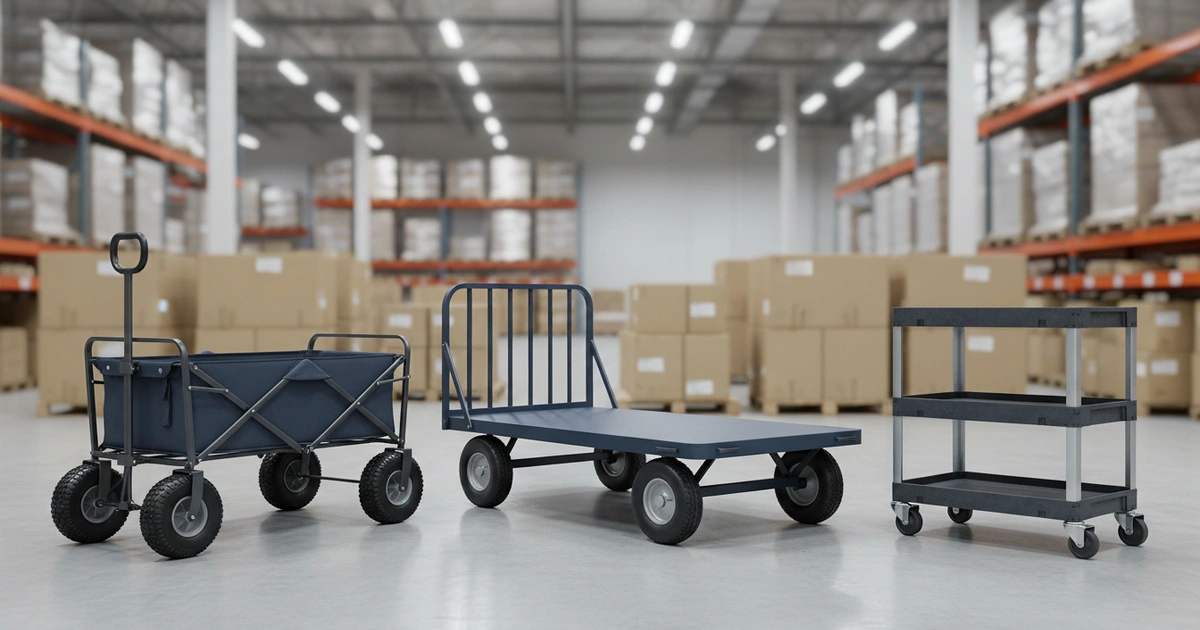
Outdoor wagons fail FBA when folded size, wheel type, and load rating go unchecked. The Q-WAGON-OT folds to 35.5" x 19.5" x 13" and rates up to 150 lbs.
Costly FBA rejections and returns hit outdoor wagons hard when folded carton size and load rating go unverified. This guide shows retail buyers how to source outdoor wagons on documented specs, not photos.
What Are Outdoor Wagons and Why Do Specs Decide Reorders?
Outdoor wagons are collapsible carts built to haul gear across sand, gravel, and grass. They are defined as folding utilities with a frame, fabric body, and wheel set. Buyers care because three outcomes decide profit: FBA survival, sell-through, and replenishment speed.
Each outcome tracks a spec. Folded size drives carton planning. Wheel type drives terrain use. Load rating drives returns. Our outdoor accessories solutions team sees this pattern across every bulk order.
The Q-WAGON-OT all-terrain wagon folds to 35.5" x 19.5" x 13" and uses off-terrain wheels with a high-strength steel frame and anti-rust coating. That combination of off-terrain wheel spec and folded dimension is what lets a buyer plan FBA cartons with confidence.
Stroller Wagon vs Utility Wagon: Which Fits Your Catalog?
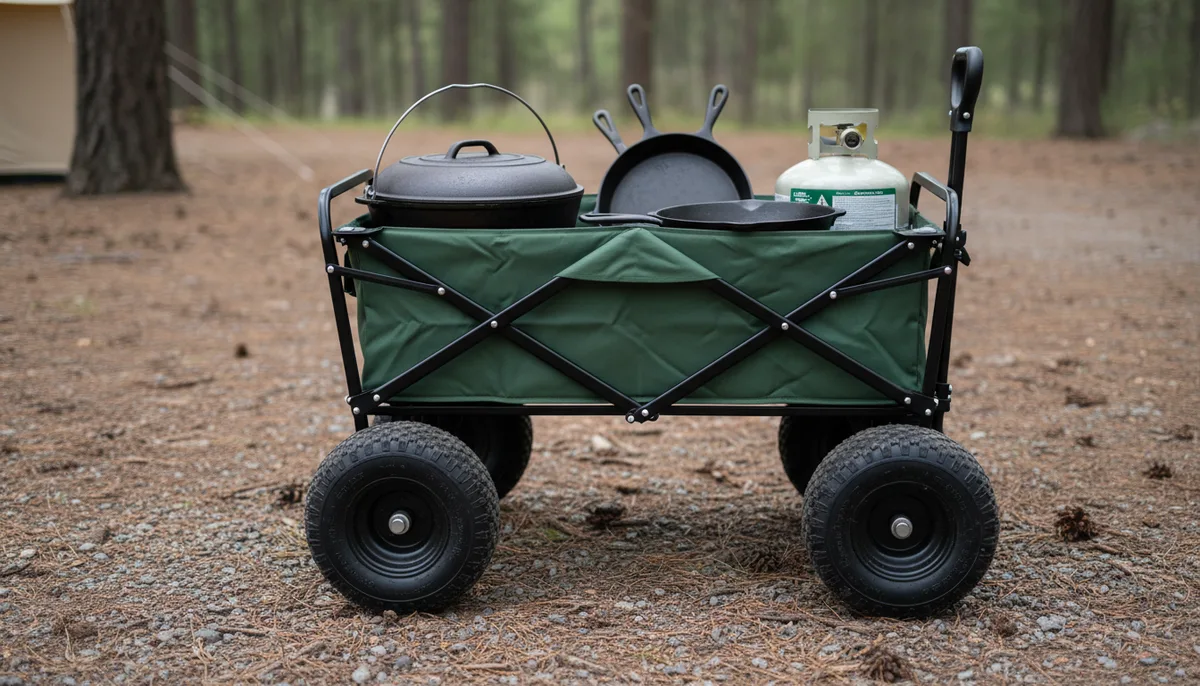
A stroller wagon is a fixed-frame cart built for child transport and tight steering. A folding utility wagon is a collapsible cart built for gear hauling and higher payload. The stroller wagon wins on maneuverability, while the folding utility wagon wins on load capacity and storage.
Utility wagons in the WFS line carry up to 150 lbs with adjustable handles and 360-degree swivel wheels. Stroller wagons prioritize steering over payload, so their rated capacity is often lower. Compared to a stroller wagon, a folding utility wagon stores flat and ships in a smaller carton.
On the other hand, a stroller wagon is more suitable for family-focused catalogs where safety harnesses and seating matter. The trade-off is that its fixed frame is a drawback for tight storage. Buyers stocking both should split them into separate SKUs.
| Wagon Type | Wheel Type | Load Capacity | Folded Size | Primary Use |
|---|---|---|---|---|
| Stroller wagon | Fixed hard wheels | Lower payload | Fixed frame, larger | Child transport |
| Folding utility wagon | Standard hard wheels | Up to 150 lbs | Collapses flat | Gear hauling |
| All-terrain/beach wagon | Off-terrain / pneumatic | Up to 150 lbs | 35.5" x 19.5" x 13" | Sand, gravel, camping |
Pneumatic Wheels Beach Wagons vs Standard Wheels: Cost and Performance
Pneumatic wheels beach wagons are carts fitted with air-filled tires that improve flotation and shock absorption on sand and gravel. Standard hard wheels are lighter and cheaper but sink in loose sand. For beach-heavy catalogs, pneumatic tires reduce returns tied to stuck or dragging carts.
Pneumatic tires improve flotation on sand and uneven terrain. That matters because soft ground is where cheap wheels fail first. Our off-terrain wheels on the Q-WAGON-OT are built for rugged environments like beaches, trails, and gravel lots.
Compared to standard wheels, pneumatic tires need pressure checks and carry a higher unit cost. Standard wheels, on the other hand, need almost no upkeep and suit paved or packed surfaces. The right pick depends on your customer's terrain, not your price sheet.
For a deeper look at beach-ready builds, see our guide to best folding beach wagons for FBA.
What Should Procurement Specify When Ordering Outdoor Wagons in Bulk?
Bulk outdoor wagons require a written spec sheet before any purchase order. Frame material, fabric treatment, wheel type, folded size, handle type. Load rating each map to an FBA or return outcome. Missing any line invites a costly surprise.
How to spec outdoor wagons in bulk: 5-step summary
- Step 1: Confirm frame spec — high-strength steel with anti-rust coating for heavy-duty use.
- Step 2: Confirm fabric — wear-resistant, waterproof, sun-proof Oxford.
- Step 3: Confirm wheel type — off-terrain or pneumatic for sand, standard for paved use.
- Step 4: Confirm folded dimensions for carton planning (Q-WAGON-OT: 35.5" x 19.5" x 13").
- Step 5: Confirm load rating — WFS wagons rate up to 150 lbs.
Chris Nakamura, our outdoor recreation product manager, notes that the folded carton size is the single most overlooked line. A wagon that fails carton rules never reaches a customer. The steel frame with anti-rust coating and the waterproof Oxford fabric together set the real durability ceiling.
Need samples or custom specs for your outdoor product line?
Request a Sample Kit →How Does Camping Table Load Capacity Affect Wagon Selection?
Camping table load capacity is the rated weight a table holds. It must be matched to wagon payload when buyers stock both. If a customer loads a table plus cooking gear into one wagon, the combined weight can exceed a light cart's limit.
Match the wagon load rating to the combined table and gear weight. WFS wagons rate up to 150 lbs, which covers most tables plus cookware for a family trip. Under-speccing here is a common cause of returns.
Our portable camping tables for FBA guide covers table ratings in detail. Buyers who stock a portable table for outdoor cooking should treat the wagon as the load carrier for the whole kit.
However, while a bigger wagon carries more, it also folds larger. That trade-off matters for carton limits. Some models add mesh cup holders and side tables, which raise appeal but add folded bulk.
Real-World Durability: Wagon Maintenance and Storage Insights
Wagon maintenance is the set of care steps that extend cart life and cut warranty exposure. Cleaning wheels, checking tire pressure, and drying fabric before folding are the three highest-value habits. These steps are simple but rarely documented for buyers.
Pneumatic tires require pressure checks, whereas standard wheels do not. An anti-rust coated steel frame benefits from dry storage. Collapsible design also reduces storage footprint, which helps both sellers and end users.
Chris Nakamura explains that our support team shares usage instructions and care tips to maximize lifespan. That guidance covers wagons, chairs, cots, tables, and stools. Most common problems trace to wet storage and unchecked tires, not to frame failure.
When Outdoor Wagons Are Not Ideal for Your Catalog
This approach is not ideal for very low-volume sellers who cannot justify carton minimums. The main drawback is that bulk economics favor buyers who can commit to steady reorders. Consider instead a smaller mixed pallet if your first order is a test.
A fixed-frame stroller wagon won't work for buyers short on warehouse space. That frame is a real limitation for tight storage. It may not be the best choice if your customers mostly haul gear rather than children.
Compared to a wagon, a bike accessory retailer's core items suit a narrower buyer. A portable table or bike accessory may be more suitable for niche catalogs. Although wagons sell broadly, the right fit depends on order volume and your customer's terrain.
Get Started with Outdoor Wagons: Your Procurement Next Step
Get Started with Outdoor Wagons: Your Procurement Next Step refers to outdoor wagons reward buyers who buy on specs, not photos. The decision sequence is simple: wagon type, wheel system, load capacity, then material spec and maintenance plan. Each step maps to an FBA or return outcome.
As of 2026, buyers are shifting toward documented spec sheets and away from listing-page claims. In 2026, the market for folding wagons is forecast to keep growing. Pneumatic tires are anticipated to gain share in beach-focused catalogs.
The outdoor wagons and carts market was valued at USD 1. 390.43 million in 2024 and is projected to reach USD 2,173.02 million by 2032, per Verified Market Research.
Cost varies by wheel type, frame, and load rating, so no single figure fits all orders. Buyers should also build a camping outdoor product catalog that lists each wagon's folded size and load rating beside its price.
For related reading, see our utility wagons guide and our outdoor shelter terms comparison.
Ready to source outdoor wagons that survive FBA inspection? Contact us to request a quote and get started with a spec-first wagon line.
Frequently Asked Questions
How does the choice of pneumatic wheels affect the total cost of ownership for beach wagons?
Pneumatic tires raise unit cost and add pressure-check maintenance, but they improve flotation on sand and gravel, which reduces returns tied to stuck or dragging carts. Standard hard wheels cost less and need almost no upkeep, yet they sink in loose sand. The right pick depends on your customer's terrain, not your price sheet.
What is the breakeven point for purchasing heavy-duty outdoor wagons versus standard folding wagons?
There is no single universal breakeven figure, because it depends on your order volume, wheel type, and frame spec. Heavy-duty wagons such as the Q-WAGON-OT carry a higher unit cost but cut returns on rough terrain. Standard folding wagons suit paved or packed surfaces. Buyers should model breakeven against their own reorder cadence and return history.
What should procurement directors specify when ordering outdoor wagons in bulk?
Require a written spec sheet covering frame material (high-strength steel with anti-rust coating), fabric (wear-resistant, waterproof, sun-proof Oxford), wheel type (off-terrain or pneumatic for sand), folded dimensions for carton planning, and load rating. The Q-WAGON-OT folds to 35.5" x 19.5" x 13" and WFS wagons rate up to 150 lbs. Missing any line invites a costly surprise.
How does camping table load capacity influence the selection of a portable table for outdoor cooking?
Camping table load capacity is the rated weight a table holds, and it must be matched to wagon payload when buyers stock both. If a customer loads a table plus cooking gear into one wagon, the combined weight can exceed a light cart's limit. WFS wagons rate up to 150 lbs, which covers most tables plus cookware for a family trip.
What are the key outdoor shelter terms to include in a camping outdoor product catalog?
A camping outdoor product catalog should list each wagon's folded size and load rating beside its price, and use consistent outdoor shelter terms across listings. Buyers comparing outdoor shelter terms should standardize vocabulary for tents, canopies, and wagons so search and AI extraction stay accurate. See our outdoor shelter terms comparison for a full list.