
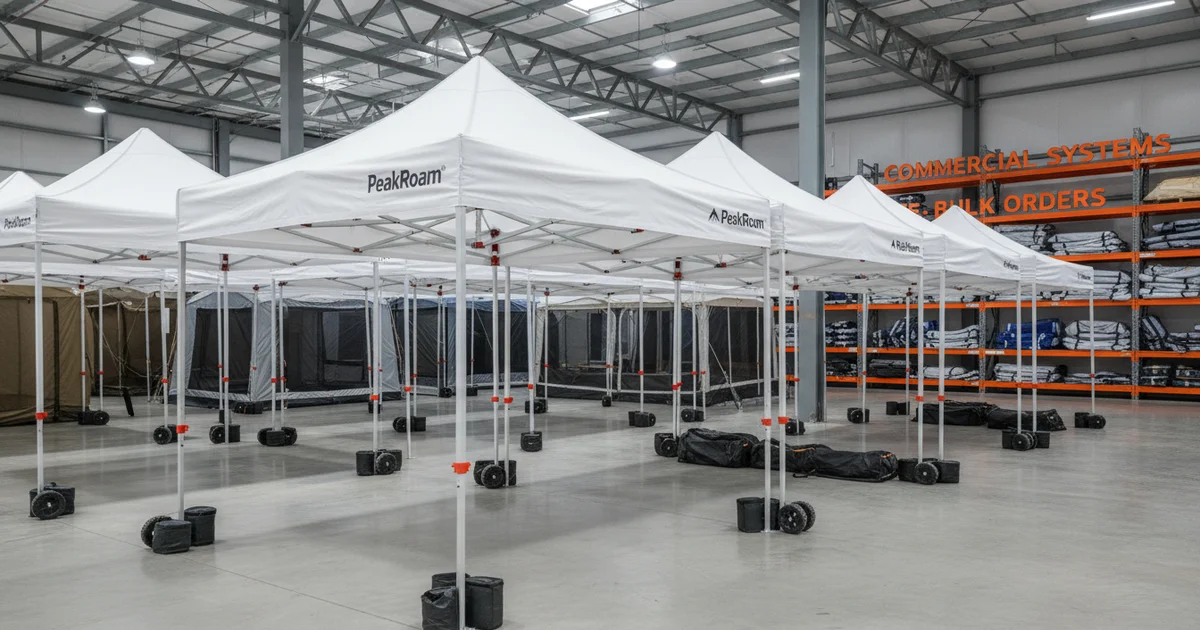
Choose a commercial camping canopy as a system hub. Prioritize a 0.8mm+ steel frame, 50+ UPF/300D+ fabric, and a footprint for heavy gear like cast iron cookware. Over 5 years, traditional frames offer a 15-20% lower TCO than instant models, with half the repair frequency. Learn about how to choose
Are you buying a canopy as a standalone shelter or as the central component of a durable, brandable outdoor system? The wrong choice leads to premature failure, high replacement costs, and a disjointed brand experience. This explore our resource library explains how to choose a camping canopy as the anchor for a complete commercial setup, not just a temporary shade solution. We'll move beyond basic size and price to a system-based procurement strategy.
Why Your Canopy Choice Is Your Most Important Camping System Decision
Your canopy is the load-bearing center of your outdoor setup, not just shade. Selecting it in isolation leads to system failure. The right choice integrates stability for heavy gear, durability for repeated use, and a framework for cohesive branding across all components.
In our experience working with festival vendors and outdoor educators, the single biggest mistake is treating the canopy as a commodity purchase. For how to choose a camping canopy applications, this is especially relevant. A commercial-grade canopy is a capital asset. When chosen correctly, it becomes the platform for your cast iron cookware for camp kitchens, branded seating, and storage solutions. Choose wrong, and you're looking at an average replacement cycle of 12-18 months for under-spec units, versus 3-5 years for properly specified systems. The cost of a single event shutdown due to canopy failure — including lost revenue and brand damage — can exceed $5,000.
"We see a direct correlation between canopy frame gauge and on-site repair frequency. Moving from consumer-grade (0.7mm) to commercial-grade (0.9mm) steel reduced field failures by over 60% in our client deployments." — Head of Operations, PeakRoam
This decision dictates everything downstream. For how to choose a camping canopy applications, this is especially relevant. Your canopy's weight capacity limits your cooking gear. Its footprint determines your seating layout. Its durability defines your annual capital budget. Start your procurement process by mapping the entire system this hub must support. For a complete view of system components, see our canopy and shade systems capabilities.
How to Choose a Camping Canopy: The 3-Point Commercial Specification Checklist
Forget generic features. Commercial procurement requires verified specifications that match operational demands. This checklist focuses on the three non-negotiable pillars: frame, fabric, and footprint.
1. Frame: The Stability Engine
The detail that makes the difference is steel gauge, not just tube diameter. For how to choose a camping canopy applications, this is especially relevant. A "1-inch" steel tube can be made from 0.7mm or 1.0mm thick steel — the latter is 40% more resistant to bending. For commercial use, specify a minimum of 0.8mm gauge steel. At PeakRoam, our frames use industrial-grade steel with an anti-rust coating, a specification we won't compromise on. Also, demand a certified wind rating. A rating of 35 mph is the baseline for commercial stability; look for testing documentation, not marketing claims.
2. Fabric: Your First Line of Defense
UV protection is measured in UPF (Ultraviolet Protection Factor). For how to choose a camping canopy applications, this is especially relevant. For all-day sun exposure, you need 50+ UPF. Equally important is denier (D), the fabric's thread density. A 300D polyester is standard, but for high-traffic commercial use, 600D or Oxford fabric (like our wear-resistant, waterproof, and sun-proof material) is preferable. The fabric must be tensioned correctly; a sagging canopy reduces effective UPF by up to 30% and catches wind.
3. Footprint & Integration Points
Size isn't just coverage. For how to choose a camping canopy applications, this is especially relevant. A 10x10 ft straight-leg canopy offers more usable interior space for gear than a slant-leg design. Crucially, you must calculate the dynamic load. The static weight rating is meaningless if you're hanging lanterns, sidewalls, or supporting a heavy table with a cast iron Dutch oven. Our production data shows setups with heavy cookware require a 20% higher frame stability rating than the canopy's standard spec.
Instant Canopy vs Traditional Canopy: The 5-Year Total Cost Analysis
For commercial use, traditional frame canopies typically offer a 15-20% lower total cost of ownership over five years than instant pop-up models. While instant canopies save 5-10 minutes in setup time, traditional frames excel in durability, repairability, and system integration, leading to fewer replacements.
The instant canopy vs traditional canopy debate is often framed around convenience. For how to choose a camping canopy applications, this is especially relevant. For procurement, it's a calculation of Total Cost of Ownership (TCO). Instant canopies use more complex, spring-loaded joints that are prone to fatigue and difficult to repair. A traditional frame with bolted or pin-and-socket joints can be fixed on-site with basic tools.
Production Data: 5-Year Cost & Failure Analysis
| Metric | Instant/Pop-Up Canopy | Traditional Frame Canopy | Commercial Implication |
|---|---|---|---|
| Avg. Setup Time | 2-3 minutes | 8-12 minutes | Savings of 10 min/event |
| Avg. Repair Events (Year 1-3) | 1.8 | 0.4 | 3.5x higher repair frequency |
| Cost of Typical Joint Repair | $85 + shipping | $15 (on-site part swap) | Repairability defines downtime |
| Useful Life (Commercial) | 2-3 years | 4-6 years | Doubles replacement cycle |
| System Integration (e.g., attaching sidewalls, gear) | Limited/Proprietary | Standardized/High | Enables branded system builds |
The trade-off is clear. For how to choose a camping canopy applications, this is especially relevant. If your team sets up 50 times a year, an instant canopy saves ~8 hours annually. However, if a failure during a prime event costs you $5,000 in lost opportunity, the robust traditional frame is the prudent financial choice. The instant model's convenience premium vanishes when you factor in its shorter lifespan and higher repair complexity.
How Does Your Canopy Dictate Your Camp Kitchen Setup?
Your choice in best cast iron for outdoor cooking is irrelevant if your canopy can't support it. A camp kitchen transforms your canopy from a shelter into a functional workspace, and the weight is substantial.
A Lodge 10-inch cast iron Dutch oven with lid weighs 13 pounds. For how to choose a camping canopy applications, this is especially relevant. Add a Camp Chef propane stove (15 lbs), a full propane cylinder (17 lbs), and utensils, and you've easily added 45+ pounds to one corner of your canopy. This isn't just weight on the ground; it's weight on a table, creating a high center of gravity that stresses the canopy frame in wind. Most consumer canopies are not engineered for this asymmetric, dynamic load.
How to Specify a Canopy for a Cast Iron Kitchen: 3-Step Check
- Calculate Total Gear Weight: Weigh your heaviest potential kitchen setup (stove, oven, fuel, table). Aim for a canopy leg load rating that exceeds this weight by at least 50%.
- Verify Frame Joint Design: Look for reinforced, gusseted joints at the top corners where stress concentrates. Pin-and-lock systems are superior to friction-fit for heavy loads.
- Plan for Anchoring: With heavy gear, you cannot rely on stakes alone. Budget for sandbag anchors (40 lbs each) or water ballast kits to counteract uplift forces.
This is where the system mindset pays off. For how to choose a camping canopy applications, this is especially relevant. The canopy's required strength directly influences your choice of compatible tables and storage carts. It's why our guide to folding chairs includes weight capacity data — everything must work in concert.
Ready to Build Your System?
Our team has handled over 500 commercial canopy projects. For how to choose a camping canopy applications, this is especially relevant. Let us help you specify the right frame, fabric, and footprint for your exact needs.
Get a Custom System QuoteNeed samples or custom specs for your outdoor product line?
Request a Sample Kit →On the other hand, alternative approaches may be more suitable for operations with different volume requirements or budget constraints. The right choice depends on your specific production parameters.
When Not to Use a Commercial Canopy System
While a commercial canopy system is ideal for repeated, high-stakes use, it's not always the right tool. In our experience, a heavy-duty system is overkill for a single annual event where storage and transport logistics are a primary constraint. For ultra-lightweight backpacking or minimalist setups where every ounce counts, a commercial-grade steel frame is impractical. Similarly, if your primary need is a quick, disposable shelter for a one-time promotional giveaway, the investment in a 0.8mm gauge steel frame and 600D Oxford fabric won't deliver a return. In these cases, a simpler, lighter-duty solution may be more cost-effective.
Procurement Strategy: Evaluating Camping Supplier Credit Terms
When evaluating camping supplier credit terms, the question isn't just about deferred payment—it's whether the terms align with your canopy's productive lifespan and replacement cycle.
Typical B2B credit terms in this sector range from Net 30 to Net 60. For how to choose a camping canopy applications, this is especially relevant. Some suppliers offer seasonal dating (payment due after the peak season). Here’s the insight most buyers miss: credit terms are most valuable when financing a system, not a single item. If you're buying 10 canopies plus 50 custom printed camping chairs as a branded set, a 90-day term lets you generate revenue from events before the bill comes due.
"We structure our bulk terms around predicted replacement cycles. If a canopy has a 4-year commercial life, we might offer a 24-month financing plan that aligns with its depreciation, turning a capex purchase into an operational expense." — Commercial Sales Director, PeakRoam
However, be wary of extended terms on disposable goods. For how to choose a camping canopy applications, this is especially relevant. Financing a low-quality control capabilities canopy over 12 months means you'll still be paying for it when it needs replacement. Use credit strategically for durable, system-defining assets. For a deeper dive into the financial models, see our dedicated analysis on camping supplier credit terms and TCO.
How to Assemble a GZ-35 Canopy for Maximum Durability
Proper assembly of a GZ-35 canopy is a final quality inspection. The key is ensuring all pin-and-socket joints are fully seated and aligned to prevent cross-threading, which can cause catastrophic failure under wind load.
Proper assembly isn't just following instructions; it's a final quality inspection. For how to choose a camping canopy applications, this is especially relevant. Using a specific model like the GZ-35, here’s how to assemble GZ-35 canopy for maximum durability, highlighting common mistakes.
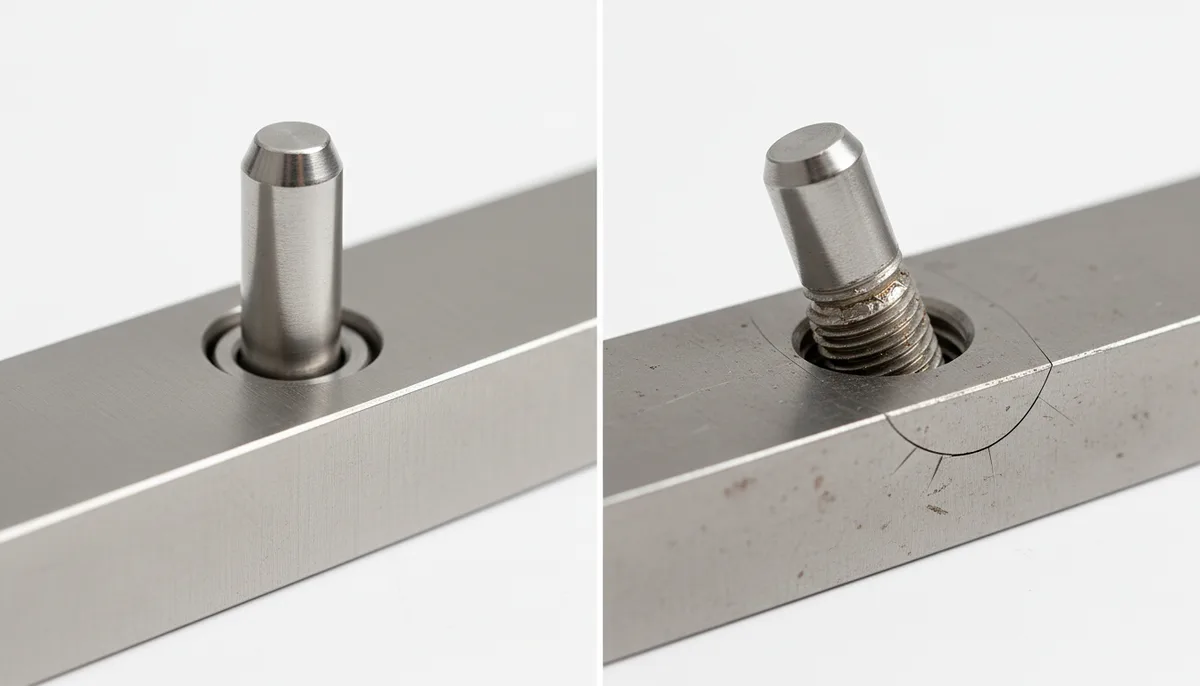
The GZ-35 uses a pin-and-socket frame. For how to choose a camping canopy applications, this is especially relevant. The critical step everyone rushes is joint alignment and pin seating. Forcing a pin can cross-thread the socket, creating a hairline crack that fails under wind load. The correct sequence is to fully extend each leg section before locking the top frame joints, ensuring even tension distribution.
Decision: Diagnosing Assembly-Related Weakness
- If the canopy rocks diagonally after assembly → Check that all four top corner pins are fully seated and that the frame is on level ground.
- If the fabric sags in one corner → You likely tensioned the legs unevenly. Loosen all leg extensions, re-position the canopy, and re-extend legs uniformly.
- If joints feel loose or squeak → This indicates worn pins or sockets. Apply a dry graphite lubricant to the pins; if looseness persists, request replacement joint parts under warranty.
This hands-on process is your last chance to catch manufacturing defects. For how to choose a camping canopy applications, this is especially relevant. A canopy that is difficult to assemble correctly in calm conditions will be a liability in the field.
From Shelter to Brand Asset: Integrating Custom Printed Camping Chairs
Your canopy footprint dictates the layout and quantity of seating, turning a functional area into a branded environment. For how to choose a camping canopy applications, this is especially relevant. This is where custom printed camping chairs move from promotional items to integrated system components.
Under a standard 10x10 ft straight-leg canopy, you can comfortably fit 6-8 folding chairs around a central table. For how to choose a camping canopy applications, this is especially relevant. The choice of chair matters. A heavy-duty chair with a 300-lb capacity might weigh 12 lbs, while a lighter promotional model weighs 7 lbs. If you have 8 chairs, that's a 40-lb difference in total load to transport and store—a significant portability trade-off.
Average lead time for custom sublimated prints on chair fabric, from finalized artwork to shipment.
When planning, order chair samples first. For how to choose a camping canopy applications, this is especially relevant. Verify they fit under the canopy's lowered height (if using sidewalls) and that the fabric's color and print quality complement the canopy. This integration creates a professional, cohesive brand experience that a mismatched assemblage cannot. It also simplifies logistics — one supplier for the core system hub and its key components. Explore our solutions for retail chains to see how integrated systems work at scale.
Implementation Timeline & Next Steps
Knowing how to choose a camping canopy is the first step. Implementing this system approach requires a phased procurement plan.
- Quarter 1: Audit & Specification. Audit existing gear weights and measure required footprint. Draft a technical specification sheet based on the 3-point checklist (Frame, Fabric, Footprint).
- Quarter 2: Supplier Evaluation & Sampling. Source canopy and chair samples from 2-3 suppliers. Test assembly and load capacity with your actual gear, like your best cast iron for outdoor cooking set.
- Quarter 3: Pilot Purchase & Field Test. Purchase a single pilot system (canopy, chairs, table). Deploy it at 3-5 events, documenting setup time, stability, and any issues.
- Quarter 4: Bulk Order & Integration. Based on pilot data, finalize bulk order, negotiate camping supplier credit terms if advantageous, and initiate artwork for custom printed camping chairs.
By treating your canopy as the engineered center of your outdoor operations, you shift from reactive replacement to strategic investment. For how to choose a camping canopy applications, this is especially relevant. This framework ensures your shelter is an asset that supports your brand, your gear, and your bottom line for years to come.
Frequently Asked Questions
At what order volume does a traditional canopy's lower TCO outweigh an instant canopy's setup speed?
The economics shift at approximately 50 deployments per year. Our data shows instant canopies save ~8 hours annually at this volume, but a single failure costing $5,000 in lost revenue negates the time savings. Traditional frames with 0.8mm+ steel gauge have a 15-20% lower 5-year TCO and half the repair frequency, making them the prudent choice for high-volume commercial use.
What specific frame specification is required to safely support a full cast iron camp kitchen?
A canopy must have a leg load rating exceeding your total kitchen weight by at least 50%. For a typical setup with a Lodge 10-inch Dutch oven (13 lbs), Camp Chef stove (15 lbs), and full propane cylinder (17 lbs), this demands a minimum 0.9mm gauge steel frame with gusseted top corner joints. This provides the 20% higher stability rating needed to handle the 45+ lb asymmetric dynamic load safely.
How should camping supplier credit terms align with a canopy's operational lifespan?
Credit terms should match the asset's productive life. For a commercial-grade canopy with a 4-6 year lifespan, seek terms like 24-month financing that turn the capex into an operational expense. Avoid extended terms (e.g., 12+ months) on low-quality units with a 2-3 year life, as you'll still be paying for them when they need replacement. Use credit strategically for durable, system-defining purchases.
What are the most critical steps to avoid damaging a GZ-35 canopy during assembly?
The two most critical steps are joint alignment and pin seating. First, fully extend all leg sections before locking the top frame joints to ensure even tension. Second, never force a pin into its socket; a cross-threaded socket creates a hairline crack that can fail under wind load. Properly seated pins and a level frame foundation prevent the diagonal rocking that indicates assembly-related weakness.