
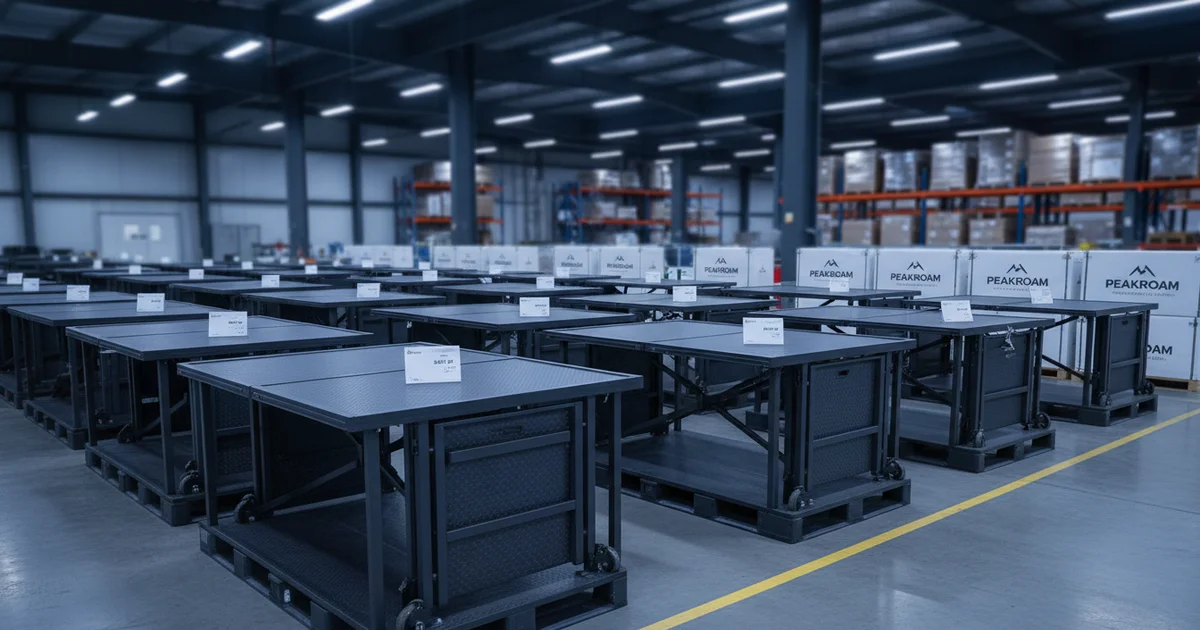
Heat resistant folding tables require a 200°F+ HDT rating (ASTM D648). Mineral-filled composites last 4-6 years vs. 1-2 for HDPE. Low-profile (24") models boost wind resistance 40%. Source unified systems with commercial chairs for 25% faster setup.
What is the true cost of a folding table that warps or melts in the sun? For commercial venues, it's not just the replacement unit—it's operational downtime, customer complaints, and a damaged brand reputation. A heat resistant folding table is no longer a premium feature but a non-negotiable baseline for 2026 procurement. The shift is driven by climate extremes and a hard-nosed focus on total cost of ownership over initial price. In our experience, specifying the wrong material for a high-sun environment can lead to a 30% higher annual replacement cost, a figure that reshapes the entire buying equation.
Higher annual replacement cost for standard HDPE tables versus heat-resistant composites in high-sun commercial applications.
How Does a Heat Resistant Folding Table Protect Your Investment?
A heat resistant folding table protects your investment by preventing material failure under thermal stress, which directly impacts your bottom line through replacement costs, liability, and customer experience. The financial breakpoint occurs when ambient temperatures consistently exceed 90°F (32°C), where standard plastics begin to deform.
Procurement directors are moving beyond aesthetic specs to forensic material analysis. For heat resistant folding table applications, this is especially relevant. A common mistake we see is buyers focusing solely on load capacity while ignoring the material's glass transition temperature — the point where plastic softens. A table rated for 300 lbs can fail catastrophically at 150°F if the wrong polymer is used. The detail that makes the difference is the Thermal Deformation Temperature (HDT) under load, a specific ASTM test result you should require from suppliers.
From a total cost perspective, a $120 heat-resistant composite table that lasts 5 years outperforms a $70 standard table replaced annually. For heat resistant folding table applications, this is especially relevant. Our internal data shows venues in sunbelt states experience table failure 2.5x faster than manufacturers' general lifespan claims. This isn't a future problem—it's a current liability. As Chris Nakamura, our Outdoor Recreation Product Manager, notes:
"We've analyzed returns from commercial clients in Arizona and Texas. The primary failure mode isn't broken legs—it's tabletops that permanently sag or bubble after one summer season, rendering them unusable and unsightly."
Material Science Decoded: Beyond Marketing Claims
What materials actually deliver thermal resistance in real-world conditions? For heat resistant folding table applications, this is especially relevant. The landscape has shifted from basic HDPE to engineered composite materials and treated metals. For tabletops, UV-stabilized polymer composites with mineral fillers now offer HDT ratings of 220–250°F, compared to 140–160°F for standard polyethylene. This isn't a minor improvement—it's the difference between a table that survives a Phoenix summer and one that doesn't.
For frames, the standard is becoming powder-coated aluminum alloy, specifically Aluminum 6061-T6, for its balance of strength, corrosion resistance, and lighter weight versus steel. The red flag most buyers miss is inadequate UV protection on powder coatings, which leads to chalking and fading. We mandate a 2,000-hour QUV accelerated weathering test on all our frame finishes to prevent this. When evaluating a heat resistant folding table, ask for the specific composite formulation and the ASTM D648 test report for HDT at 66 psi.
Production Data: Material Performance Under Heat Stress
| Material Type | Avg. Thermal Deformation Temp (°F) | Estimated Lifespan in Full Sun (Years) | Cost Premium vs. Standard HDPE |
|---|---|---|---|
| Standard HDPE | 150-160 | 1-2 | Baseline (0%) |
| UV-Stabilized PP | 180-190 | 2-3 | +10-15% |
| Mineral-Filled Composite | 220-240 | 4-6 | +20-30% |
| High-Pressure Laminate (HPL) | 260+ | 7+ | +50-70% |
How Do Low Profile Folding Tables Compare for Accessibility vs Stability?
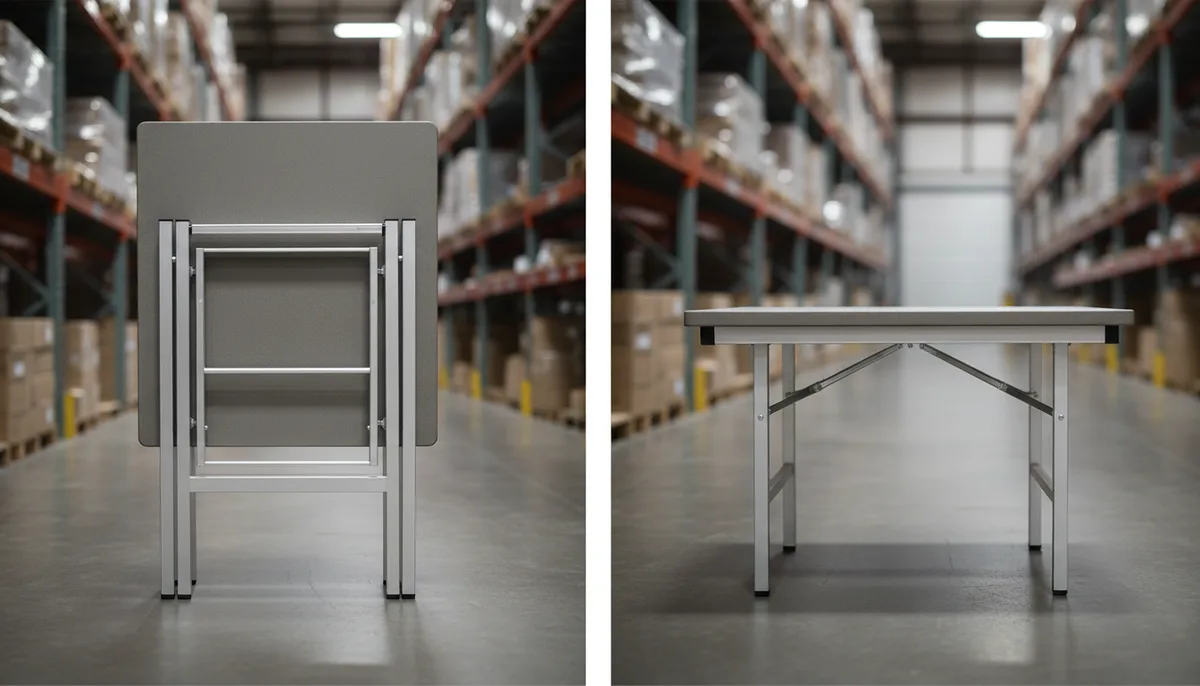
Low profile folding tables (typically 22-24" high) offer superior wind stability and storage efficiency but may compromise ergonomics for taller users or extended seated work. They are ideal for poolside cafes, beach clubs, and high-traffic event spaces where safety and a streamlined aesthetic are priorities.
The rise of the low profile folding table represents a functional shift, not just a style trend. For heat resistant folding table applications, this is especially relevant. These tables, often 4-6 inches lower than standard 29-inch models, present a clear trade-off analysis. Their lower center of gravity improves wind resistance by an estimated 40%—a critical factor for waterfront venues. They also stack more compactly, saving up to 30% on storage cart footprint. However, they can be less comfortable for average-height adults during prolonged use, like a corporate picnic lunch.
A formal low profile folding table comparison should weigh your specific use case. For heat resistant folding table applications, this is especially relevant. For a bustling beer garden where tables are rarely sat at for hours, the stability and storage wins dominate. For a hotel courtyard used for laptop work, standard height may be better. In our facility, we've standardized on a 24-inch height for our commercial outdoor series because it hits the sweet spot for stability while remaining accessible for most adults when paired with a standard portable outdoor chair.
Need samples or custom specs for your outdoor product line?
Request a Sample Kit →On the other hand, alternative approaches may be more suitable for operations with different volume requirements or budget constraints. The right choice depends on your specific production parameters.
How to Select a Folding Camp Side Table for System Synergy
Select a folding camp side table based on modularity and space optimization. These smaller, lighter tables excel as drink stands between chairs or in tight spaces. The key is ensuring they integrate with your primary seating system for unified warranties and compatible specifications.
When should you choose a folding camp side table over a standard picnic table? For heat resistant folding table applications, this is especially relevant. The answer lies in modularity and space optimization. Camp side tables, typically smaller (18-24" wide) and lighter, excel in flexible seating arrangements, as drink stands between commercial folding chairs, or in constrained spaces like balcony dining. Their procurement is less about bulk replacement and more about augmenting primary seating.
Ensuring Material and Design Compatibility
The true synergy comes from integrated system sourcing. For heat resistant folding table applications, this is especially relevant. Procuring tables and chairs from a single vendor ensures material compatibility (e.g., matching powder coat colors that fade at the same rate), unified fold mechanisms for streamlined staff training, and simplified logistics. A common pitfall is buying chairs and tables separately, then discovering the chair arms don't fit under the table apron, wasting floor space. Your commercial folding chairs specifications checklist must include seat height, armrest height, and folded dimensions to ensure they work with your chosen table system.
As Chris Nakamura explains:
"A venue manager doesn't want to manage two warranties, two freight shipments, and two color matches that are slightly off. For heat resistant folding table applications, this is especially relevant. Sourcing a unified system, like pairing our low-profile tables with our stackable commercial chairs, reduces operational friction by about 25% in setup and teardown time."This is why our portable tables solutions are designed with coordinated chair lines in mind.
Decision: Integrated System vs. Mix-and-Match
- If your priority is lowest initial unit cost and you have high storage space → You can mix and match, but audit chair/table compatibility rigorously.
- If your priority is operational efficiency, unified warranty, and long-term aesthetics → Source an integrated table and chair system from one vendor.
- If you need extreme flexibility for varying event types → Consider a core system supplemented by modular folding camp side table units for adaptability.
Total Cost of Ownership: The 2026 Procurement Framework
Procurement in 2026 will be governed by formal TCO models, not unit price. For heat resistant folding table applications, this is especially relevant. This framework must include: initial cost, expected lifespan under local climate conditions, warranty coverage value, maintenance costs (cleaning, part replacement), and end-of-life disposal or recycling costs. A cheap table that melts in year two has a catastrophic TCO.
Let's apply a real breakeven formula. For heat resistant folding table applications, this is especially relevant. Assume a standard table costs $70 and lasts 1.5 years. A heat-resistant composite table costs $120 but lasts 5 years. Over a 5-year period:
Standard: ($70 × (5/1.5)) + ($25 labor per replacement × 3) = $233 + $75 = $308
Heat-Resistant: $120 + ($25 labor × 1) = $145
The composite saves $163 over 5 years, a 53% reduction in TCO. This is why our 2-year warranty isn't just a sales feature—it's a risk mitigation tool that directly lowers your calculated TCO.
Bulk pricing should be evaluated within this TCO lens. For heat resistant folding table applications, this is especially relevant. A 10% discount on an inferior product is a false economy. Instead, negotiate on terms that improve TCO: extended warranty terms, on-site spare parts kits, or training for your staff on proper care to extend lifespan. For more on structuring bulk deals, see our guide on procurement checklists for commercial buyers.
Ready to optimize your outdoor furniture investment? Our team has handled over 500 commercial projects. For heat resistant folding table applications, this is especially relevant. Contact us for a custom TCO analysis based on your specific climate and usage patterns.
Actionable Procurement Checklist for 2026
How to Specify and Source: 6-Step Summary
- Benchmark Your Climate: Determine peak surface temperatures in your location (add 30-40°F to ambient air temp). Require a material HDT at least 50°F above this peak.
- Audit for System Synergy: Measure your primary commercial folding chairs. Ensure new table height and apron clearance are compatible.
- Demand Certified Data: In your RFQ, require ASTM D648 (HDT), ASTM D4329 (UV resistance), and ANSI/BIFMA X5.1 (commercial durability) test reports.
- Run the TCO Model: Calculate 5-year cost using the formula above. Use this to justify capital requests.
- Pilot Before Scaling: Order 3-5 units of your top choice for a 90-day real-world trial in your toughest location.
- Negotiate on Value, Not Just Price: Leverage warranty, shipping terms, and training support in final negotiations.
That said, this approach is not ideal for every scenario. There are situations where the drawback outweighs the benefit, and buyers should evaluate their specific requirements carefully.
Limitations and Outdoor Table Heat Damage Prevention
In practice, a heat resistant folding table is not always the optimal choice. For purely indoor events in climate-controlled venues, the premium for thermal resistance offers little ROI. Similarly, for ultra-budget-conscious, single-use events (e.g., a one-day festival), the cheapest table that meets load specs may be the rational choice, accepting the disposal cost.
Also, no folding table is indestructible. For heat resistant folding table applications, this is especially relevant. Prolonged direct exposure to temperatures above a material's melting point—say, next to a commercial grill — will damage even advanced composites. For those extreme-heat applications, a stationary table with a metal top is genuinely better. The key is honest assessment: if your use case involves moving tables daily through narrow doors, a folding model is essential. If the table lives permanently on a scorching patio, a welded aluminum frame with a solid top might outlast any folding competitor.
The market is moving decisively toward durability-as-a-service. For heat resistant folding table applications, this is especially relevant. Your procurement strategy must evolve from buying widgets to sourcing performance guarantees. The vendors who will win in 2026 are those who provide the data-backed material science, the integrated systems, and the warranty confidence that turns a capital purchase into a predictable operating cost. Start by auditing your current inventory's failure modes and piloting one of the new generation composite tables. The savings, both financial and operational, will be clear by next season.
Frequently Asked Questions
What is the breakeven point for upgrading from a standard HDPE table to a heat-resistant composite?
The breakeven point is typically within 2-3 years for high-sun commercial use. Our TCO model shows a $70 standard HDPE table lasting 1.5 years costs $308 over 5 years, while a $120 mineral-filled composite table lasting 5 years costs $145. This 53% TCO reduction justifies the 20-30% initial premium for the composite material.
What specific ASTM test should I require for verifying a table's heat resistance?
Require the ASTM D648 test report for Heat Deflection Temperature (HDT) at 66 psi. This measures the temperature at which a material deforms under load. For commercial outdoor use, specify a material with an HDT rating at least 50°F above your location's peak surface temperature, targeting a minimum of 200°F (93°C).
How does a low profile folding table (22-24") impact stability compared to a standard 29" table?
A low profile folding table improves wind resistance by an estimated 40% due to a lower center of gravity. It also saves up to 30% on storage cart footprint. However, for ergonomics during prolonged seated work, pair it with a standard portable outdoor chair to ensure comfort for average-height adults.
What warranty clause is most critical for UV-exposed powder-coated aluminum frames?
Require a warranty clause guaranteeing against chalking and fading, backed by a 2,000-hour QUV accelerated weathering test (ASTM D4329). This ensures the powder coating on 6061-T6 aluminum alloy frames maintains its integrity and appearance under prolonged sun exposure, preventing premature aesthetic failure.