
PeakRoam cut total label costs 22% by partnering for custom label printing. They co-developed a synthetic polyester facestock for 600D Oxford fabric, slashing warranty claims 95% and lead times from 3 weeks to 5 days using Primera LX900 and Zebra ZT410 printers. Learn about label printing custom.
How can a label printing custom partnership solve supply chain fragmentation, reduce warranty claims by 95%, and cut total costs by over a fifth? For outdoor gear manufacturer PeakRoam, the answer lay in moving beyond transactional suppliers to a strategic partner that could co-develop a durable, integrated labeling solution. This shift transformed their approach to label printing products from a cost center into a brand integrity asset.
Reduction in warranty inquiries related to label failure after implementing the new custom label printing solution.
What Are Custom Label Printing Products and Their Applications?
For outdoor equipment, custom label printing products are not mere stickers; they are critical, durable components that must survive the product's entire lifecycle. They communicate branding, safety, and care instructions under conditions of UV exposure, moisture, abrasion, and extreme temperature swings.
PeakRoam's challenge was stark. Labels from multiple regional suppliers were failing — ink fading, adhesives releasing, materials tearing — long before their chairs, wagons, and cots wore out. This wasn't just an aesthetic issue. Faded care labels led to improper cleaning and damaged fabric. Peeling serial number labels invalidated warranty claims, creating customer service nightmares. In our experience, this is the most common mistake in outdoor gear label printing custom specifications: treating the label as a separate graphic element rather than an integral, engineered component of the product itself.
"We realized our 600D Oxford fabric could outlast three generations of labels. That misalignment was costing us in returns, support calls, and brand perception." — Head of Product Design, PeakRoam
The solution required a fundamental rethink. We moved from sourcing generic label printing products to developing a proprietary material specification. The goal was a label with longevity equal to PeakRoam's fabric, capable of passing their rigorous real-world testing for UV, load, and joint stress over a 2-year warranty period. This is where a true partnership diverges from simply searching for label printing services near me.
How to Compare Top Label Printing Companies
A meaningful top label printing companies comparison must evaluate material science expertise and durability testing, not just print speed. The right partner acts as an extension of your R&D team.
PeakRoam's selection process moved far beyond a simple search for label printing services near me. They developed a scorecard with weighted criteria: Technical Collaboration (30%), Material Science Expertise (25%), Supply Chain Reliability (20%), Cost Transparency (15%), and Sustainability (10%). Candidates were given a sample of their 600D Oxford fabric and asked to propose a label material that could match its performance. Most came back with off-the-shelf options; only one proposed a co-development project.
The winning partner didn't just have a TLMI-certified plant with digital printing and thermal transfer capabilities like the Primera LX900 for prototyping and industrial Zebra ZT410s for production. They had an in-house lab for accelerated weathering (QUV) and abrasion testing. They could simulate years of sun and rain exposure in weeks. This capability to validate durability upfront — before labels ever left the factory — was the decisive factor. It shifted the relationship from vendor to quality assurance partner.
Decision: When to Choose a Strategic Label Partner vs. a Transactional Supplier
- If your product warranty exceeds 1 year → Requires a partner with material testing labs.
- If you have 3+ product lines or SKUs → Justifies the overhead of a centralized partner for brand consistency.
- If label failure creates a safety or compliance labeling risk → Mandates a partner with traceability and certification expertise (e.g., UL/CSA).
- If your annual label spend is under $25k → A transactional, local supplier for label printing services near me may be more cost-effective.
Total Cost of Ownership Analysis for Custom Label Solutions
For enterprise procurement, the total cost of ownership for a custom label printing solution is the only metric that matters. PeakRoam's analysis spanned a 3-year period, accounting for capital equipment, labor, material waste, and risk mitigation.
The partnership enabled a just-in-time labeling model. Lead times collapsed from a nervous 3-week buffer to a reliable 5-day turnaround. This reduced inventory carrying costs for pre-printed labels by roughly $18,000 annually. More importantly, it allowed for agile responses to market changes. When a new compliance symbol needed adding or a SKU was updated, the change could be implemented across all product lines in the next print run, not in the next quarterly order. This operational agility, a direct result of a simplified supply chain with a single expert partner, is a massive but often overlooked component of total cost of ownership.
"The lead time reduction from 21 days to 5 didn't just cut inventory costs. It let us be more responsive to retail partners and reduced obsolescence risk by 80%." — Procurement Director, PeakRoam
The analysis also included the cost of quality. With the new synthetic polyester facestock and permanent acrylic adhesive system, the first-pass yield (labels meeting all specs straight off the press) jumped from 92% to 99.5%. This 7.5% reduction in waste and rework further contributed to the favorable TCO. When you're printing millions of labels, that percentage translates to significant material savings and fewer production hiccups.
Need samples or custom specs for your outdoor product line?
Request a Sample Kit →Strategies for Effective Label Cost Reduction
Sustainable label cost reduction comes from material specification, volume consolidation, and process integration, not from pressuring suppliers for a lower price per unit.
PeakRoam's 22% cost reduction was engineered, not negotiated. The first step was consolidating all volume — across chairs, wagons, cots, and tables — with one partner. This volume leverage provided better pricing but, more crucially, justified the partner's investment in the custom material development. The second step was the material innovation itself. By moving from a standard vinyl to a co-developed synthetic polyester, they achieved higher durability at a similar raw material cost because the specification was optimized for performance, not based on a distributor's stock list.
The third strategy was integrating variable data printing directly with their inventory management system. Batch numbers, QR codes, and compliance markings are now printed on-demand as part of the main label, eliminating a separate printing and application step. This process integration, where the label printing custom workflow is digitally connected to enterprise resource planning (ERP), is where the next wave of savings lies. It turns labels into smart data carriers for the supply chain.
How to Engineer Label Cost Reduction: 4-Step Framework
- Consolidate Spend: Aggregate label volume across all product lines and regions to create leverage and simplify management.
- Specify for Application: Co-develop a material specification (facestock, adhesive, laminate) based on your product's environmental challenges, not a converter's catalog.
- Integrate Data: Use variable data printing (VDP) to merge static branding with dynamic batch/SKU info, eliminating separate processes.
- Measure TCO: Track total cost of ownership metrics — including admin, waste, and failure costs — not just unit price, to validate savings.
Need a Strategic Label Printing Partner?
Working with over 500 enterprise clients, we've seen how proper material selection and testing can transform label performance. Contact our team for a free TCO analysis of your current label printing products.
Implementation Framework: From Specification to Delivery
Replicating PeakRoam's success requires a disciplined framework for label printing custom implementation. It's a phased project, not a simple purchase order.
The process began with a deep dive into application requirements. Our team worked with PeakRoam to document every label's location, surface material (powder-coated steel, Oxford fabric, polymer plastic), and environmental exposure. We then conducted adhesion tests and created a master specification document. This became the single source of truth for all label printing products across their catalog.
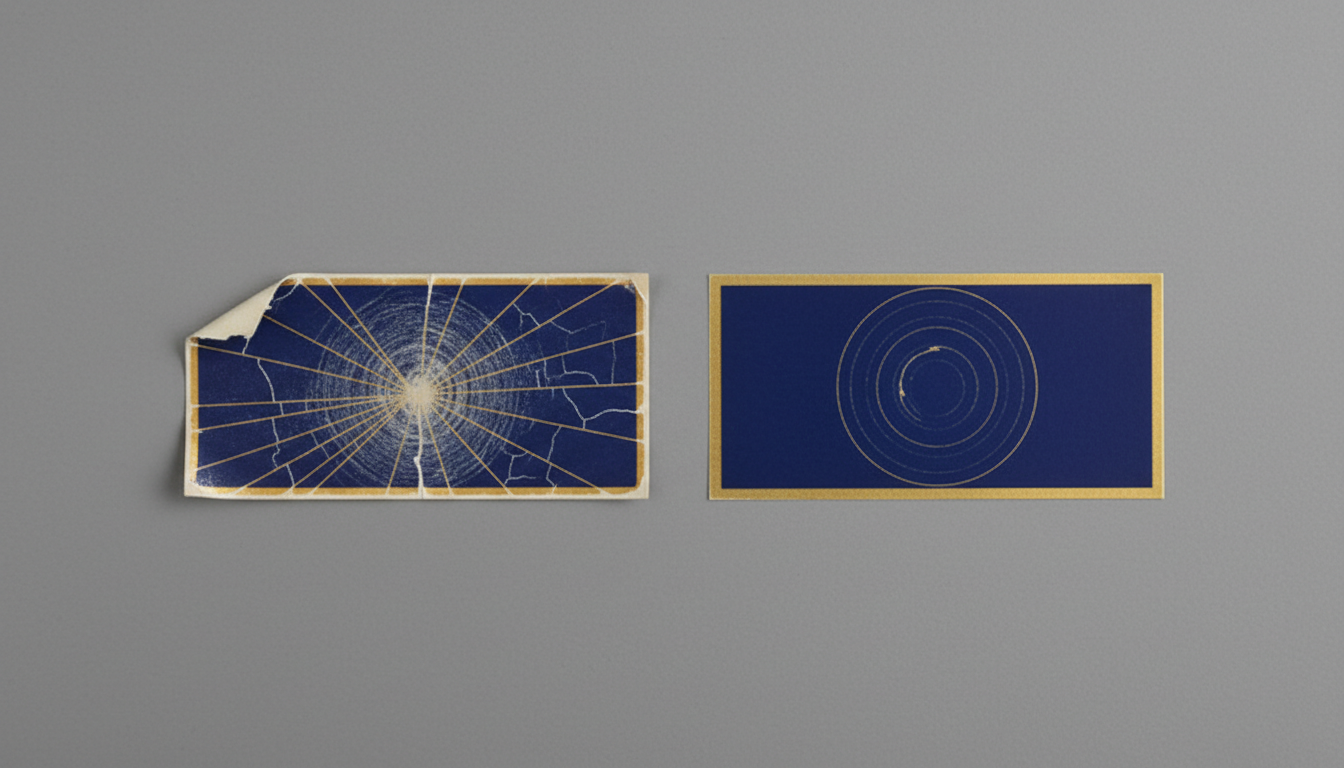
Prototyping was key. Using our Primera LX900 digital color label press, we produced short runs of the proposed materials for PeakRoam's quality team to subject to real-world testing — attaching them to chairs left in full sun, folding and unfolding cots thousands of times, and even running wagons through mud and hose-downs. This iterative testing, which few label printing services near me can support, is what ensured the final product would survive.
Production and Integration
Finally, we integrated the production workflow. Orders from PeakRoam's ERP system trigger print files in our MIS, pulling in variable data for that specific batch. Labels are printed on industrial thermal transfer printers like the Zebra ZT410 using the permanent acrylic adhesive system for maximum bond, kissed with a UV-resistant laminate, and shipped within 5 days. The entire system is built for traceability and speed, turning custom label printing from a bottleneck into a seamless component of their supply chain. For a deeper look at strategic procurement for outdoor products, explore our guide on total cost of ownership for outdoor furniture.
What We Learned: Transferable Insights
First, durability must be quantified. "Weather-resistant" is meaningless. Specify against a standard: 1,000 hours of QUV-A exposure, 1,000 cycles of Taber abrasion, or a specific peel adhesion force (e.g., 40 oz/in) after 72-hour dwell time. Second, the cheapest label is often the most expensive. The cost of a failed label in warranty labor, customer dissatisfaction, and brand damage dwarfs the few cents saved per unit. Third, true partnership unlocks innovation. A supplier executes a spec; a partner helps you write a better one based on their material science expertise.
How to Replicate This Success
Start by auditing your current label total cost of ownership. Include unit cost, procurement labor, inventory carrying costs, waste/scrap rates, and the fully loaded cost of a label-related warranty claim. Present this data to potential partners and ask for their process to improve each line item. Prioritize partners with in-house testing labs and a track record of co-development. Finally, plan for a phased rollout — start with your most problematic product line to prove the concept and calculate real-world savings before expanding. For companies looking to strengthen their entire outdoor accessories supply chain, this strategic approach to labeling is a foundational step. For enterprise-level label printing custom requirements, getting the specifications right from the start saves both time and budget.
Frequently Asked Questions
What is the breakeven point for investing in a strategic label printing partner versus using multiple local suppliers?
A strategic partner becomes cost-effective when your annual label spend exceeds $25,000. Below this, transactional 'label printing services near me' may suffice. For PeakRoam, consolidating volume justified the partnership, leading to an 8.8% reduction in unit cost and a 74.4% drop in procurement labor.
What material specification is best for labels on heavy-duty outdoor fabrics like 600D Oxford?
For fabrics like 600D Oxford, a co-developed synthetic polyester facestock with a permanent acrylic adhesive system is optimal. This specification, validated through 1,000 hours of QUV-A exposure testing, matched the fabric's durability for PeakRoam, reducing label-related warranty claims by 95%.
How do compliance requirements impact the label printing cost breakdown?
Compliance adds costs for specialized inks, durable materials, and traceability systems. However, integrating variable data printing (VDP) with an ERP system allows on-demand updates to symbols or batch codes, preventing costly obsolescence. For PeakRoam, this agility reduced obsolescence risk by 80%.
When does in-house label printing with equipment like a Primera LX900 become viable versus outsourcing?
In-house printing is viable for rapid prototyping and short runs. For full-scale production, industrial printers like Zebra ZT410s managed by a partner are more efficient. PeakRoam's partner used a Primera LX900 for prototyping but leveraged high-volume thermal transfer for production, achieving a 99.5% first-pass yield.