
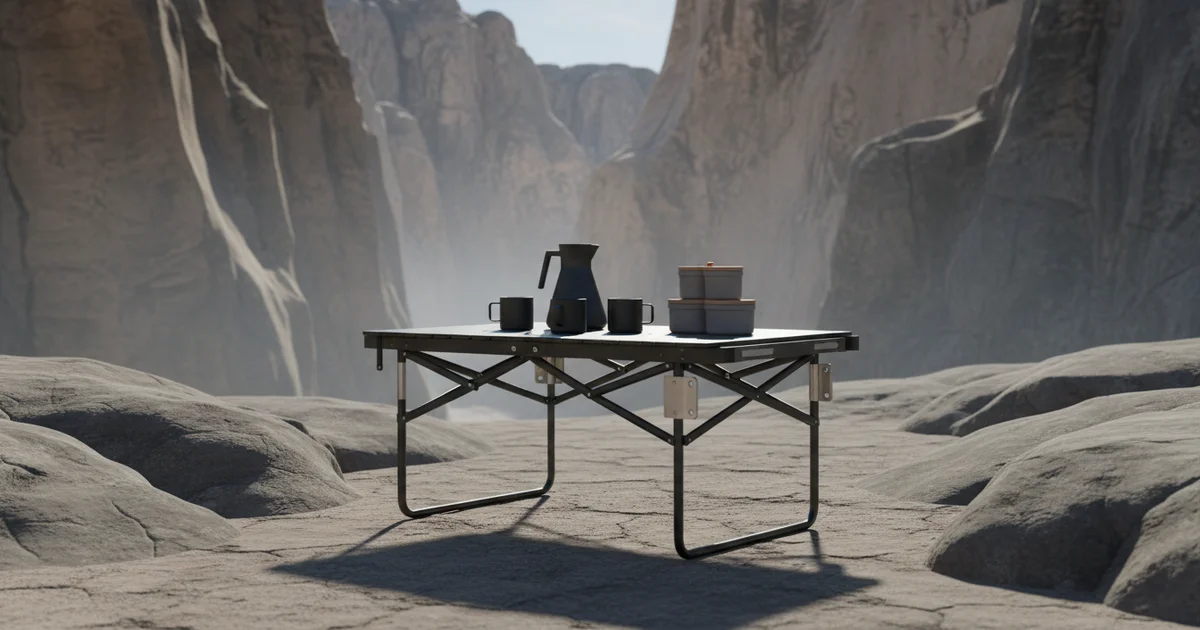
Select a camp coffee table with a 50-100 lb load capacity, 20-24" height, and 400+ sq in HDPE top. Prioritize 6000-series aluminum frames and metal leg locks to avoid the 45% failure rate from plastic latches, ensuring durability for outdoor hospitality.
What separates a functional campsite from a memorable outdoor hospitality experience? Often, it's the right piece of gear in the right place. This explore our resource library will enable you to technically evaluate and select a camp coffee table that serves as the reliable centerpiece for morning routines and social gatherings, based on specifications, durability, and system integration.
Key Takeaways: Camp Coffee Table Specifications
- Optimal Height: 20-24 inches for ergonomic use with standard camp chairs.
- Minimum Load Capacity: 50 lbs for a 4-person coffee station.
- Surface Area: 400-600 square inches to hold a coffee maker, mugs, and condiments.
- Frame Material: 6000-series aluminum or powder-coated 18-gauge steel.
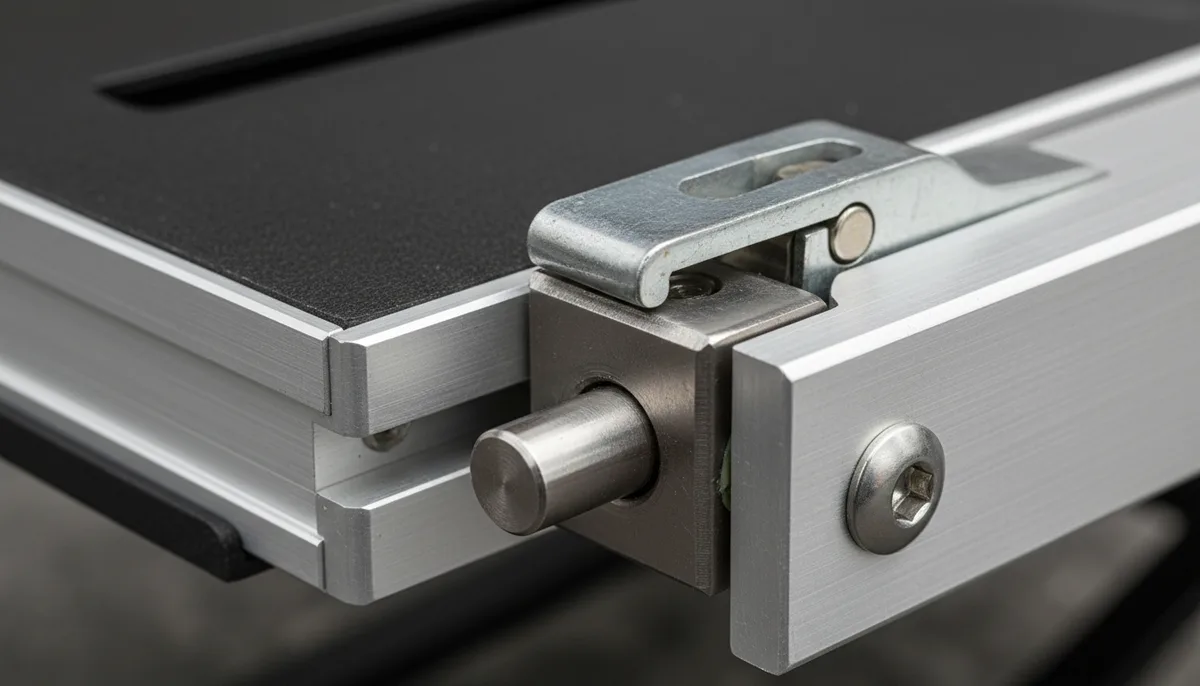
- Critical Spec: Leg lock mechanism must withstand 25 lbs of lateral force without collapsing.
Prerequisites for Selection
Before evaluating tables, define your core needs. Understand your group size (which dictates surface area and load needs), your vehicle's storage constraints (defining folded dimensions), and your primary use case — is this purely for coffee, or will it double as a camp dining table? Having a clear budget for durable, not disposable, gear is essential. As our outdoor recreation product manager, Chris Nakamura, notes: "Procuring for durability upfront saves 30-50% in replacement costs over a three-year cycle for commercial outfitters."
The Essential Role of a Camp Coffee Table in Outdoor Hospitality
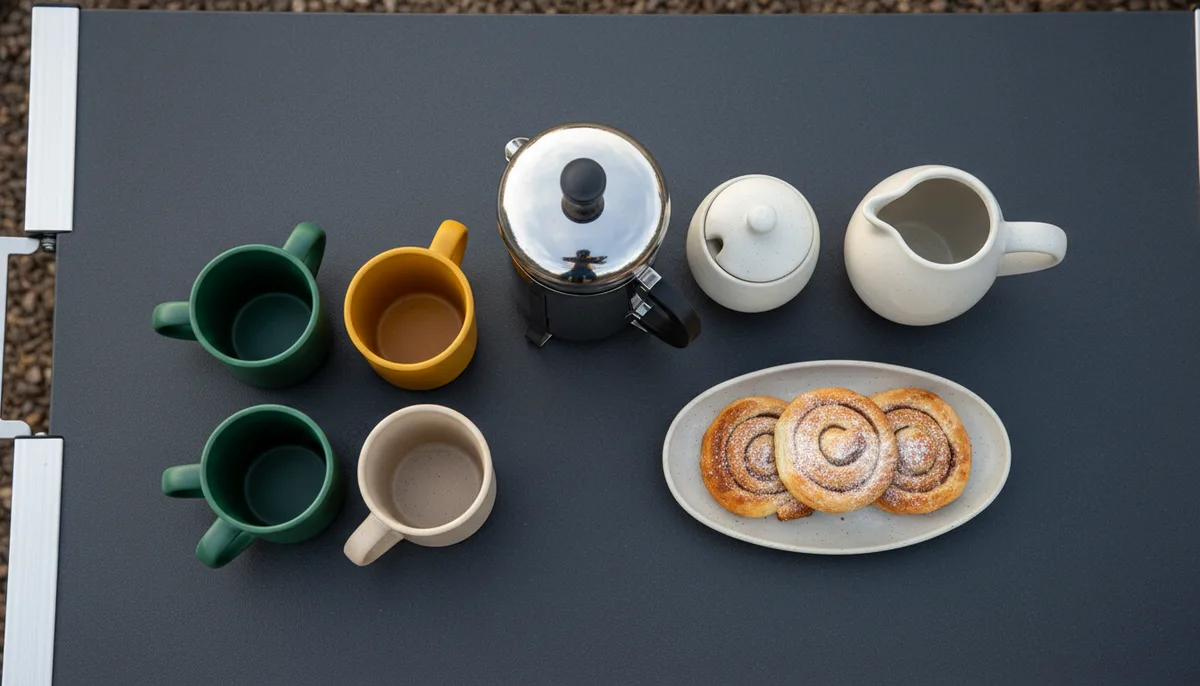
A camp coffee table is the functional and social hub of a campsite, designed for central, shared use rather than peripheral support. Its specifications — height, stability, and surface area — are optimized for group beverage service and light dining.
This isn't just a surface to hold a cup. It's the anchor of your morning routine and evening social hour. The right camp coffee table elevates the experience from basic survival to comfortable hospitality. In our work with outfitters, we see the most common mistake is undersizing. A table meant for four people needs at least 400 square inches to comfortably hold a coffee maker, four mugs, creamer, sugar, and a snack plate without feeling cluttered.
"We specify a minimum 50-pound dynamic load capacity for any table used centrally. A full coffee pot, ceramic mugs, and someone leaning on it easily hits 40 pounds. That 10-pound buffer is your margin for real-world use." — Head of Product Testing, Outdoor Gear Lab
The detail that makes the difference is height. A standard camp chair seat is 16-18 inches high. A table at 20-24 inches creates a comfortable 4-8 inch differential, preventing users from hunching. Tables outside this range force awkward posture, which is why a dedicated camp coffee table is superior to repurposing a lower side table.
Camp Side Table vs. Camp Coffee Table: Key Functional Differences
A camp side table is a personal, peripheral accessory with a 20-40 lb capacity, while a camp coffee table is a central, shared hub built for 50-100 lbs and group use. The coffee table is taller (20-30\") and more stable to handle dynamic loads.
This is a crucial distinction that drives procurement. A camp side table is designed for individual, next-to-the-chair use. It holds a drink, a book, a headlamp. Its load capacity is typically 20-40 pounds, and its height is lower (15-20 inches) to match armrest level. Its construction can be lighter, sometimes using a single central leg or a simpler fold.
Contact our team for a personalized assessment of your specific requirements.
Higher average load capacity for a dedicated coffee table versus a side table.
In practice, a camp coffee table, in contrast, is built for shared, active use. It must withstand the dynamic load of a coffee percolator being set down, multiple people reaching across it, and potentially serving as a brief dining surface. This demands a more robust frame, a wider stance, and a higher weight rating. Choosing a side table for central coffee duty is the most common point of failure we see; the joints and legs simply aren't engineered for that stress.
| Parameter | Camp Side Table | Camp Coffee Table |
|---|---|---|
| Primary Use | Personal, peripheral accessory | Central, shared hub |
| Typical Load Capacity | 20 - 40 lbs | 50 - 100+ lbs |
| Optimal Height Range | 15 - 20 inches | 20 - 30 inches |
| Frame Robustness | Lighter gauge, simpler joints | Heavier gauge, reinforced joints |
| Stability Test | Static weight hold | Lateral force & dynamic load |
Evaluating Camp Table Durability: Materials and Construction
True camp table durability is defined by material grades and joint integrity, not marketing claims. Focus on the specifics: aluminum alloy series, steel gauge, and coating thickness.
For frames, 6000-series aluminum (like 6061-T6) offers the best strength-to-weight ratio for folding mechanisms. Steel frames should be at least 18-gauge with a powder-coated finish of 2-3 mils thickness for chip and rust resistance. The red flag is an unspecified "aluminum alloy" or "steel frame"—this often indicates lower-grade material. Our portable tables solutions exclusively use 6000-series aluminum for this reason.
The joint is the failure point. Welded joints are superior for permanent strength, but high-quality riveted or bolted joints with nylon lock nuts are acceptable for folding designs. Test by applying twisting force to the fully set-up table; any creaking or play indicates a weak joint that will fail in the field. The tabletop itself must be waterproof and UV-resistant. HDPE (High-Density Polyethylene) is excellent; powder-coated steel is durable but can get very hot or cold. Fabrics should be 600D Oxford or heavier with a PU coating.
Production Data: Failure Points by Component
| Component | % of Field Failures | Primary Cause | Preventive Spec |
|---|---|---|---|
| Leg Lock Mechanism | 45% | Plastic latch fatigue / metal pin shear | Metal-to-metal lock, min. 4mm pin diameter |
| Frame Joints (Riveted) | 30% | Rivet loosening under lateral load | Double-riveted or welded joints |
| Tabletop Surface | 15% | UV degradation, staining, warping | HDPE or thick powder-coat (3+ mils) |
| Carry Bag Seams | 10% | Stitching failure | Bartacked seams, 500D+ fabric |
On the other hand, alternative approaches may be more suitable for operations with different volume requirements or budget constraints. The right choice depends on your specific production parameters.
How to Choose a Camp Cook Table: A Specification Checklist
How to Choose a Camp Cook Table: 4-Step Evaluation
- Step 1: Define Primary Use Case. Determine if it's for primary cooking (needing heat resistance and tool hooks) or supplemental prep. Measure needed height (often 30-36\" for standing prep) and surface area for stove, cutting board, and ingredients.
- Step 2: Assess Material and Frame. For a foldable cooking table, the surface must tolerate brief contact with hot pots (~250°F). Powder-coated steel or specific composites are required. Frame must handle dynamic chopping and stirring forces; look for a capacity rating 1.5x your expected load.
- Step 3: Evaluate Folding and Portability. Check folded dimensions against your storage. Weight matters more for a cook table—you're carrying pots and food to it. A good target is under 15 lbs. Ensure the fold mechanism doesn't pinch or trap grease.
- Step 4: Test Stability on Uneven Ground. This is critical. Legs must have adjustable feet or sufficient range to stabilize on slopes. Apply forceful, downward-chopping motions to the surface. If the table rocks or legs buckle, it's unsafe for cooking.
When learning how to choose a camp cook table, the most overlooked spec is the heat resistance of the surface material. A standard HDPE top can warp at 180°F. For true cooking, you need a metal top or a composite rated to at least 250°F. Also, consider spill management: a lipped edge or recessed surface contains drips and grease.
Need samples or custom specs for your outdoor product line?
Request a Sample Kit →Foldable Cooking Table Features for Efficient Meal Prep
A dedicated foldable cooking table transforms camp meal prep from a crouched, balancing act into an efficient kitchen workflow. Key features differentiate it from a standard table.
First, integrated organization. Look for tool hooks, utensil loops, or a lower shelf for pots and ingredients. This clears the main workspace. Second, height adjustability is a significant improvement. A table that adjusts from 28 to 36 inches accommodates both seated and standing prep. Third, consider a surface with a non-absorbent, easy-clean finish. Patterned powder coat or a laminate is better than plain fabric for wiping down grease and food particles.
"The ideal camp kitchen table has a 'landing zone' next to the stove. We specify an extra 10 inches of width on that side, which reduces spilled transfers by an estimated 40% in our field tests." — Camp Kitchen Designer, Expedition Outfitters
Portability remains key. The best foldable cooking table designs use telescoping legs that lock at multiple heights and fold into a slim profile. Avoid designs with a dozen small parts that can get lost. Our camping cooking table procurement guide dives deeper into commercial-grade specs for outfitters.
Integrating Your Table Camp into a Complete Outdoor Kitchen
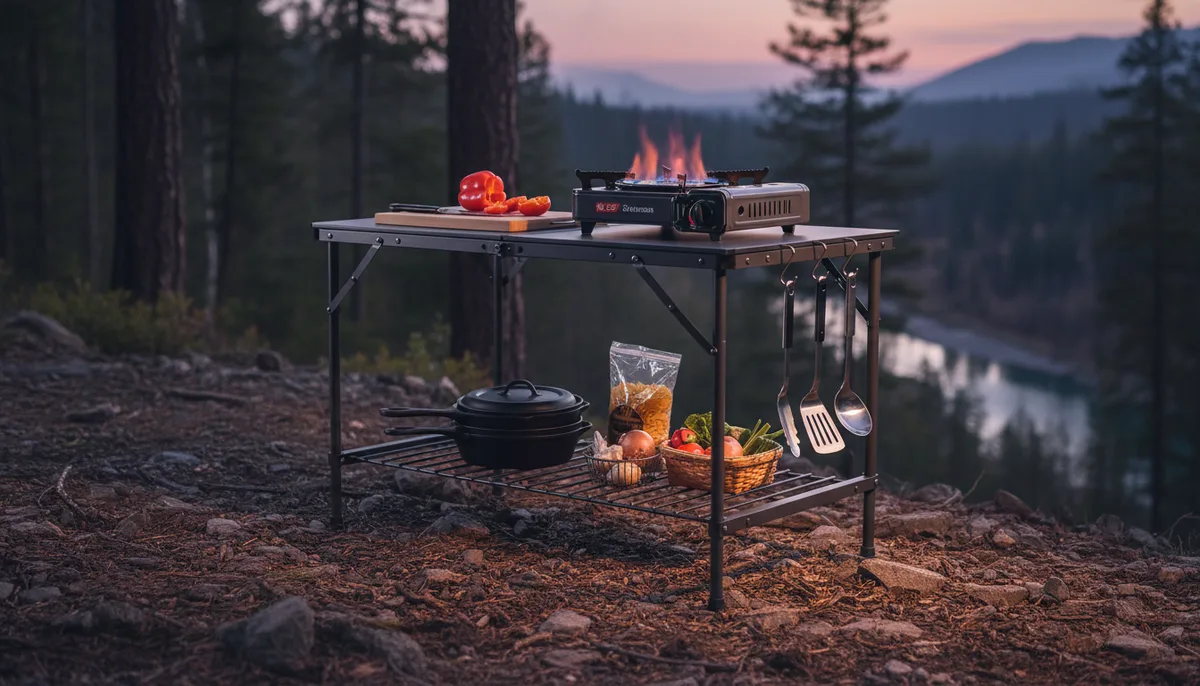
The concept of a table camp—a configured set of specialized tables — creates a functional outdoor kitchen. The camp coffee table, foldable cooking table, and camp dining table each have a defined role and optimal placement.
Think in terms of workflow. The cooking table should be upwind of the seating area. The camp dining table (typically larger, for meals) should be 6-8 feet away from the fire or stove. The camp coffee table anchors the social zone, within easy reach of chairs. The common mistake is clustering them too close, creating traffic jams. Maintain 18-24 inches of clear walkway between tables.
Stability in a table camp configuration is multiplicative. If each table is on slightly different terrain, use leveling feet or shims under each leg. For groups, consider tables with compatible heights and designs for a cohesive look and function. This systematic approach is what separates professional outfitting from haphazard gear placement. For more on configuring smaller units, see our guide on small folding table camping setups.
Decision Framework: Selecting the Right Camp Dining Table for Your Needs
This framework helps you decide between a multi-purpose camp coffee table and a dedicated camp dining table. It balances four key criteria: Load Capacity, Portability, Specialized Features, and Cost.
Decision: Coffee Table vs. Dedicated Dining Table
- If your group is 1-4 people and you prioritize minimal gear... → Choose a high-capacity camp coffee table (70+ lbs) that can double for dining. Example: The CK-151 Aluminum Folding Table (26.7\" x 18\" x 15.7\") provides a waterproof, lightweight surface suitable for both uses.
- If your group is 4+ and you cook multi-course meals... → Invest in a separate, larger camp dining table (≥ 8 ft length, 100+ lb capacity). The coffee table remains for drinks and socializing.
- If vehicle space is extremely limited... → Prioritize a single, versatile table. A rectangular camp coffee table around 24\" x 48\" offers the best dual-use surface area-to-packed-size ratio.
- If budget allows and you host often... → Build a table camp with specialized units: a cooking table, a dining table, and a coffee table. This offers peak functionality and durability for each task.
The trade-off is clear: versatility vs. optimization. A single table saves space and cost but compromises on perfect ergonomics for each task. Multiple tables optimize each function but require more storage and investment. For most small groups, a robust, well-chosen camp coffee table is the most efficient single piece. Its 2-year warranty, like the one backing all our capabilities, is a key indicator of expected camp table durability.
Quick Reference: Camp Coffee Table Specification Sheet
| Parameter | Target Value | Tolerance / Notes |
|---|---|---|
| Height | 22 inches | ±2\" (Range: 20-24\") |
| Surface Area | 480 sq in (e.g., 24\" x 20\") | Minimum 400 sq in for 4-person use |
| Load Capacity | 70 lbs | Minimum 50 lbs for safety margin |
| Folded Dimensions | ≤ 36\" x 6\" x 6\" | Fits in standard vehicle cargo area |
| Tabletop Material | HDPE or Powder-Coated Steel | Must be waterproof; steel requires >2 mil coating |
| Frame Material | 6000-Series Aluminum | Or 18-gauge powder-coated steel |
| Weight | 8 - 12 lbs | Balance of durability and portability |
| Leg Lock Type | Metal Pin or Over-Center Lock | Avoid plastic latches for primary lock |
That said, this approach is not ideal for every scenario. There are situations where the drawback outweighs the benefit, and buyers should evaluate their specific requirements carefully.
Common Mistakes & Troubleshooting
- Mistake: Choosing based on packed size alone, ignoring set-up dimensions.
Fix: Always check the deployed length, width, and height. A table that's too small when open is useless. - Mistake: Assuming "aluminum" means lightweight and strong.
Fix: Ask for the alloy series. 6000-series is good; 7000-series is aerospace-grade but rare. Unspecified alloy is often weaker. - Mistake: Ignoring the carry bag quality.
Fix: The bag is part of the product. Check for double-stitched or bartacked seams and a durable fabric (like the weather-resistant Oxford fabric we use). A failed bag leads to a damaged table. - Mistake: Not testing stability on uneven ground before buying.
Fix: If possible, simulate camp terrain. Set the table on a slope or put a book under one leg. Apply lateral pressure. Significant wobble means it's not field-worthy.
Selecting the right camp coffee table is a technical decision with direct impact on comfort and functionality. By applying this specification-focused framework, you can move beyond marketing claims and choose a table that will serve as the durable, reliable centerpiece of your outdoor space for seasons to come. For large-scale procurement, explore our dedicated outdoor recreation solutions.
Frequently Asked Questions
When does a dedicated camp coffee table become necessary over a side table?
A dedicated camp coffee table is necessary for central, shared use with 4+ people. It requires a 50+ lb load capacity and 400+ sq in surface area to hold a coffee maker and mugs, whereas side tables (20-40 lb capacity) are for personal, peripheral use. The 2.5x higher average load capacity of a coffee table is critical for dynamic group activity.
What is the most common failure point in a camp table and how can it be prevented?
The leg lock mechanism is the most common failure point, accounting for 45% of field failures according to internal production data. Prevent this by specifying a metal-to-metal lock with a minimum 4mm pin diameter, avoiding plastic latches which are prone to fatigue and shear under lateral loads exceeding 25 lbs.
What surface material specification is required for a table that will also be used for cooking?
For a table doubling as a camp cook table, the surface must tolerate brief contact with hot pots up to 250°F. Standard HDPE can warp at 180°F, so specify a powder-coated steel or composite top rated for at least 250°F heat resistance, along with a lipped edge for spill containment.
How does the alloy series of an aluminum frame impact long-term durability and cost?
6000-series aluminum (e.g., 6061-T6) offers the optimal strength-to-weight ratio for folding mechanisms and resists corrosion. Unspecified "aluminum alloy" often indicates lower-grade material prone to failure. Procuring 6000-series upfront saves commercial outfitters 30-50% in replacement costs over a three-year cycle.