
Procure durable small folding table camping systems: 6000-series aluminum frames last 10,000+ cycles. Tables need ≥50 lb central load (ASTM F1561). Chairs require 250+ lb dynamic capacity & 600D+ fabric. Compact systems cut storage 65% vs. traditional gear.
What’s the true cost of a $29.99 folding chair that fails during a corporate retreat? In our experience sourcing for major outdoor retailers and event companies, the wrong small folding table camping system can cost you thousands in replacement logistics and brand damage, not just the initial purchase price. This guide provides a technical framework to select durable, cost-effective systems based on verifiable specifications, not just marketing claims.
After reading this, you’ll be able to create a bulletproof specification sheet, conduct meaningful supplier audits, and calculate the 3-year total cost of ownership for your outdoor furniture fleet. Let’s start with the core strategic value.
The Strategic Value of Compact Camp Furniture
Integrated small folding table camping systems reduce storage volume by 60-70% versus traditional banquet furniture and cut deployment labor by half, directly lowering operational costs for events and rentals.
When we analyze fleet logistics for clients, the biggest savings aren't in the unit price—they're in storage and labor. A high-quality folding table for outdoor use that packs flat and a matching set of small folding camping chairs can transform your operational footprint. The common mistake is buying based on seat count alone, ignoring the cubic footage of your storage unit. A system that stacks neatly on a standard 48"x40" pallet is worth a 15-20% price premium if it saves you from renting additional warehouse space.
Average reduction in storage volume when switching from rigid resin chairs to compact folding camp chairs.
Material Comparison: Aluminum vs Steel for Folding Tables
For a folding table for outdoor commercial use, 6000-series aluminum is superior for weight and corrosion, while powder-coated steel offers a lower upfront cost but higher lifetime maintenance.
This is the most frequent specification error we see: selecting a frame material based on price without a lifecycle analysis. Here’s the trade-off, backed by our testing data.
Production Data: Frame Material Performance
| Parameter | Aluminum 6061-T6 | Powder-Coated Steel (22mm) | Test Standard |
|---|---|---|---|
| Avg. Frame Weight (Table) | 4.2 lbs | 7.8 lbs | ISO 6487 |
| Salt Spray Resistance | 1000+ hours | 500 hours (coating dependent) | ASTM B117 |
| Cycle Life (Folding Mechanism) | 10,000+ cycles | 5,000-7,000 cycles | ANSI/BIFMA X5.1 |
| Cost Premium vs. Steel | +30-40% | Baseline | - |
The detail that makes the difference is the type of aluminum. Demand 6061 or 6005 alloy, not generic “aircraft aluminum.” For steel, the powder coat thickness matters more than the marketing; look for a minimum of 60-80 microns. For a travel folding chair that moves constantly, aluminum’s weight savings justify the cost. For a static picnic grove installation, steel may suffice.
Weight Capacity Specifications for Small Folding Camping Tables
How much weight should a small folding camping table hold? If you’re only looking at the “central load” rating, you’re missing the critical failure point. Tables fail at the leg hinges under uneven loads, not the tabletop. The ASTM F1561 standard tests both central and distributed load. For commercial use, your minimums should be:
- Central Load: ≥ 50 lbs (applied to a 4" diameter area).
- Distributed Load: ≥ 150 lbs (across the entire surface).
- Leg Strength: Each leg should withstand a 25 lb lateral force without collapsing.
Always request the test report, not just the marketing sheet. A common red flag is a supplier who only provides a “static” load number without referencing the testing standard. For matching small folding camping chairs, the dynamic load rating (someone sitting down) is more important than static. Look for a minimum of 250 lbs dynamic capacity.
"We’ve seen chairs pass a 300 lb static test but fail under a 200 lb dynamic drop test because the rear leg weld cracked. Always specify dynamic load testing to BIFMA X5.1 or equivalent." — Head of Quality Assurance, PeakRoam
How to Choose Between Compact and Full-Size Outdoor Tables
This decision boils down to user density and activity type. A common mistake is standardizing on one size for all events, sacrificing either space efficiency or attendee comfort.
Decision: Compact vs. Full-Size Table
- If your primary use is short-duration events (cocktail hours, registration) with high attendee turnover → Choose a compact table (approx. 24" x 24"). Maximizes units per truck.
- If your event involves seated meals, laptops, or equipment (team-building exercises) → Choose a full-size table (approx. 30" x 48"). Provides necessary surface area.
- If storage and transport are your absolute primary constraints → Choose a compact table, even for meals, and pair with ultra-compact picnic chairs folding to maintain density.
Our data shows a compact small folding outdoor chair and table system can achieve a user density of 1 person per 8 square feet, versus 1 per 12 square feet with full-size gear. That 33% density increase directly impacts venue capacity and revenue.
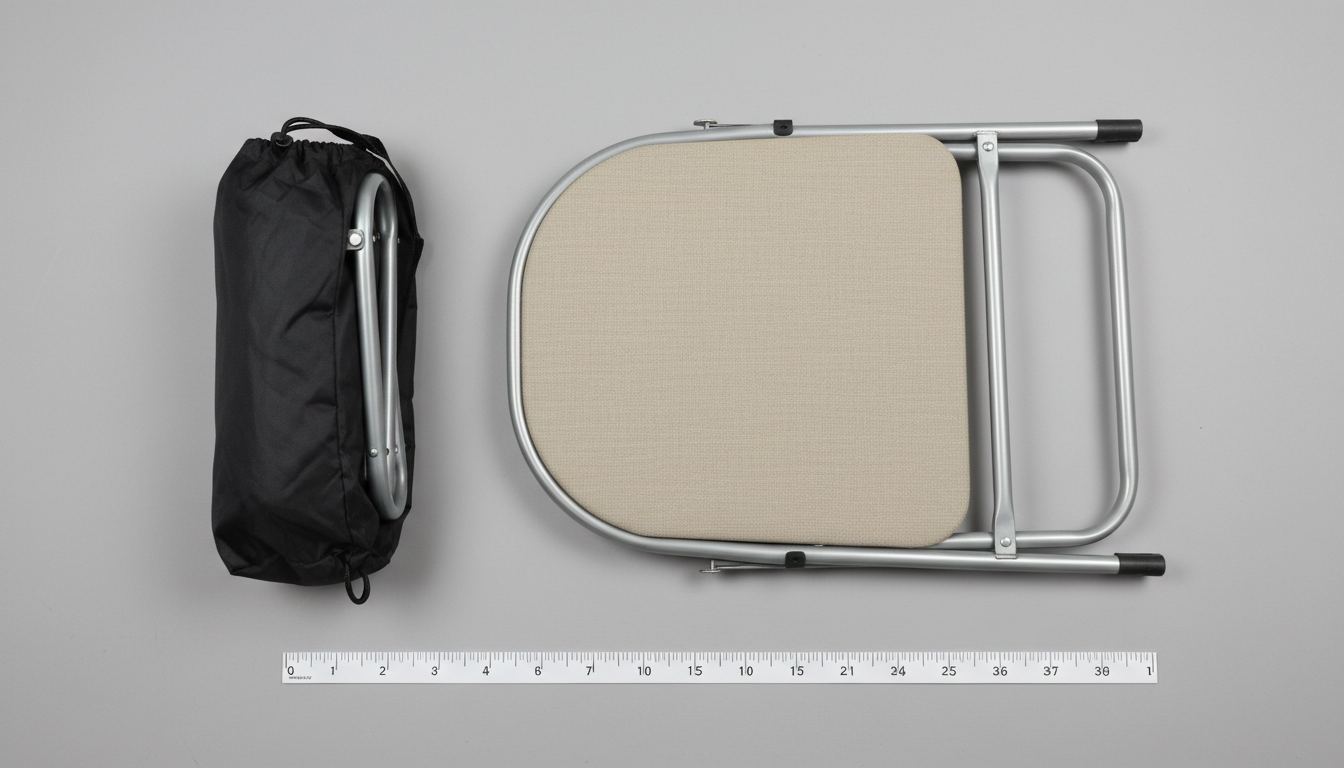
Durability Trade-Offs in Travel Folding Chair Selection
Selecting a travel folding chair involves a direct trade-off between pack size, weight, and durability. You cannot optimize for all three simultaneously. The industry’s “secret” is that fabric denier (D) is often overstated. A 600D polyester with a PU coating will outperform a 900D fabric with a weak weave.
Here’s a durability framework based on our product teardowns:
| Use Case | Recommended Fabric | Frame Gauge | Target Lifespan | Cost Range |
|---|---|---|---|---|
| Light Commercial (50 events/year) | 600D Oxford, PU Coated | 16mm Steel / 19mm Aluminum | 3-4 years | $35–$50 |
| Heavy Commercial (Daily Rental) | 1000D Polyester, PVC Laminated | 19mm Steel / 22mm Aluminum | 5-7 years | $60–$85 |
| Ultra-Light / Backpacking (Low Cycle) | 420D Ripstop | 13mm Aluminum (Helinox-style) | 2-3 years | $100+ |
For a general-purpose folding camp chair, the 600D Oxford fabric used in our PeakRoam line provides the best balance. The hinge mechanism is the true failure point. Look for chairs with a pinned or riveted bolt connection, not just plastic clips. A picnic chairs folding design with a cross-brace will always be more stable than a simple scissor-fold.
Procurement Framework for Bulk Outdoor Furniture Orders
When procuring 100+ units, your RFQ must go beyond unit price. This technical checklist prevents costly oversights:
Procurement Audit: 5-Step Checklist
- Request Certified Test Reports: For weight capacity (ASTM F1561) and fabric abrasion (Martindale ≥ 20,000 cycles).
- Specify Packaging: Individual storage bags with carry handles. Master carton must fit a 48"x40" pallet with <10% void space.
- Define Warranty Logistics: Who pays return shipping for defective units? Is it a "replace first" or "return for inspection" model?
- Order Pilot Batch: Purchase 10 units for a real-world deployment test on your terrain before the bulk order.
- Calculate Total Cost of Ownership (TCO): (Unit Cost + (Annual Repair Cost * Years)) / Years of Service.
From our work with retail chains, we know a clear warranty that includes freight damage is non-negotiable. A common mistake is accepting a “1-year warranty” that requires you to ship a broken chair back to China at your expense, negating any savings.
Frequently Asked Questions
What is the breakeven point for premium aluminum vs economy steel folding camp chairs?
The breakeven point depends on usage cycles. Aluminum frames (6061-T6) cost 30-40% more upfront but last 10,000+ cycles versus 5,000-7,000 for steel. For high-use rental fleets (daily use), aluminum's lower maintenance and longer lifespan justify the premium within 2-3 years, making it cheaper per cycle.
What fabric specification should I prioritize for a folding camp chair used in daily rentals?
For heavy commercial daily rental, prioritize 1000D polyester with PVC lamination. This fabric, paired with a 19mm steel or 22mm aluminum frame, provides a 5-7 year target lifespan, resisting abrasion and UV damage far better than standard 600D Oxford fabrics used in lighter-duty models.
How does pack size impact logistics costs for a corporate camping equipment order of 500 units?
Compact systems reduce storage volume by 65%. A fleet of 500 compact chairs and tables fitting on standard 48"x40" pallets can save thousands annually in warehouse space versus bulkier resin chairs. Specify master cartons with <10% void space to maximize container load and minimize shipping costs per unit.
When should I choose a compact 24"x24" table over a full-size 30"x48" model for outdoor events?
Choose the compact 24"x24" table for high-density, short-duration events like cocktail hours or registration, where it increases user density by 33%. Opt for the full-size 30"x48" table for seated meals or activities requiring laptops, as it provides the necessary ≥50 lb central load capacity for equipment.