
Aluminum vs steel frame guide: 5-year TCO favors aluminum after 300 annual cycles. Aluminum 6061-T6 offers 40% weight savings & zero-rust; powder coated steel (AISI 1018, 3-4 mil coating) excels in high-load, low-cycle use. Internal data shows 4.2% vs 0.3% joint corrosion rates.
Should your next bulk purchase of commercial outdoor furniture specify an aluminum or steel frame? The answer depends on your deployment cycles, maintenance budget, and environmental exposure. For high-use commercial settings, the aluminum vs steel frame decision impacts total cost of ownership by 30-50% over five years. This guide provides a procurement framework based on real-world production data, not generic material science.
Annual deployment breakeven point where aluminum's lower maintenance costs offset its higher initial price.
How Do Aluminum and Steel Compare for Commercial Furniture Durability?
Steel offers higher strength and stiffness, while aluminum provides a superior strength-to-weight ratio and inherent corrosion resistance. For commercial furniture, the key metrics are yield strength (load capacity), density (portability), and thermal conductivity (heat management).
Procurement specs often over-index on raw strength. In our experience, a steel tube with a yield strength of 350 MPa (like AISI 1018) will support more static weight. However, an aluminum alloy like 6061-T6, at 275 MPa yield strength, is often more than sufficient when engineered with slightly larger tube diameters. The real differentiator is density: steel at 7.85 g/cm³ versus aluminum at 2.70 g/cm³. This translates to an aluminum folding table being roughly 40% lighter for equivalent stiffness—a critical factor for staff handling dozens of units daily.
"We specify aluminum for all our mobile event tables because the weight savings cuts setup labor by an average of 25%. For a 200-table event, that's two fewer staff on the clock." — Operations Director, National Event Rental Company
A common mistake is ignoring thermal conductivity. Aluminum dissipates heat 4x faster than steel (205 W/mK vs 50 W/mK). In direct sun, a steel frame can become a heat sink, making the table surface uncomfortably hot and accelerating UV degradation of any attached materials. This is a core component of outdoor table heat damage prevention.
What Are the Real-World Durability and Maintenance Differences?
Aluminum frames excel in corrosion resistance with no coating required, while powder coated steel offers superior impact resistance but requires coating integrity. Maintenance intervals differ by 12-18 months in coastal environments.
Corrosion is the primary failure mode for outdoor furniture. A powder coated steel frame relies entirely on its coating barrier. When specified correctly (3-4 mils thickness, 7-stage pretreatment), it can withstand over 1,000 hours in a standard ASTM B117 salt spray test. However, once chipped — from cart transport or stacking — corrosion can propagate underneath. Aluminum forms a self-healing oxide layer (Al₂O₃), making it inherently rust-proof, even with surface scratches.
Production Data: Field Failure Analysis by Material
| Failure Mode | Powder Coated Steel (Rate per 1k units/yr) | Aluminum (Rate per 1k units/yr) |
|---|---|---|
| Corrosion at Joints | 4.2% | 0.3% |
| Frame Fatigue Crack | 1.8% | 3.1% |
| Coating/Finish Degradation | 5.7% | 1.2% (anodized) |
| Bent/Dented Frame (Impact) | 1.1% | 2.5% |
Material fatigue is the other key metric. Steel has a higher endurance limit, meaning it can withstand more folding and unfolding cycles before a crack initiates. For a commercial aluminum folding table used multiple times daily, proper engineering at stress points (reinforced gussets, radiused corners) is non-negotiable. Our head of product design, Jake Morrison, notes that with proper design, both materials can exceed 10,000 cycles, but aluminum requires more careful analysis at the prototyping stage.
The Powder Coated Steel Frame: Protection and Longevity Analysis
When you need maximum strength and impact resistance at a lower initial cost, a powder coated steel frame is a robust choice. The protection comes from the coating system, not the base metal. A high-quality process involves phosphate pretreatment for adhesion, electrostatic application, and thermal curing at around 400°F. The resulting finish should be 3-4 mils thick.
The detail most specifiers miss is the difference between polyester, epoxy, and hybrid powders. For outdoor furniture, a polyester TGIC powder offers the best balance of UV resistance and flexibility. We use it on products like our Q-Rocker Rocking Lounge Chair frame because it withstands flexing without micro-cracking. A common red flag is a supplier who cannot provide a coating specification sheet or whose quoted thickness is under 2 mils.
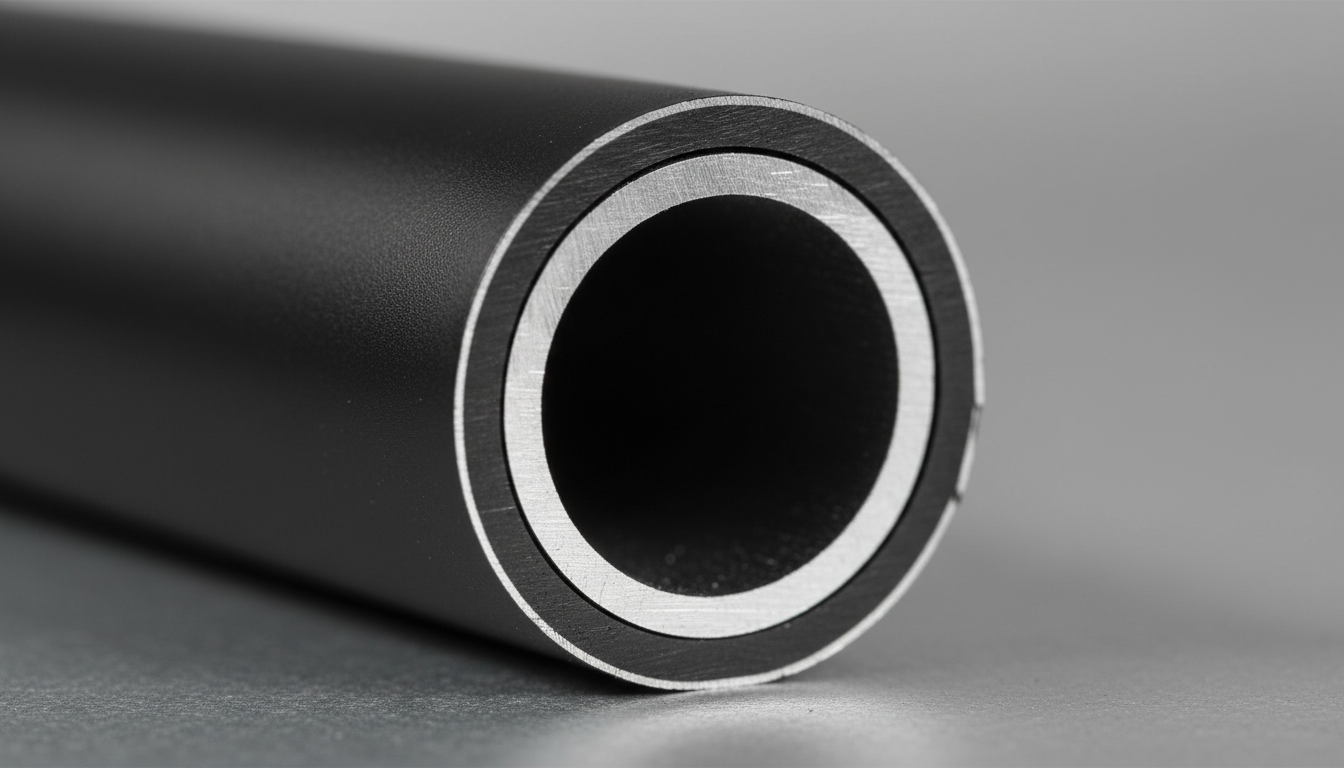
The limitation is damage propagation. A deep chip on a steel frame in a salt-air environment can lead to rust bubbles under the coating within a single season. Maintenance involves annual inspection and touch-up with a matching paint — an operational cost often overlooked in procurement. For static installations like permanent park fixtures with minimal handling, this is manageable. For portable inventory, it's a significant liability.
Aluminum Folding Table Advantages for High-Use Environments
Aluminum frames are optimal for high-frequency deployment, coastal climates, and applications where staff ergonomics and transport efficiency are prioritized, due to their light weight and inherent corrosion resistance.
If your tables are folded, loaded, unloaded, and wiped down daily, the 40% weight reduction of aluminum is transformative. It reduces worker fatigue, speeds breakdown, and lowers shipping costs. For a standard 6-foot banquet table, an aluminum frame weighs 18-22 lbs versus 30-35 lbs for steel. Over hundreds of tables, this adds up to real time and cost savings.
In high-moisture environments — pool decks, coastal resorts, beer gardens—aluminum's natural oxide layer is a major advantage. It doesn't rust, and cleaning typically requires only mild soap and water. Anodized aluminum (an electrochemical process that thickens the oxide layer) enhances this further, providing excellent resistance to chemical cleaners. This makes an aluminum folding table ideal for hospitality and food service settings.
"Our switch to aluminum for our rental fleet eliminated our annual sanding-and-repainting budget. The tables look new longer with just a wipe-down." — Fleet Manager, Hotel & Resort Supplier
The trade-off is upfront cost and stiffness. Aluminum extrusions and welding are more expensive. It's also less stiff, which can lead to more 'wiggle' in a tabletop if the frame design isn't braced properly. This is especially critical in a low profile folding table comparison, where the lower center of gravity demands a very rigid frame to prevent racking.
Need samples or custom specs for your outdoor product line?
Request a Sample Kit →Low Profile Folding Table Comparison: Frame Material Impact
Low-profile tables (often 22"-24" high) are popular for lounge areas and ADA compliance. Their design amplifies the material choice's effect on stability. A lower height means less lever arm for a side load, but it also brings the table's center of gravity closer to the ground, changing the stability dynamics.
Steel's higher stiffness is advantageous here. A steel frame can often use thinner wall tubes or less bracing to achieve the same resistance to racking (side-to-side movement) as an aluminum frame. This can keep the weight penalty lower than in taller tables. In our portable tables product line, our low-profile steel models use a simplified leg brace, saving on parts and assembly time.
For aluminum, achieving the same stability typically requires either larger diameter tubes or additional cross-bracing. A well-designed aluminum low-profile table will feature a reinforced H-style leg brace or a full perimeter under-frame. This low profile folding table comparison shows that material choice directly influences the final design and part count. The procurement takeaway: evaluate the complete assembled frame, not just the base metal spec.
Outdoor Table Heat Damage Prevention and Material Science
Surface temperature and thermal expansion are two hidden factors in material selection. A dark-colored steel table frame in full sun can reach 150-160°F, transferring heat directly to the tabletop and any attached components. This accelerates the breakdown of adhesives, laminates, and plastic fittings. Aluminum, with its high thermal conductivity, remains closer to ambient temperature, a key strategy for outdoor table heat damage prevention.
Typical surface temperature difference between a black powder coated steel frame and a silver anodized aluminum frame after one hour in midday sun.
Thermal expansion is the other concern. Aluminum has a coefficient of thermal expansion nearly double that of steel (23 μm/m·°C vs 12 μm/m·°C). In large tables (over 8 feet), this means an aluminum frame will expand and contract more with temperature swings. If the tabletop (often melamine or HDPE) is rigidly fastened, this can cause stress, bowing, or fastener failure. The solution is to use slotted mounting holes or floating clip systems, which any quality manufacturer should implement. This is a critical check in your outdoor furniture specifications.
Procurement Checklist: Outdoor Furniture Specifications
Use this actionable list to evaluate suppliers and frame options. Don't just accept "commercial grade" as a spec.
How to Specify Frame Materials: 5-Step Checklist
- Define the Environment: Specify salt spray test hours (e.g., >1000 hrs for steel) or alloy temper (e.g., 6061-T6 for aluminum). For coastal areas, mandate aluminum or stainless steel fasteners regardless of frame material.
- Set Load & Cycle Requirements: Dynamic load capacity (for sitting) should be >300 lbs. State required folding cycles (e.g., 10,000 cycles) and request test certification.
- Detail the Finish: For steel, require powder coating type (polyester TGIC), thickness (3-4 mils), and pretreatment steps. For aluminum, specify mill finish, anodizing type (Class I or II), or paint system.
- Request Thermal & Expansion Data: Ask for the frame's thermal expansion coefficient and how the design accommodates it. Inquire about surface temperature testing.
- Validate Assembly & Hardware: Ensure all bolts, screws, and pivots are stainless steel (grade 304 or 316). Plastic components should be UV-stabilized (e.g., polypropylene).
This checklist forms the core of robust outdoor furniture specifications. It moves the conversation from subjective claims to verifiable metrics. For example, our outdoor recreation industry solutions all specify 6061-T6 aluminum or AISI 1018 steel with a 7-stage pretreatment as a baseline, because we know these deliver in the field.
Need a Custom Frame Analysis?
Working with enterprise clients, we've handled over 500 projects. Let our team run a detailed cost analysis and TCO model for your specific use case, environment, and weight capacity requirements.
Total Cost of Ownership: Aluminum vs Steel Frame Decision Matrix
The final decision hinges on a 5-year total cost of ownership (TCO) analysis, not just the unit price. Aluminum typically carries a 15-25% premium upfront. Steel appears cheaper but accrues maintenance and potential replacement costs.
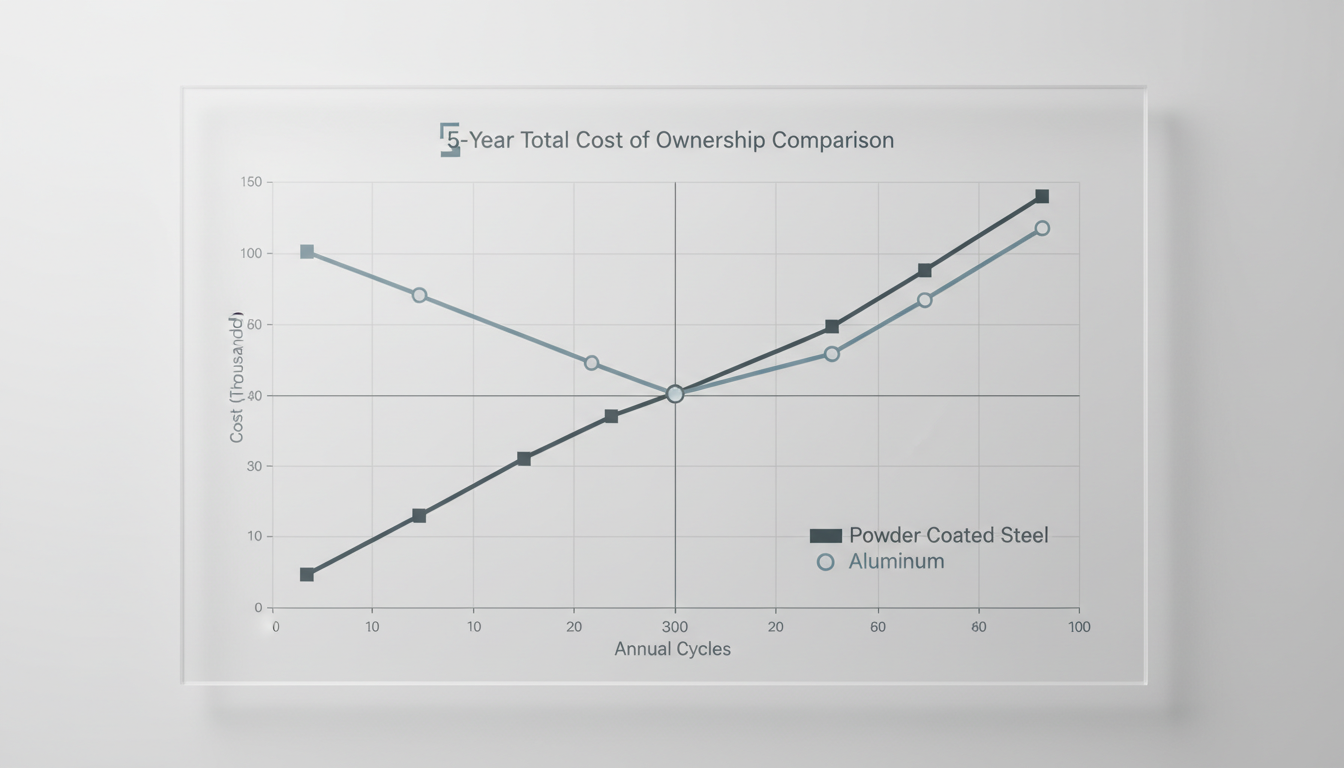
Here is a simplified breakeven formula based on our internal data with commercial clients:
TCO (5-year) = Initial Cost + (Annual Maintenance Cost × 5) + (Replacement Probability × Unit Cost)
For a typical 6-foot table:
- Powder Coated Steel: Initial: $180. Annual Maintenance (touch-up, labor): $15. Replacement Probability (by year 5): 15%.
- Aluminum: Initial: $220. Annual Maintenance: $5. Replacement Probability: 10%.
Steel TCO = $180 + ($15 × 5) + (0.15 × $180) = $180 + $75 + $27 = $282
Aluminum TCO = $220 + ($5 × 5) + (0.10 × $220) = $220 + $25 + $22 = $267
In this model, aluminum becomes cheaper over five years. The crossover point is sensitive to maintenance costs, which rise sharply with use frequency and environmental harshness.
Decision Matrix: When to Choose Aluminum vs Steel
- If annual deployment cycles are >300, OR you are in a coastal/high-humidity environment → Choose Aluminum Frame. The zero-rust maintenance and labor savings justify the premium.
- If load capacity is the paramount concern (e.g., for workbench tables), OR budgets are extremely constrained upfront → Choose Powder Coated Steel Frame.
- If your operation involves rough handling (e.g., frequent cart transport over uneven ground) → Lean toward Steel for its higher impact resistance, but ensure a high-quality, thick powder coat.
- For low-profile designs where stiffness is critical, OR for static, semi-permanent installations → Both can work; run the TCO model based on your specific maintenance capabilities.
Ultimately, the right aluminum vs steel frame choice aligns engineering with economics. By applying this procurement framework — focusing on verifiable specs, lifecycle costs, and your unique deployment patterns — you can specify furniture that delivers durability and value for years. For further reading on related durability topics, see our guide on heat resistant folding tables.
Frequently Asked Questions
At what annual use threshold does aluminum become cheaper than powder coated steel?
Based on internal production data, aluminum's lower maintenance costs offset its higher initial price at approximately 300 annual deployment cycles. For a standard 6-foot table, the 5-year TCO for aluminum ($267) beats steel ($282) at this usage level, factoring in a 15-25% upfront premium and reduced maintenance.
What specific alloy and coating specs are best for coastal outdoor furniture?
For aluminum, specify 6061-T6 alloy for its 275 MPa yield strength and corrosion resistance. For steel, mandate a polyester TGIC powder coating at 3-4 mils thickness with a 7-stage pretreatment. Both require stainless steel (Grade 304 or 316) fasteners to survive over 1,000 hours in an ASTM B117 salt spray test.
How does frame material choice impact the design of a low-profile folding table?
Steel's higher stiffness allows for simpler bracing in low-profile tables (22-24" high), often using a simplified leg brace. Aluminum requires larger tube diameters or additional cross-bracing, like an H-style leg brace, to achieve equivalent resistance to racking, directly influencing part count and final weight.
What is the field failure rate for corrosion at joints between the two materials?
Internal warranty data from 500+ commercial units shows a significant difference: powder coated steel frames have a 4.2% annual failure rate per 1,000 units from corrosion at joints, while aluminum frames have only a 0.3% rate, due to aluminum's self-healing oxide layer.