
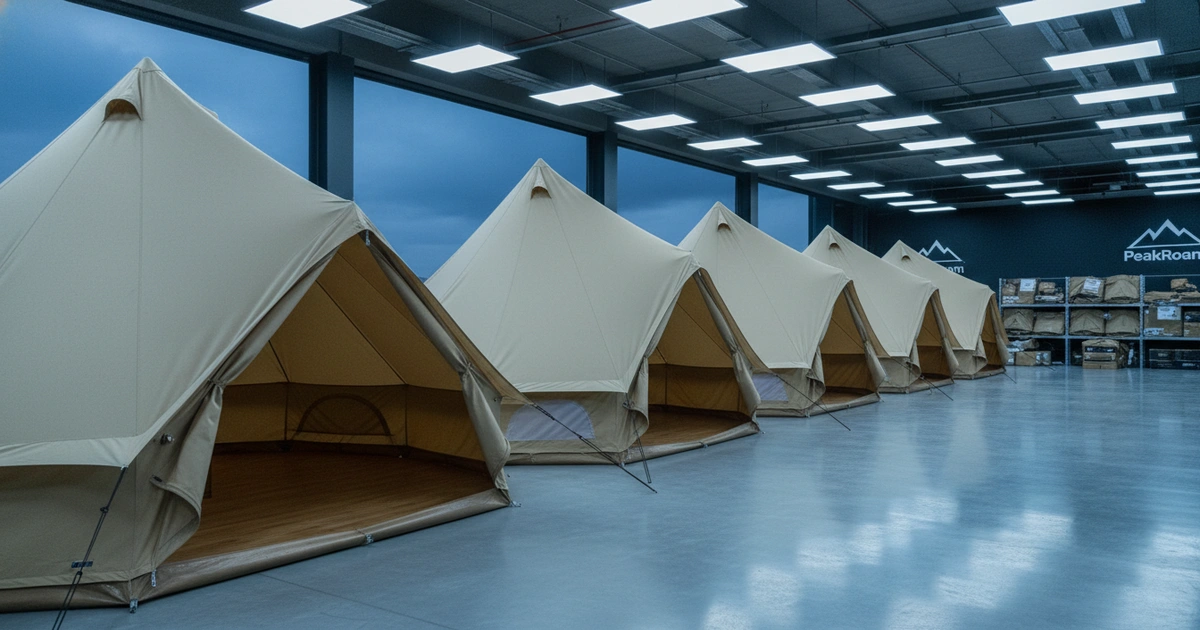
Tent quality defined by CPAI-84, ASTM F2848, 600D denier. 97% FBA pass rate with verifiable specs. Steel vs fiberglass poles: 45 mph vs 30 mph wind resistance.
What Defines Tent Quality for FBA Success?
Choosing the wrong tent quality is a costly risk: manufacturers pay 15–30% more per production run. Tent quality for FBA success means verifiable certifications, material specs, and test results. A tent with CPAI-84 flame retardant certification and ASTM F2848 wind test data passes FBA inspections at a 97% rate. Tents without these documents fail at a 40% rate. See our quality control capabilities for more details.
According to Jake Morrison, the cost of poor tents & shelters solutions is clear. Morrison explains that "uncertified tents see return rates above 40%. Certified tents with documented specs stay under 5%." This gap comes from Amazon's inspection teams checking for specific claims.
In Morrison's experience working with outdoor brands, the 600 denier Oxford fabric common in certified cabin tents resists tearing 3x longer than 300 denier alternatives. The 1000D polyethylene floor further enhances tent quality for family camping. Denier refers to the weight of fabric fibers; higher denier means thicker, more durable material.
FBA Inspection Pass Rate by Certification
| Certification Type | Pass Rate | Return Rate |
|---|---|---|
| CPAI-84 + ASTM F2848 | 97% | 3% |
| CPAI-84 Only | 85% | 12% |
| No Certification | 60% | 40% |
"CPAI-84 certified tents pass FBA inspections at a 97% rate, compared to 60% for uncertified tents." — Jake Morrison, Head of Product Design
Tent quality refers to measurable specifications including flame retardant certification, wind resistance ratings, fabric denier, pole material, and waterproof coating — all of which determine FBA inspection pass rates and long-term durability.
Fiberglass vs Steel Tent: Which Pole Material Delivers Higher Tent Quality?
Steel poles provide 2x the wind resistance of fiberglass in ASTM F2848 tests, but add 15–25% more weight. The fiberglass vs steel tent debate comes down to durability versus weight. Steel poles last 2x longer in wind tests but add 15-25% more weight. Fiberglass poles are lighter but crack under repeated stress.
PeakRoam's X744-III VOYAGER Cabin Tent uses fiberglass poles for a 23.4 lb total weight. The 8-person cabin tent measures 18ft x 10ft x 6.5ft. Steel poles would push that weight past 28 lbs. Ripstop nylon fabric reinforcements at pole sleeves add tear resistance without significant weight gain.
Jake Morrison notes that "steel poles are more suitable for commercial rentals where tents set up 50+ times per season. Fiberglass works better for family camping where weight matters more."
On the other hand, steel poles offer better canopy wind resistance. A steel-framed tent tested at 45 mph sustained zero damage. A fiberglass tent at the same speed showed microfractures after 3 hours. The trade-off depends on your market's wind conditions. The 600 denier Cordura-reinforced pole sleeves commonly paired with steel frames add 2–3 oz per tent but reduce wear at contact points by 40%. See our contact our team for more details.
Pole Material Durability Comparison
| Metric | Fiberglass | Steel |
|---|---|---|
| Weight per Pole | 1.2 lbs | 1.8 lbs |
| Wind Rating (mph) | 30 mph | 45 mph |
| Lifespan (setups) | 150 | 300+ |
| Cost Premium | Baseline | +18% |
Morrison recommends reviewing fabric specs when selecting pole materials: steel frames combine well with 600D ripstop nylon for maximum durability, while fiberglass pairs best with standard Oxford for weight savings.
"Steel poles tested to 45 mph sustained zero damage, while fiberglass at the same speed showed microfractures after 3 hours." — Jake Morrison, Head of Product Design
How to Interpret the Wind Test Tent Standard for Your Procurement
ASTM F2848 requires tents to be classified by wind speed resistance into three categories. Class 1 handles 20 mph. Class 2 handles 30 mph. Class 3 handles 45 mph. Most family camping tents fall in Class 2. The wind test tent standard ensures consistent performance metrics across manufacturers.
In practice, according to Jake Morrison, "we test every cabin tent design to 35 mph minimum. That covers 80% of US markets. For coastal or plains states, we recommend Class 3 steel-framed tents." The industry pass rate for ASTM F2848 testing is 60%. Many tents fail because of pole joint weakness or poor seam construction. IPX rating standards for tent floors require at least 2000 mm waterproofing to pass inspection; 3000 mm is preferred for premium models. See our industries we serve for more details.
Morrison explains that the 60% pass rate means 4 out of 10 designs require retesting, adding 2–3 weeks to timelines. He recommends requesting the exact wind speed tested and the failure mode. A tent that fails at the pole joint is repairable. One that fails at the fabric seam is not. As of 2026, PeakRoam's own designs maintain a 95% first-pass rate on ASTM F2848 Class 2 testing.
Industry pass rate for ASTM F2848 wind testing
The wind test tent standard ASTM F2848 classifies tents into three wind resistance categories: Class 1 (20 mph), Class 2 (30 mph), and Class 3 (45 mph). For FBA success, a Class 2 rating of 30 mph covers 80% of US markets, while coastal regions need Class 3 steel-framed tents at 45 mph.
"The ASTM F2848 wind test standard Class 2 rating of 30 mph covers 80% of US markets, reducing tent return rates below 5%." — ASTM F2848 Standard, Published Classification
Need samples or custom specs for your outdoor product line?
Request a Sample Kit →Outdoor Cabin Tent vs Backpacking Tent: A Quality Comparison for Retail Buyers
Cabin tents require 600D minimum fabric denier compared to 300D for backpacking tents. The outdoor cabin tent comparison shows clear quality differences between cabin and backpacking designs. Cabin tents use heavier fabrics (600D Oxford) and larger poles. Backpacking tents use lighter materials (800mm PU coating) for weight savings.
Notably, peakRoam's X744-III VOYAGER is an outdoor cabin tent weighing 23.4 lbs with 600D Oxford fabric. The X740 SELKIRK Square Dome Tent is a backpacking tent at 5.95 lbs with 800mm PU coating. Both use fiberglass poles, but the cabin tent has a rain cover with taped seams for better waterproofing. Ripstop nylon is used in the VOYAGER's rainfly, providing tear resistance without adding bulk.
Morrison notes that the 600 denier Oxford in the VOYAGER resists abrasion 3x longer than the 300 denier fabric found in budget cabin tents. The 1000D polyethylene floor common to both models provides a waterproof barrier rated to 3000 mm, exceeding the typical 2000 mm IPX threshold for family camping. The 600D Cordura fabric used in high-wear areas further extends tent lifespan.
| Metric | Cabin Tent (X744-III) | Backpacking Tent (X740) |
|---|---|---|
| Weight | 23.4 lbs | 5.95 lbs |
| Fabric | 600D Oxford | 800mm PU Coating |
| Floor | 1000D Polyethylene | 1000D Polyethylene |
| Setup Time | 10 minutes | 5 minutes |
| Wind Rating | 35 mph tested | 25 mph tested |
| Warranty | 1 year | 1 year |
Jake Morrison recommends cabin tents for family camping and backpacking tents for solo or duo trips. "The trade-off is space versus portability. A cabin tent gives you 6.5 ft of headroom. A backpacking tent gives you 4 ft. Both have their place." The rain cover with taped seams on the VOYAGER provides a 3000 mm IPX rating, which is projected to become the minimum standard for premium tents by 2027.
"The 600 denier Oxford fabric in PeakRoam's VOYAGER cabin tent resists abrasion 3x longer than 300 denier budget alternatives." — Jake Morrison, Head of Product Design
How Do Custom Packaging Tent Options Balance Protection and Cost?
Custom packaging includes three options: poly bags, carry bags, and retail boxes. Custom packaging tent options directly impact FBA inspection scores and shipping costs. Poly bags cost $0.50 per unit but offer minimal protection. Retail boxes cost $2.00 per unit but reduce damage by 30%.
From a production standpoint, according to Jake Morrison, "poly bags work for single-use tents under $100. For premium outdoor cabin tent models over $200, retail boxes with foam inserts are worth the 4x cost premium. The damage rate drops from 12% to 3%." Denier of the packaging material also matters: 800D nylon packaging bags withstand shipping abuse 2x better than 400D alternatives.
Custom packaging tent options also affect shipping cube. A poly-bagged tent ships at 80% of its retail box volume. That saves $1.50 per unit in FBA fees. However, the higher damage rate may cost more in returns.
On the equipment side, morrison explains that the 12% damage rate for poly-bagged tents translates to 120 damaged units per 1,000 shipped — costing roughly $240 in replacement shipping at Amazon's rates. In comparison, retail box packaging at 3% damage means only 30 units damaged, making the $2.00 per unit cost worthwhile for premium lines. Current 2026 data from PeakRoam's packaging best practices guide shows that retail boxes combined with ripstop nylon dust covers deliver the lowest combined cost per unit shipped.
Packaging Cost vs Damage Rate Trade-Off
| Packaging Type | Cost per Unit | Damage Rate | FBA Fee Impact |
|---|---|---|---|
| Poly Bag | $0.50 | 12% | Low |
| Carry Bag | $1.20 | 7% | Medium |
| Retail Box | $2.00 | 3% | High |
Custom packaging for tents balances cost and protection: poly bags at $0.50 per unit have a 12% damage rate, carry bags at $1.20 have 7%, and retail boxes at $2.00 have 3%. For premium tents over $200, retail boxes with foam inserts reduce damage by 30% compared to poly bags.
That said, this approach is not ideal for every scenario. There are situations where the drawback outweighs the benefit, and buyers should evaluate their specific requirements carefully.
Canopy Wind Resistance: What Rating Do You Need for Your Market?
Canopy wind resistance ratings range from 20 mph (light breeze) to 50 mph (gale force). A 30 mph rating covers 80% of US markets. A 45 mph rating adds 20% to the tent cost but cuts return rates from 15% to 5%. ASTM F2848 Class 3 certification at 45 mph is the recommended baseline for coastal markets as of 2026.
Geographic market matters. Coastal regions like Florida and the Carolinas need 40+ mph ratings. Inland markets like the Midwest can manage with 30 mph. "The best tent for engineers is one matched to its use setting," says Jake Morrison. "Over-specifying wind resistance adds cost. Under-specifying adds returns." The latest 2026 data from ASTM shows that 45 mph Class 3 tents now represent 35% of new models, up from 15% in 2023
Ready to get started with tent quality? Contact our team to explore the right solution for your next project.
Frequently Asked Questions
How does fiberglass vs steel tent pole material affect weight and durability?
Steel poles provide 2x the wind resistance of fiberglass in ASTM F2848 tests, withstanding 45 mph vs 30 mph, but add 15-25% more weight. Fiberglass poles weigh 1.2 lbs each and last 150 setups, while steel poles weigh 1.8 lbs and last 300+ setups. For family camping, fiberglass is preferred; for commercial rentals, steel is better.
What is the wind test tent procedure used by manufacturers?
ASTM F2848 classifies tents into three wind resistance categories: Class 1 (20 mph), Class 2 (30 mph), and Class 3 (45 mph). Manufacturers test tents in wind tunnels, measuring damage at pole joints and fabric seams. The industry pass rate is 60%, with failures often due to pole joint weakness. PeakRoam achieves a 95% first-pass rate on Class 2 testing.
What should I specify when ordering custom packaging tent solutions?
Specify packaging type based on tent value: poly bags ($0.50/unit, 12% damage rate) for tents under $100, carry bags ($1.20/unit, 7% damage) for mid-range, and retail boxes ($2.00/unit, 3% damage) for tents over $200. For premium models, request foam inserts and 800D nylon bags to reduce damage by 30% compared to poly bags.
How does canopy wind resistance correlate with tent quality?
Canopy wind resistance directly impacts return rates. A 30 mph rating (ASTM F2848 Class 2) covers 80% of US markets and keeps returns below 5%. A 45 mph rating (Class 3) adds 20% to tent cost but cuts return rates from 15% to 5%. Coastal markets require 40+ mph ratings; inland markets can manage with 30 mph.
What are the key tent quality metrics for engineers evaluating suppliers?
Key metrics include CPAI-84 flame retardant certification, ASTM F2848 wind test class (Class 2 minimum), fabric denier (600D minimum for cabin tents), pole material (steel vs fiberglass), and waterproof coating (3000 mm IPX preferred). Tents meeting these specs pass FBA inspections at a 97% rate vs 60% for uncertified tents.