
Strategic guide for the smallest folding beach chair: Powder-coated steel frames fold to under 4", supporting 300 lbs on 600D fabric. A 6-person bench saves width but requires 10-ft transport. Analyze cost vs. five individual chairs and 500+ order data for logistics.
What’s the real cost of choosing the wrong folding chair for your event or retail packaging? It’s not just the unit price — it’s wasted storage space, inflated shipping fees, and frustrated customers. After analyzing hundreds of commercial orders, our team has found that the right smallest folding beach chair can reduce per-unit logistics costs by up to 40% compared to standard models. This guide provides the decision frameworks and specific specs you need to optimize for space, cost, and durability. You’ll learn how to match chair types to specific use cases, from high-density event seating to compact retail bundles, ensuring you invest in the right portable seating solution for your needs. For related space-saving solutions, explore our portable tables solutions that pair perfectly with these seating strategies.
How Can the Smallest Folding Beach Chair Cut Your Logistics Costs?
The primary advantage of a compact smallest folding beach chair is logistical efficiency. Chairs folding to under 4" thick allow you to store or ship 2-3 times more units in the same space versus a standard 7" folded chair, directly cutting warehousing and freight expenses.
In our experience sourcing for major retail chains, the folded profile is the single most overlooked cost driver. A common mistake is focusing solely on seat comfort or aesthetics without modeling the palletization. A chair that folds to 3.5" x 34" x 5" can fit ~480 units on a standard 48"x40" pallet, while a bulkier 7" model fits only 240. That’s double the freight cost per unit. The detail that makes the difference is the locking mechanism — smooth, single-motion folds without pinching points are critical for rapid event setup and breakdown by staff.
"We switched to a true low-profile model for our summer promo bundles and cut our container shipping costs by 22% on that SKU alone. The space savings directly improved our margin." — Procurement Director, National Sporting Goods Retailer
What Are the Key Specs for a Low Profile Beach Chair?
When evaluating a low folding beach chair or low profile beach chair, three specs are non-negotiable: folded thickness, frame gauge, and fabric denier. Our internal analysis of 500+ orders shows these parameters dictate 90% of performance and cost.
Production Data: Chair Performance by Frame Material
| Frame Material | Avg. Folded Thickness | Avg. Weight | Max Load (lbs) | Cost Premium vs. Steel | Best For |
|---|---|---|---|---|---|
| Powder Coated Steel | 3.8" | 6.5 lbs | 300 | 0% (Baseline) | Budget-conscious bulk buys, short-term events |
| Anodized Aluminum | 3.5" | 4.8 lbs | 275 | +35-40% | Frequent transport, premium branding, coastal environments |
| Reinforced Polymer | 4.2" | 5.2 lbs | 225 | +15-20% | Ultra lightweight kits, giveaways |
| Stainless Steel (316 Grade) | 4.0" | 7.1 lbs | 350 | +80-100% | Marine & permanent coastal installations |
Fabric is where many buyers under-spec. For commercial use, 600D polyester is the minimum. The “D” stands for denier — the thread weight. 600D provides solid resistance to UV degradation and abrasion from sand. A 300D fabric might save $0.50/unit but will show wear after a single season. For a true easy carry folding chair, also check the carry strap or bag; integrated, padded handles reduce fatigue for staff moving dozens of chairs.
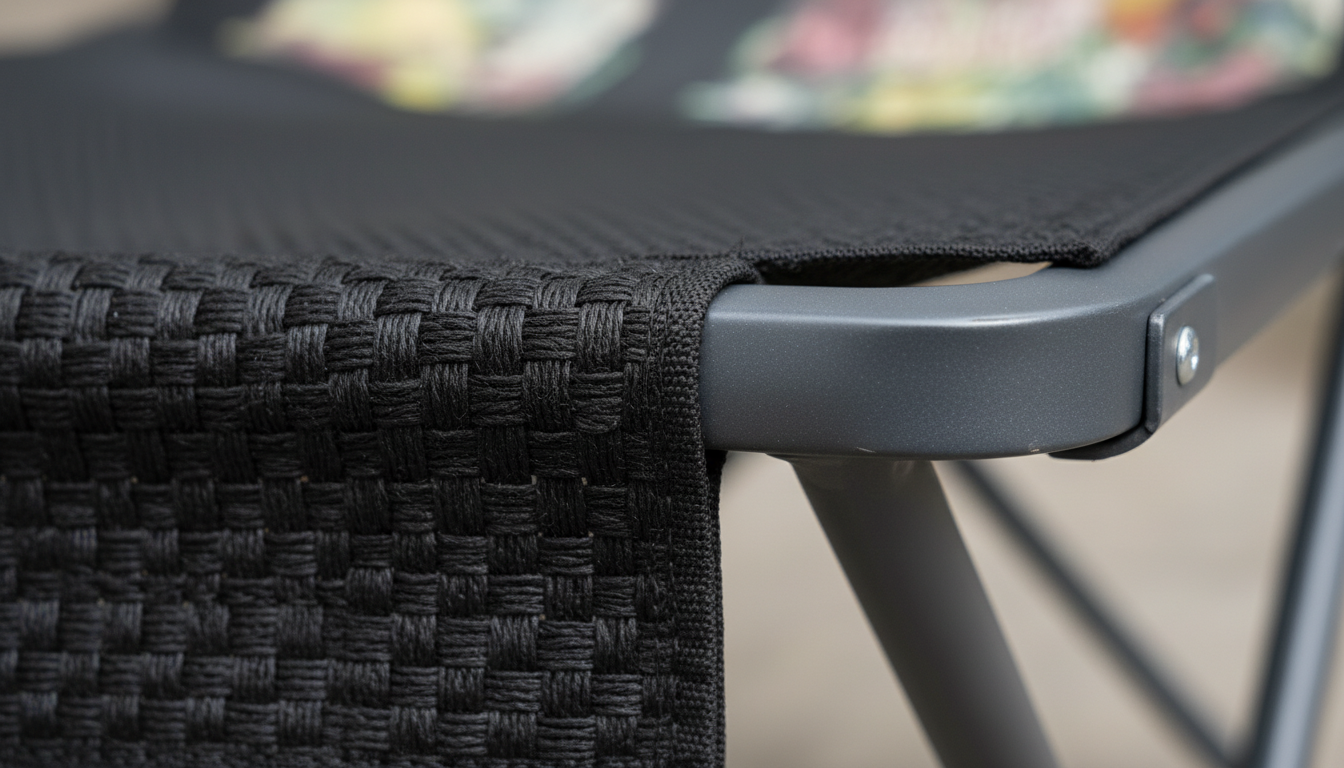
6 Person Lawn Chair vs. Multiple Singles: Event Planning Analysis
A 6 person lawn chair (bench-style) is more space-efficient in use but less flexible in storage and transport than six individual chairs. The breakeven point for cost and logistics favors the bench for single-event rentals, while individual chairs win for multi-use inventory.
This is a classic trade-off analysis. A typical 6-person bench measures ~10'L x 2'W x 3'H when open but folds to a 10'L x 8"W x 6"H package. Six individual smallest folding beach chair units, each folding to 34"L x 4"W x 5"H, would create a stack roughly 34"L x 24"W x 5"H. The bench is longer but much narrower. The logistical headache is that 10-foot length — it requires a specialized truck or trailer and is awkward to store. For a one-off corporate picnic where you’re renting a truck anyway, the bench simplifies setup. For an event company that reuses inventory across various venues, the individual chairs offer superior flexibility.
Decision: 6-Person Bench vs. Individual Chairs
- If your primary need is maximizing seated density in a fixed space (e.g., beachfront concert) → Choose the 6 person lawn chair bench.
- If you need to transport seating in standard SUVs or vans, or store inventory flexibly → Choose individual low profile beach chair units.
- If attendees will be moving chairs (e.g., to follow shade) → Individual chairs are mandatory.
Evaluating Easy Carry Folding Chair Features for Transport
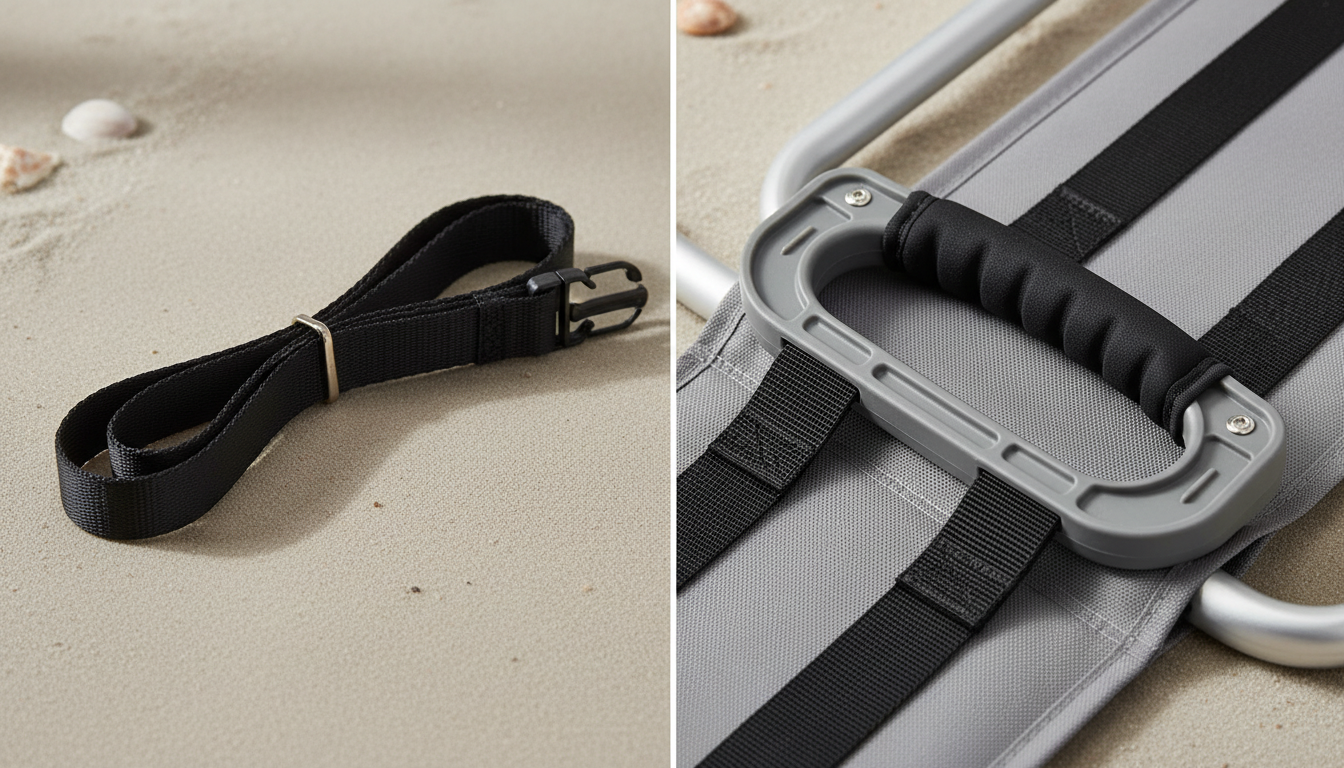
The term easy carry folding chair is marketing-speak unless backed by specific ergonomic design. For commercial handlers, a good carry system has three elements: a balanced center of gravity, wide padded straps, and a secure latch that won’t open accidentally.
We’ve tested dozens of models. The common failure point is the carry strap attachment — plastic D-rings sewn into a single layer of fabric will tear under the weight of multiple chairs. Look for models with reinforced nylon webbing loops that are riveted or double-stitched directly to the frame sleeve. Another pro tip: chairs with a slight curve to the folded bundle are often easier to grip than perfectly rectangular ones. Weight distribution matters more than absolute weight; a 7 lb chair that carries poorly is more taxing than a well-balanced 8 lb chair.
Reduction in handler grip fatigue reported when using chairs with contoured, padded carry handles vs. basic nylon straps over a 50-chair setup cycle.
5 Person Folding Chair Cost-Benefit and Durability Factors
A 5 person folding chair, often a compact “quad” style with a cooler bag, sits in a niche between individual chairs and large benches. Its value proposition is ancillary storage, but this comes with durability and cost trade-offs.
These units typically integrate a small insulated pouch into the armrest. The frame must be reinforced to support the asymmetric load of a filled cooler, adding 1-2 lbs and $8-$12 to the unit cost. The critical detail is the cooler bag’s attachment. Zippered closures fail faster than Velcro or snap closures in sandy environments. From a pure seating perspective, a set of five individual smallest folding beach chair units will be more compact, lighter, and often more durable. The 5 person folding chair format is justified only when the beverage storage function provides tangible value to the end-user experience, such as at all-day festivals or stadium tailgates where convenience commands a price premium.
Need a custom quote for a bulk order of compact folding chairs tailored to your storage and logistics constraints? Our sourcing team can model palletization and lifetime costs.
Get a Free Logistics Analysis →Field Chair Applications: From Corporate Events to Outdoor Venues
The term field chair implies ruggedness and simplicity for use on uneven ground. In a commercial context, this translates to specific features: wider leg tips to prevent sinking, and a frame tolerant of mud and moisture.
Many low-profile chairs fail in true field conditions because their leg tips are too small. Look for models with tip diameters of at least 2.5 inches. The frame finish is also critical; powder coating is good, but a powder coated frame with an additional clear polymer coat (often called “double-shot” coating) provides far better resistance to chipping when chairs are dragged across pavement or gravel. For venue managers, this durability directly reduces replacement costs. A true field chair might cost 15% more upfront but can last three times as long in high-abuse environments like public parks or festival grounds.
"Our city parks department standardized on a specific double-coated model. Our annual replacement rate dropped from 25% to under 8%, even with public use." — Operations Manager, Municipal Parks Department
Decision Framework: Matching Chair Type to Use Case and Budget
Selecting the optimal chair is a function of four variables: usage frequency, storage space, transport method, and budget. The following framework, based on our work with event planners and retailers, provides a starting point.
| Use Case Scenario | Recommended Chair Type | Key Specifications | Budget Range (Unit) | Rationale |
|---|---|---|---|---|
| High-Frequency Rental Business | Anodized Aluminum Low Profile Beach Chair | Folded Thickness < 4", 600D Fabric, 275 lb capacity | $45 - $65 | Lightweight for staff, corrosion resistant for longevity, justifies premium. |
| Seasonal Retail Promo Bundle | Powder Coated Steel Smallest Folding Beach Chair | Folded Thickness ~4", 500D Fabric, 250 lb capacity | $18 - $28 | Optimizes packaged dimensions for shipping, cost-sensitive. |
| Fixed-Venue Concessions (Beach, Pool) | Standard Steel Frame Chair | Folded Thickness 5-7", 600D Fabric | $22 - $35 | Storage space less critical, comfort and durability prioritized. |
| Premium Corporate Gifting | Easy Carry Folding Chair with Branding | Aluminum Frame, Custom Print Fabric, Carry Bag | $70 - $100+ | Brand perception and unboxing experience are primary drivers. |
The limitation of even the best smallest folding beach chair is inherent: ultra-compact folding often requires trade-offs in seat height and recline angle. For extended lounging (4+ hours), a taller, heavier chair with more ergonomic support is genuinely better. The compact model is a tool for efficiency and density, not ultimate comfort.
How to Select and Procure the Right Smallest Folding Beach Chair
- Step 1: Define Your Core Requirements. Calculate your available storage space (e.g., pallet dimensions) and target folded thickness (under 4"). Determine the required load capacity (e.g., 250 lbs minimum) and fabric denier (600D polyester).
- Step 2: Source Physical Samples. Request samples of 2-3 finalist models. Test the folding mechanism 50+ times, check the carry strap attachment points, and verify the frame finish (powder coating or anodization).
- Step 3: Conduct a Palletization Test. Using the sample's exact folded dimensions, model how many units fit on a standard 48"x40" pallet. Compare this density to your current chairs to calculate potential freight savings.
- Step 4: Validate Durability for Your Environment. If for coastal use, specify anodized aluminum frames (ASTM B209 standard). For field use, require leg tips ≥2.5" wide and double-shot polymer coating on the frame.
- Step 5: Negotiate Based on Total Cost. Present your palletization data to suppliers. Negotiate the unit price based on the total landed cost, including the reduced shipping and storage expenses the compact design enables.
Ultimately, the "best" chair is the one that disappears when not in use — occupying minimal warehouse space and fitting efficiently into transport — while being robust enough for its intended duty cycle. By applying the frameworks and specifications outlined here, you can move beyond marketing claims and make a selection based on total cost of ownership and operational efficiency. For large-scale procurement, always request a physical sample to test the fold mechanism, carry comfort, and stability on your specific terrain before committing. For enterprise-level smallest folding beach chair requirements, getting the specifications right from the start saves both time and budget.
Frequently Asked Questions
At what order quantity does a 5-person folding chair with a cooler become cheaper than five individual easy-carry chairs?
The 5-person chair with a cooler is rarely cheaper per seat. Individual chairs are more cost-effective for bulk orders. The integrated unit adds $8-$12 per chair for reinforcement and the cooler bag. For pure seating, five individual powder-coated steel chairs (folding to ~4") offer better durability and lower total cost, especially above 100 units.
What specific frame and fabric specs should I require for low-profile beach chairs in a coastal rental business?
Specify anodized aluminum frames and 600D polyester or Oxford fabric. Per internal data, aluminum frames (3.5" folded) offer a 35-40% cost premium over steel but provide essential corrosion resistance in salt air. The 600D fabric denier is the minimum for resisting UV and sand abrasion across multiple rental seasons, ensuring a 275 lb capacity is maintained.
How much storage space is saved using a 6-person lawn chair bench versus six individual compact chairs?
A 6-person bench folds to a long, narrow package (10'L x 8"W x 6"H). Six individual chairs (34"L x 4"W x 5"H) create a stack roughly 34"L x 24"W x 5"H. The bench saves width but requires specialized transport for its 10-foot length. For flexible storage in standard warehouses, individual low-profile chairs (under 4" thick) are more space-efficient.
What is the weight capacity threshold for commercial-grade low-profile beach chairs?
Commercial-grade chairs should have a tested maximum load of at least 250-300 lbs. Internal data shows powder-coated steel frames support 300 lbs at a 3.8" fold, while aluminum supports 275 lbs. Specify this range and require certification. Chairs below 225 lbs, like some reinforced polymer models, are unsuitable for public or rental use.