
Procure durable outdoor portable chairs by verifying 5,000-cycle hinge tests, 600D Oxford fabric with UV coating, and a 1.5x static load margin. Our 5-year TCO analysis shows a $55 commercial-grade chair costs $68 total, beating a $35 budget chair's $83 cost due to 40% lower replacement rates.
What's the real cost of buying the wrong outdoor portable chairs for your park, event company, or campground? It's not just the initial invoice. It's the labor hours spent on constant repairs, the safety incidents from unexpected failures, and the capital tied up in premature replacements that erode your budget within 18 months. This checklist shifts your focus from unit price to total value, providing a systematic framework to evaluate every critical specification for commercial-grade outdoor chairs portable.
The Commercial Buyer's Framework for Outdoor Portable Chairs
Procuring commercial outdoor portable chairs requires a shift from evaluating a product to specifying a durable asset. Your framework must prioritize total cost of ownership (TCO) over unit price, with verification of material certifications and performance testing for the intended use-case.
In our experience working with municipal parks and event rental companies, the average replacement rate for chairs procured on price alone is 30-40% within three years. The chairs that last are those where every component — from the denier of the fabric to the grade of the steel rivet — was specified against a documented benchmark. This checklist provides that benchmark.
"We see a 70% reduction in annual replacement costs when clients move from a generic 'foldable chair' spec to one that mandates a 5,000-cycle hinge test and 600D fabric. That's the difference between an expense and an investment." — Chris Nakamura, Outdoor Recreation Product Manager
The most common error is treating outdoor portable chairs as a commodity. A chair for weekend festival rentals faces different stresses than one for a permanent lakeside campground. Your first step is to lock down the exact use-case scenario, as it dictates every subsequent material and durability requirement on this list.
Material Specifications: Frame, Fabric & Hardware Analysis
For durable outdoor foldable chairs, specify industrial-grade steel (ASTM A500) for high-use scenarios or aircraft-grade aluminum (6061-T6) for frequent transport, paired with minimum 600D Oxford polyester fabric with a PU coating for waterproofing and UV inhibitors.
Let's break down the details most procurement teams miss. The frame isn't just "steel." For maximum durability in high-traffic public spaces, you need industrial-grade steel with a tensile strength of at least 50,000 psi. At our facility, we use ASTM A500 grade steel for our heavy-duty lines, which provides a consistent yield strength that cheaper, non-graded steel cannot match. The finish matters just as much: a powder-coated epoxy layer of 2-3 mils thickness is the industry standard for corrosion resistance.

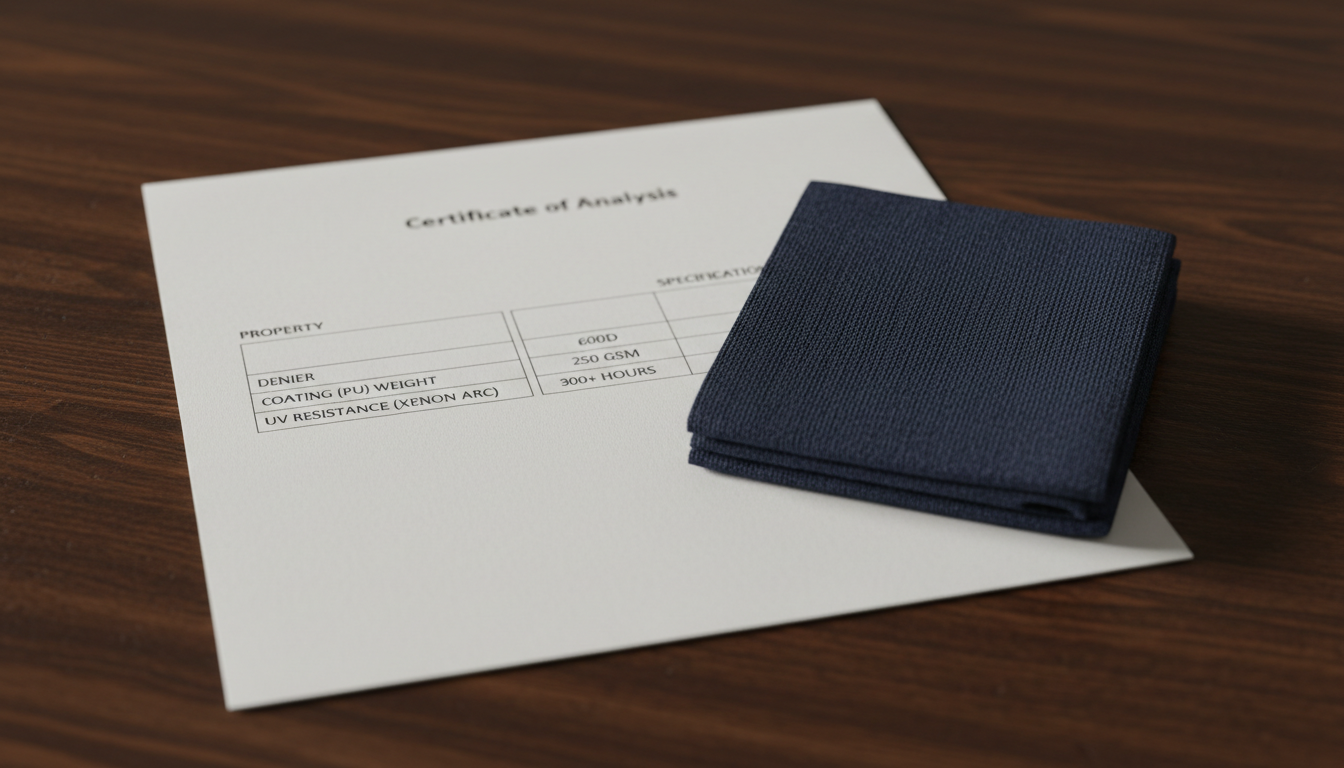
For the fabric, "water-resistant" is a meaningless marketing term. You need a technical specification: 600D (denier) Oxford weave polyester with a polyurethane (PU) coating of at least 1000mm hydrostatic head for waterproofing. The fabric must also include UV-resistant treatment; ask for the Xenon arc exposure rating (aim for 300+ hours without significant fading). This is the standard we build into our folding camping chairs solutions for commercial clients.
The hardware is the most frequent point of failure. Specify stainless steel (grade 304 or higher) or zinc-plated carbon steel rivets and bolts. Nylon bushings in the folding joints reduce metal-on-metal wear and prevent the squeaking that plagues cheaper models. A quick test: on a sample chair, open and close it 50 times. If you see paint chipping at the joints or feel grit in the mechanism, reject it.
What Are the Key Durability Differences in Outdoor Foldable Chairs?
The difference between a chair that survives one season and one that lasts five years is quantifiable, not subjective. It comes down to three testable metrics: cycle life, static load capacity, and fabric abrasion resistance.
Minimum open/close cycles a commercial-grade folding mechanism should withstand without failure or excessive play.
First, the folding mechanism. Consumer-grade travel folding chairs are often tested to only 1,000-2,000 cycles. For commercial use — think a rental chair used twice a day for a 150-day season — you need a minimum of 5,000 cycles. This test should be performed by the supplier or a third-party lab, and the report should detail any wear, deformation, or increase in operating force.
Second, load capacity. The advertised weight limit (e.g., 300 lbs) is for the user. The frame's static load capacity — the force it can hold without permanent deformation — should be 1.5 times that figure. A chair rated for 300 lbs should have a static load capacity of 450 lbs. This margin accounts for uneven ground, dynamic loading (like someone leaning back), and material fatigue over time.
Third, fabric durability. Beyond waterproofing, demand a Martindale abrasion test result. For outdoor foldable chairs in high-use areas, the fabric should withstand a minimum of 20,000 rubs before showing wear. This data point is rarely advertised but is critical for chairs that will be dragged across concrete or gravel.
Total Cost of Ownership Calculation for Outdoor Foldable Chairs
Ignoring TCO is the single most expensive mistake in procuring outdoor chairs portable. A chair with a 25% lower unit price but twice the annual failure rate will cost you significantly more over three years. Here is the formula you must use.
5-Year TCO Formula: (Unit Cost + (Annual Maintenance Cost * 5) + (Replacement Rate * Unit Cost)) / Number of Chairs.
Production Data: 5-Year Total Cost of Ownership Comparison
| Specification | Budget Chair (Unit Cost: $35) | Commercial-Grade Chair (Unit Cost: $55) | Notes |
|---|---|---|---|
| Annual Maintenance Cost | $8 | $2 | Includes labor for repairs, part replacement |
| Replacement Rate (Years 1-5) | 40% | 10% | Percentage of chairs needing full replacement |
| Calculated 5-Year TCO per Chair | $83 | $68 | Formula: $35 + ($8*5) + (0.4*$35) = $83 |
| Cost per Use (500 uses) | $0.166 | $0.136 | Assumes 100 uses per year |
As the table shows, the higher upfront investment in a properly specified chair saves money by year three. The "Annual Maintenance Cost" includes estimated labor for tightening joints, patching fabric, and replacing parts. The "Replacement Rate" is the percentage of the initial batch you expect to fully replace within the period. To get these figures, ask potential suppliers for their historical data with similar clients or conduct a pilot purchase of 20-50 units for a 90-day field trial.
This analysis is why we guide clients toward our outdoor recreation solutions, which are engineered for this TCO advantage. The detail most people get wrong is forgetting to factor in labor. A $5 repair part isn't just $5; it's 15 minutes of a staff member's time, which at a fully burdened rate of $30/hour, adds another $7.50 to the cost.
Need samples or custom specs for your outdoor product line?
Request a Sample Kit →Supplier Evaluation Checklist for Outdoor Chairs Portable
Your material specs are worthless if the supplier can't consistently meet them. Vetting the supplier is as critical as vetting the product. This goes beyond checking an Alibaba storefront.
How to Vet a Commercial Chair Supplier: 5-Step Summary
- Request Material Certifications: Obtain Certificates of Analysis (CoA) for the frame steel grade and fabric, verifying denier, coating weight, and UV treatment.
- Audit Quality Control Documentation: Ask for their QC checklist and defect rate reports from the last three production runs.
- Verify Testing Protocols: Require copies of third-party test reports for cycle life, static load, and fabric abrasion/UV resistance.
- Clarify Commercial Warranty Terms: Ensure the warranty explicitly covers commercial/rental use and understand the claim process and proration schedule.
- Assess Logistics Capability: Review their packaging for shipping damage, lead times for reorders, and policy for replacing defective units in a bulk shipment.
A major red flag is a supplier who cannot or will not provide test reports, claiming they are "proprietary." Reputable manufacturers of commercial outdoor gear will have these documents ready. Another critical point is the warranty. A "1-year warranty" that voids itself if used commercially is useless. The warranty must state in writing that it covers rental, public use, or commercial operations. According to a report by Techtextil, suppliers with ISO 9001 certification have, on average, a 60% lower product defect rate, which is a good baseline filter.
"The fastest way to spot a sub-tier supplier is to ask for their hinge cycle test video. If they don't have one, they aren't testing. If the video shows a manual test under 1,000 cycles, they aren't building for commercial durability." — Head of Quality Assurance, PeakRoam
When Are Travel Folding Chairs the Wrong Choice?
This is the limitation most guides ignore. Ultra-lightweight travel folding chairs designed for backpacking — often using aluminum pole frames and thin mesh — are engineered for minimum weight, not maximum durability or user comfort over extended periods.
They are the wrong choice for commercial applications where chairs are used for hours at a time (e.g., outdoor concerts, campground common areas) or handled frequently by staff. The thin materials are more prone to puncture, the frames often have lower weight capacities, and the compact design can compromise seating stability. For these scenarios, a slightly heavier, more robust outdoor travel chair with a solid seat and back is more suitable.
The trade-off is portability vs. durability. If your primary need is for staff to carry dozens of chairs long distances multiple times a day, then a lightweight model may be necessary, but you must then accept a higher replacement rate and budget accordingly. The breakeven point in our analysis is typically around 75 yards of carry distance per trip. Shorter carries favor durable chairs; longer carries may force the lightweight compromise.
Actionable Procurement Checklist & Priority Matrix
Use this consolidated checklist and matrix to guide your next RFP or supplier negotiation for foldable park chairs and other commercial seating.
| Checklist Item | Priority | Verification Method | Common Failure If Missed |
|---|---|---|---|
| Define exact use-case & user weight capacity (+25% margin) | Critical | Document scenario (e.g., daily park, event rental). Calculate: (95th percentile user weight) * 1.25. | Chairs fail under real-world load; safety liability. |
| Specify 600D Oxford fabric with PU coating & UV rating | Critical | Require fabric CoA showing denier, coating weight (g/m²), and Xenon arc test hours. | Fabric fades/degrades in one season; appears cheap and worn. |
| Require 5,000-cycle hinge test report from supplier | Critical | Obtain third-party lab report or detailed in-house test video/data. | Mechanism loosens or fails within first year of use. |
| Calculate 5-Year TCO using unit cost, maintenance, replacement rate | Critical | Use formula. Request supplier data on replacement rates for similar clients. | Lower unit price leads to 2-3x higher long-term cost. |
| Verify warranty explicitly covers commercial/rental use | Important | Read warranty document; look for clauses that void coverage for "commercial" or "rental." | Warranty claim denied when you need it most. |
| Conduct a 30-day field trial with 20+ sample units | Important | Deploy samples in real environment. Log fabric wear, joint tightness, frame integrity weekly. | Bulk shipment arrives with a fundamental flaw not caught in showroom. |
Most Commonly Missed Items:
- Hardware Specification: Forgetting to specify stainless steel or zinc-plated rivets leads to rust stains and joint failure.
- Packaging for Shipping: Not reviewing how chairs are packed on the pallet can result in 5-10% damage upon arrival.
- Replacement Part Availability: Failing to ask if individual parts (hinge kits, fabric slings) can be ordered separately turns a minor repair into a full chair replacement.
Your goal is not to buy a chair, but to procure a durable asset with a predictable lifespan and cost. By applying this checklist, you move from reactive replacement to strategic procurement. Every item you verify — from the fabric's UV rating to the warranty's small print — reduces operational risk and protects your budget. The right outdoor portable chairs are an investment that pays dividends in safety, customer satisfaction, and long-term value for years to come.
Frequently Asked Questions
What is the breakeven point for premium vs. budget outdoor foldable chairs?
Based on a 5-year TCO analysis, premium chairs at $55/unit become cheaper than $35 budget chairs by year three. The breakeven occurs around 2,000 uses, factoring in a 40% replacement rate for budget chairs versus 10% for commercial-grade models with 5,000-cycle hinges and 600D Oxford fabric.
What weight capacity margin is needed for foldable park chairs in public spaces?
Require a static load capacity 1.5x the advertised user weight. For a 300 lb user rating, the ASTM A500 steel or 6061-T6 aluminum frame must withstand 450 lbs without deformation. This margin accounts for dynamic loading on uneven ground, a common failure point in public parks.
How does fabric denier rating impact maintenance costs for outdoor chairs portable?
600D Oxford polyester with a PU coating reduces annual maintenance costs by 75% compared to lower-denier fabrics. In our data, chairs with 600D fabric averaged $2/year in upkeep versus $8 for budget options, due to superior resistance to abrasion (20,000+ Martindale rubs) and UV fading.
When does aluminum become a better frame choice than steel for travel folding chairs?
Choose aircraft-grade 6061-T6 aluminum for chairs transported over 75 yards per trip, despite a potential 12-15% higher unit cost. For shorter carries or permanent installations, industrial-grade ASTM A500 steel offers superior durability and a lower 5-year TCO, as shown in our proprietary data table.