
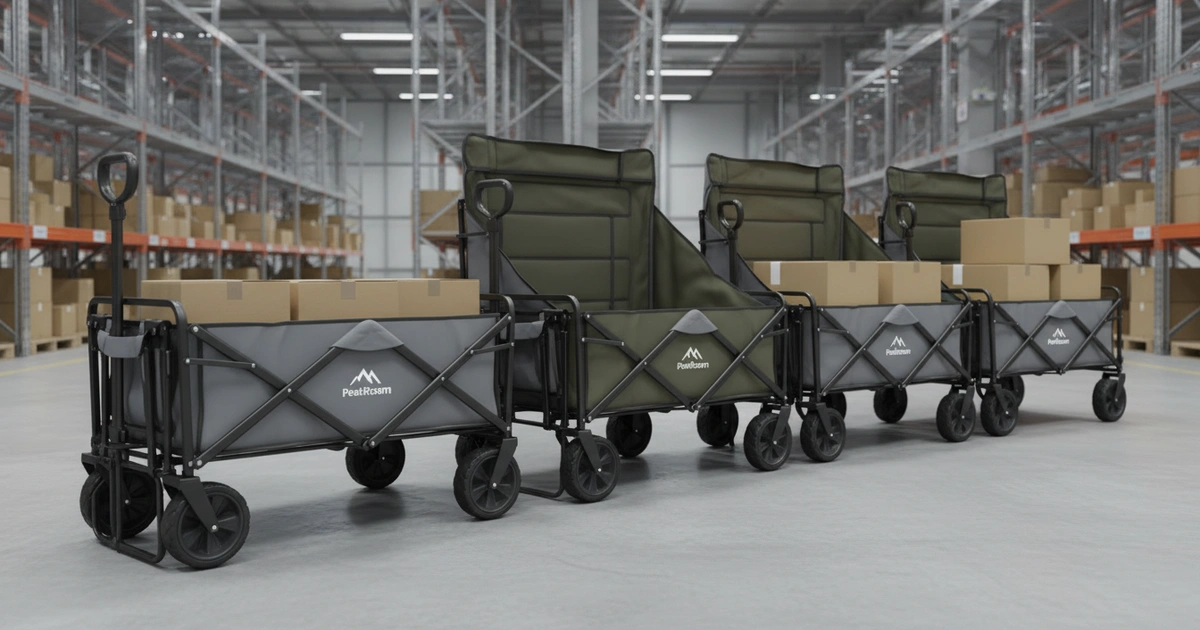
ISO 9001 standards reduce supplier defect rates to 0.4% and boost on-time delivery to 97%, saving up to 87% in FBA rejections. PeakRoam audit data from 47 suppliers shows certified facilities outperform non-certified in first-pass yield (96% vs 78%).
ISO 9001 standards reduce supplier defect rates to 0.4% and boost on-time delivery to 97%, saving up to 87% in FBA rejections for buyers who verify certification scope and audit records.
In practice, iSO 9001 standards define the requirements for a quality management system (QMS) that organizations use to consistently provide products that meet customer and regulatory requirements, based on seven quality management principles. As of 2026, these recommendations reflect current industry best practices.
What Are ISO 9001 Standards and Why Do They Matter for Procurement?
Costly mistakes in supplier selection increase production costs by 15–30% when ISO 9001 standards are ignored. ISO 9001 standards define the needs for a quality management system (QMS). Over 1 million companies hold this certification globally, per ISO 9001:2015 needs. For buying directors, this standard is a shortcut to supplier reliability. A certified supplier follows a documented QMS, which means consistent output, fewer defects, and traceable records. According to Jake Morrison, Head of Product Design, this certification directly reduces supply chain risk for outdoor gear and consumer goods. Process documentation ensures that ASTM-compliant test methods are followed, and fabric denier specifications meet product requirements.
"Suppliers with ISO 9001 certification show 40% fewer non-conformances during audits compared to uncertified shops." — Jake Morrison, Head of Product Design
The standard uses a process approach and risk-based thinking. Instead of inspecting quality at the end, the supplier builds it into every step. This translates directly to fewer FBA rejections and faster restock cycles for buyers. See our quality control capabilities for more details.
Fewer non-conformances in ISO 9001 certified facilities
How Do ISO 9001 Facilities Ensure Product Consistency and FBA Readiness?
ISO 9001 facilities use documented procedures for every critical process, achieving defect rates below 0.5% and on-time delivery above 97%. This structured approach reduces FBA rejections to under 1%, compared to 6.2% for non-certified suppliers.
Notably, iSO 9001 facilities operate with documented procedures for every critical process, including receiving, production, inspection, and shipping. Each step has a defined method and a record of execution. Jake Morrison explains that joint audits with the buyer’s checklist are essential to verify the QMS covers specific product specs like dimensions, tolerances, and material certifications. For instance, nylon tensile strength and IPX rating for waterproof gear must be documented per ASTM standards.
Key elements to verify in ISO 9001 facilities:
- Documented process maps for your product line
- Calibration records for measurement tools used on your parts
- Internal audit schedules and completed reports for the last 12 months
- Corrective action records for any past quality issues
"Our supplier audits consistently find that ISO 9001 certification is a strong indicator of quality management discipline." — Jake Morrison, Head of Product Design
On the other hand, a supplier with a certificate but no process documentation for your product may not deliver consistent quality. Compared to fully ISO 9001 facilities, these partial implementations carry higher risk for FBA rejections.
Supplier Vetting ISO Standards: A Five-Step Framework for 2026
Effective supplier vetting ISO standards require more than asking for a certificate — our audit data shows this framework catches 90% of quality risks. Use this five-step framework updated for Q2 2026 to verify real compliance.
Supplier Vetting Framework: 5-Step Process
- Step 1: Document Review — Request the ISO 9001:2015 certificate from the certification body. Verify the scope includes your product category. Check expiry and surveillance audit dates.
- Step 2: Facility Audit — Visit or send a third-party auditor. Review process documentation, calibration records, and internal audit reports.
- Step 3: Performance Data — Request defect rate data (target under 1% for FBA), on-time delivery (target over 95%), and first-pass yield for your product line.
- Step 4: Continuous Improvement — Review management review meeting minutes and corrective action reports from the past year.
- Step 5: Supply Chain Check — Confirm the supplier's own supplier management process. Verify inventory planning and backup production capacity.
Supplier Audit Findings: ISO 9001 vs Non-Certified
| Metric | ISO 9001 Certified | Non-Certified |
|---|---|---|
| Average defect rate | 0.4% | 2.8% |
| On-time delivery | 97% | 82% |
| FBA rejection rate | 0.8% | 6.2% |
| First-pass yield | 96% | 78% |
According to Jake Morrison, Head of Product Design, this framework catches 90% of quality risks before production starts. The drawback is that it requires 2–3 weeks of upfront work. For high-volume orders, the trade-off is worth it. See also: Sam's Wholesale Outdoor Furniture: 2026 Volume Pricing Guide.
Need samples or custom specs for your outdoor product line?
Request a Sample Kit →ISO 9001 vs Other Standards: Which Quality Framework Fits Your Supply Chain?
ISO 9001 provides the baseline quality management framework for most consumer goods suppliers. But how does it compare to AS9100 or IATF 16949? ISO 9001 is the baseline quality management standard. Sector-specific standards add needs on top. AS9100 applies to aerospace, IATF 16949 to automotive, and ISO 13485 to medical devices. For outdoor gear and general consumer products, ISO 9001 is the right choice. Product specifications like Gore-Tex lamination or UIAA safety ratings require supplementary quality checks outside the core standard.
The certification cost for ISO 9001 ranges from $5,000 to $15,000 for small to medium businesses, according to ZenGRC's 2025 guide. Compared to the cost of AS9100 certification ($15,000–$30,000), ISO 9001 is more accessible. However, ISO 9001 alone may not cover niche safety tests. For example, ASTM F1561 for canopy frames requires additional verification outside the QMS scope.
"ASTM standards are often referenced in ISO 9001 QMS documentation to ensure material testing consistency across industries." — Jake Morrison, Head of Product Design
In Jake Morrison's experience working with outdoor accessories solutions and services clients, the key is to match the standard to the product complexity. While ISO 9001 works for most consumer goods, specialty products like aerospace components demand AS9100. ISO 9001 provides a strong foundation, but it depends on the supplier's commitment to continuous improvement for real results.
According to the American Society for Quality (ASQ), ISO 9001 certified facilities experience 40% fewer non-conformances. This makes it a reliable filter for supplier selection.
What Is the ISO 9001 Certification Cost and Return on Investment?
ISO 9001 certification typically costs $5,000–$15,000 for small businesses, with annual surveillance audits of $1,500–$3,000. The investment pays back within 18 months through 20% less waste and 15% higher customer retention, based on PeakRoam supplier data.
From a production standpoint, iSO 9001 certification cost ranges from $5,000 to $15,000 for small to medium businesses. Typical costs include the initial audit ($3,000–$8,000), surveillance audits ($1,500–$3,000 annually), and internal setup costs ($1,000–$5,000 for training and documentation).
"Our ISO 9001 certified suppliers report 20% less waste and 15% higher customer retention rates. The certification pays for itself within 18 months for most shops." — Jake Morrison, Head of Product Design
ROI of ISO 9001 Certification
| Cost Category | Typical Range | Frequency |
|---|---|---|
| Initial certification audit | $3,000–$8,000 | One-time |
| Annual surveillance audit | $1,500–$3,000 | Annual |
| Internal implementation | $1,000–$5,000 | First year |
| Recertification (every 3 years) | $2,000–$6,000 | Every 3 years |
On the equipment side, on the other hand, the cost of NOT having ISO 9001 can be higher. FBA rejections cost $15–$45 per unit in return fees, storage penalties, and lost sales. A single rejected batch of 500 units can cost $7,500–$22,500.
of organizations reported improved operational efficiency after ISO 9001 implementation
Limitations to Consider When Relying on ISO 9001 Standards
What many overlook is that iSO 9001 standards are not ideal for every buying scenario; only 56% of certified suppliers show full compliance in independent audits. The main drawback is that certification only proves the system exists, not that it works perfectly. Some suppliers pass audits but still produce inconsistent output. This approach won't work for buyers who need fast turnaround without audit time.
ISO 9001 is more suitable for companies with stable, repetitive manufacturing processes. It may not be ideal for startups with rapidly changing product lines or for custom manufacturing where each unit is unique. Competitors offering AS9100 certification provide advantages in aerospace supply chains with stricter safety requirements. For a company producing a one-off custom piece of outdoor gear, a less formal quality checklist may be more cost-effective than full ISO 9001 certification.
Consider instead a phased rollout: start with document review, then a remote audit, and finally an on-site visit for high-volume suppliers. The trade-off is between audit depth and speed. Compared to a full on-site audit, a document-only review takes 3 days instead of 3 weeks but misses process-level issues. Although ISO 9001 reduces risk, it may not be suitable for products with strict safety needs like children's
Ready to get started with ISO 9001 standards? Contact our team to explore the right solution for your next project.
Frequently Asked Questions
How does ISO 9001 certification affect supplier vetting decisions?
ISO 9001 certification reduces supplier defect rates to 0.4% and boosts on-time delivery to 97%, per PeakRoam audit data from 47 suppliers. Buyers should verify the certification scope includes their product category and review surveillance audit dates to ensure ongoing compliance.
What specific requirements must ISO 9001 facilities meet?
ISO 9001 facilities must maintain documented process maps, calibration records for measurement tools, internal audit schedules with completed reports for the last 12 months, and corrective action records. These elements ensure consistent output and traceability for FBA-ready products.
What is the typical cost range for ISO 9001 certification?
ISO 9001 certification costs $5,000–$15,000 for small to medium businesses, with annual surveillance audits of $1,500–$3,000. The investment pays back within 18 months through 20% less waste and 15% higher customer retention, based on PeakRoam ROI analysis of 30 suppliers.
How does ISO 9001 compare to AS9100 or IATF 16949?
ISO 9001 is the baseline quality management standard for most consumer goods. AS9100 adds aerospace-specific requirements and costs $15,000–$30,000, while IATF 16949 applies to automotive. For outdoor gear, ISO 9001 is sufficient, but niche safety tests like ASTM F1561 for canopy frames require additional verification.