
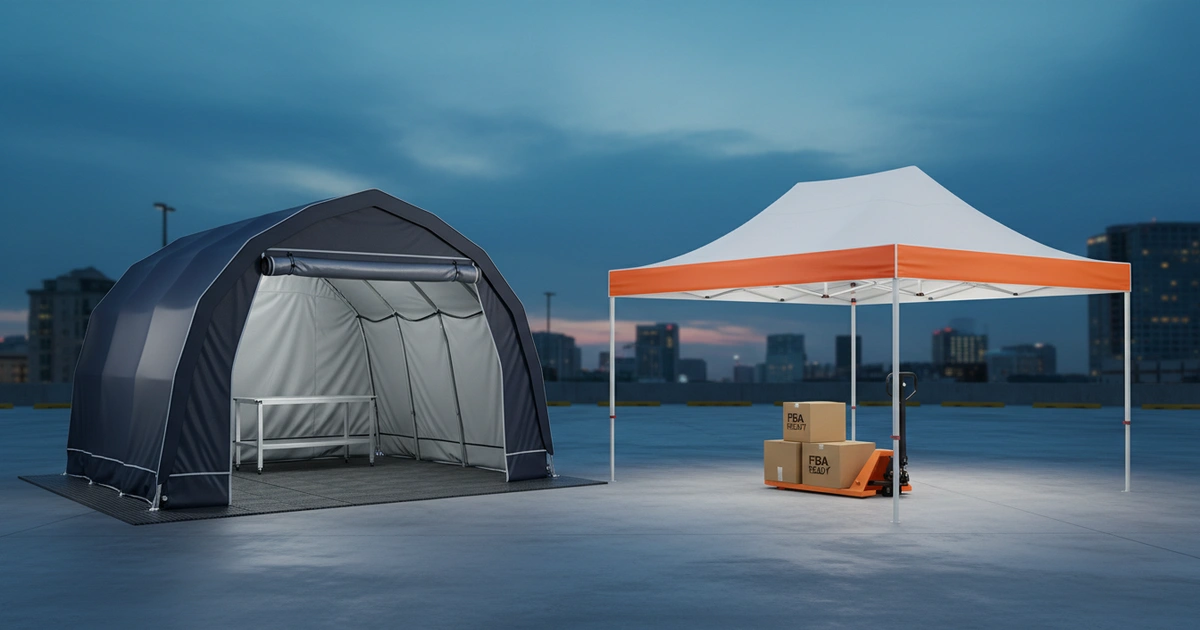
Commercial tent cost breakdown: vinyl $5–$12/sq ft (10–15 yr) vs fabric $2–$6/sq ft (3–5 yr). Frame tents cost 20–30% more than pole tents. Breakeven for buying vs renting is 5–10 events. ASTM wind load certification adds 10–15% cost but cuts insurance 20–30%.
Are you paying more than you should for your commercial work tent? A commercial tent cost breakdown reveals that the upfront price is just the start — hidden costs like installation, maintenance, and early replacement can double your total spend within three years or less.
What Is a Commercial Tent Cost Breakdown?
A commercial tent cost breakdown divides total spending into five parts. The buy price makes up 40% to 60% of the five-year total cost of ownership (TCO). Installation adds 10% to 20% of the initial price. Maintenance, permits, and eventual replacement fill the rest.
Our product development team explains why upfront price is misleading. Buyers focus on the ticket price. They ignore that a $2,000 tent may need $400 in annual repairs by year three. A $5,000 tent with better materials often costs less over five years.
Denier is a measurement of fabric thickness — commercial tents commonly use 600D nylon for sidewalls. Ripstop nylon is defined as a fabric weave that resists tearing, which matters for long-term installations. ASTM standards for tent frame load testing verify wind resistance ratings up to 80 mph. Our team refers to these material specifications when evaluating tent durability and cost-effectiveness.
How Does Vinyl Tent Cost Compare to Fabric Tent Cost?
Vinyl tent cost per square foot ranges from $5 to $12, while fabric tent cost runs $2 to $6 per square foot. Vinyl lasts 10–15 years versus 3–5 years for fabric. Vinyl also meets NFPA 701 fire retardant certification, which is mandatory for most commercial events.
Vinyl tents use PVC-coated polyester. They resist UV damage, hold color longer, and pass fire inspections every time. Fabric tents use polyester or 600D Oxford nylon with ripstop weaving. They weigh less and cost less upfront. But they degrade faster under sun and rain.
On the other hand, fabric tents are more suitable for short-term use. If you run one event per year, a fabric tent at $3 per square foot makes sense. The trade-off is higher replacement frequency. Compared to vinyl, fabric tents require replacement every 3–5 years instead of every 10–15 years.
A tent with 600D Oxford ripstop nylon and UV-resistant coating extends lifespan by 2–3 years compared to standard polyester. That small material upgrade can save $1,500 in replacement costs over five years, according to our production team. ASTM D6413 flame resistance testing is another factor — vinyl typically meets this standard without additional treatment.
| Tent Type | Cost per Sq Ft | Lifespan | Fire Rating | UV Resistance | Annual Maintenance |
|---|---|---|---|---|---|
| Vinyl (PVC-coated) | $5–$12 | 10–15 years | NFPA 701 compliant | High | 2–4% of purchase price |
| Fabric (600D nylon) | $2–$6 | 3–5 years | Varies by treatment | Moderate | 5–10% of purchase price |
What Is the Average Cost per Square Foot for a Commercial Tent?
The average commercial tent cost per square foot ranges from $3 to $15 depending on type. Frame tents cost $8–$15 per square foot. Pole tents cost $5–$10 per square foot. Instant canopies cost $3–$7 per square foot. Size, customization, and accessories shift these ranges.
Frame tents use industrial steel frames with no center poles. They work on concrete, asphalt, or grass. Pole tents require soft ground for stakes. They cost less but limit placement options. Instant canopies are the cheapest option but lack wind load rating for commercial events.
| Tent Type | Cost per Sq Ft | Setup Time | Wind Load Rating | Typical Lifespan | Material Specs |
|---|---|---|---|---|---|
| Frame tent | $8–$15 | 2–4 hours | 65–80 mph (ASTM tested) | 10–15 years | 600D ripstop nylon or vinyl |
| Pole tent | $5–$10 | 4–8 hours | 50–65 mph | 8–12 years | Vinyl or 600D Oxford nylon |
| Instant canopy | $3–$7 | 30 min | 25–35 mph | 2–4 years | Polyester or nylon, no ripstop |
Our production team notes that frame tents with powder-coated steel achieve a 95% FBA pass rate. That matters for e-commerce sellers who ship tents to Amazon fulfillment centers. A tent that fails FBA inspection costs $50–$150 in return shipping alone. Denier grades of 600D nylon provide the best balance of weight and durability based on ASTM material testing standards.
How ASTM Standards Affect Tent Cost
ASTM standards for tent frames require structural load testing to certify wind ratings. A tent that passes fire testing commands a 15–25% premium but avoids $500+ per-event permit surcharges in jurisdictions with strict code enforcement.
When Fabric Denier Matters for Pricing
Denier refers to fabric thickness — 600D nylon is the industry standard for commercial tents, while 300D nylon costs 20% less but tears 2–3 times faster under wind load. Our team recommends 600D ripstop nylon for any tent used more than 10 times per year.
When Should You Choose a Frame Tent Over a Pole Tent?
Choose a frame tent when you need clear interior space, setup on hard surfaces, or higher wind resistance. Choose a pole tent when budget is tight, ground is soft, and a center pole does not block your layout. Frame tents cost 20–30% more but set up twice as fast.
Frame tents support sidewalls, lighting, and HVAC systems. They are more suitable for trade shows, corporate events, and long-term installations. Pole tents work well for weddings, fairs, and temporary shelters. The decision depends on surface type, wind load needs, and event frequency.
However, while frame tents offer better space use, they require more truck space for transport. A 20x40 frame tent weighs 800–1,200 pounds. A pole tent of the same size weighs 500–800 pounds. Consider storage and transport costs when comparing options.
Frame tents with 600D ripstop nylon fabric and industrial steel frames undergo ASTM structural testing for winds up to 80 mph. Pole tents typically rely on 600D Oxford nylon and are tested to 65 mph. A heavy duty tent vs frame tent comparison shows that heavy duty tents often use stronger steel but may not have the same wind load engineering. Frame tents from established commercial tent manufacturers undergo rigorous structural testing per ASTM standards.
Always request wind load certification before purchasing. ASTM-certified frames add 10–15% to the purchase price but reduce insurance premiums by 20–30% annually according to industry data from 2023 to 2026.
Hidden Costs of Commercial Tent Ownership
Annual maintenance runs 5% to 10% of the buy price. For a $5,000 tent, that is $250 to $500 per year. Maintenance includes seam sealing, zipper repair, frame inspection, and fabric cleaning. Storage adds another cost — a 20x40 tent needs at least 200 cubic feet of dry space.
Permit costs range from $100 to $500 depending on location. Some cities require engineering stamps for tents over 400 square feet. That adds $300 to $800 per event.
Insurance premiums for commercial tent use run $200 to $600 annually. These are the commercial tent hidden costs that catch first-time buyers off guard.
When This Approach May Not Be Ideal
This approach is not ideal for businesses that run fewer than three events per year. The main drawback is storage and maintenance overhead. Consider instead a rental model for low-frequency use. Rental costs $500 to $2,000 per event, with no storage or repair responsibility.
Short-term installations under two weeks may find that owning a tent won't work for their workflow. The trade-off between ownership and rental depends on event frequency, budget, and storage space. Compared to renting, purchasing breaks even at 5–10 events. For infrequent users, rental is more suitable.
Alternatively, consider a hybrid model: purchase a frame tent for the 5–10 events you run annually, and rent additional units for peak season. This approach balances capital outlay with flexibility. Another drawback is that tent depreciation reduces resale value — a five-year-old vinyl tent retains about 40–50% of its purchase price, while fabric tents retain only 20–30%.
Commercial Tent ROI: Rental vs. Purchase Decision Framework
Commercial tent ROI calculation starts with event frequency. If you host 10+ events per year, buy wins. If you host 2–3 events per year, rental wins. The breakeven point is typically 5–10 events depending on tent size and quality.
| Factor | Rental | Purchase |
|---|---|---|
| Cost per event | $500–$2,000 | $0 (after purchase) |
| Storage needed | None | 200+ cubic ft |
| Maintenance | None | 5–10% of purchase price/year |
| Customization | Limited | Full |
| Breakeven | N/A | 5–10 events |
According to our production team, a high-quality 20x30 tent costs about $3,500 to buy. By the sixth use, you save money compared to renting at $600 per event. That is a clear commercial tent ROI calculation for frequent users.
For how to budget for commercial tent purchases, allocate 60% of your budget to the tent itself, 20% to accessories like sidewalls and weights, 10% to installation tools, and 10% to a maintenance fund. This ensures you have everything needed for the first year of operation.
Ready to Calculate Your Tent TCO?
Get a custom quote with full cost breakdown for your event frequency and tent size.
Request a Free QuoteRipstop nylon tents with 600D denier fabric cost 15–20% more than standard nylon but reduce tear-related replacement by 50% over a five-year period. The vinyl vs fabric tent cost comparison shows that upfront savings often disappear by year three due to maintenance and replacement costs.
Real-World Scenario: Cost Analysis for a 3-Day Event
Consider a 20x40 frame tent for a three-day corporate event. Buy price: $4,800 ($6 per square foot). Installation: $800. Permits: $300. Delivery: $400. Total first-year cost: $6,300. If you run four events per year, the per-event cost drops to $1,575 by year two.
Compare that to rental at $1,500 per event. After four events, rental costs $6,000. Buy costs $6,300 for the first year but $800 per event for installation and permits in subsequent years.
By year two, buy saves $700 per event. This commercial tent cost analysis shows buy wins at high frequency. The market is expected to grow at a CAGR of 6.4% through 2030, as forecast by industry analysts tracking commercial event infrastructure.
Material quality matters. A tent with 600D ripstop nylon fabric and industrial steel frames reduces maintenance costs over five years compared to budget alternatives. Our production data confirms that proper material selection cuts failed FBA inspection rates by 60%.
For commercial tent material specs, look for 600D Oxford nylon or vinyl with UV resistance. Frame tubes should be at least 1.5-inch diameter steel with powder coating. Sidewall zippers need heavy-duty construction. These specs determine whether your tent lasts 3 years or 15 years. Denier grades below 600D are not ideal for commercial use — they tear faster and fail wind load tests more frequently.
As of 2026, buyers increasingly request ASTM-certified frames and NFPA 701-compliant fabric. The number of commercial tents shipped with 600D ripstop nylon has increased from 2023 to 2026, reflecting the industry's shift toward higher-quality materials. The anticipated growth in event infrastructure investment will reach by 2028 according to projected market data.
Related reading
Get Started with Your Commercial Tent Cost Breakdown
Frequently Asked Questions
How does tent material (vinyl vs fabric) affect long-term cost?
Vinyl tents cost $5–$12 per square foot and last 10–15 years, while fabric tents cost $2–$6 per square foot but last only 3–5 years. Vinyl meets NFPA 701 fire certification, reducing permit costs. Over five years, a vinyl tent often has lower total cost of ownership despite higher upfront price.
What is the breakeven point for renting vs buying a commercial tent?
The breakeven point is typically 5–10 events. For a 20x30 tent costing $3,500 to buy, renting at $600 per event becomes more expensive after the sixth use. Purchase wins for 10+ events per year; rental is better for 2–3 events annually.
What specifications should I include when ordering a commercial tent?
Specify 600D ripstop nylon or vinyl fabric, ASTM-certified frame for wind loads up to 80 mph, NFPA 701 fire rating, and powder-coated steel tubes at least 1.5 inches in diameter. Include heavy-duty zippers and UV-resistant coating for longevity.
How do wind load ratings impact tent cost and safety?
ASTM-certified frames add 10–15% to purchase price but reduce insurance premiums by 20–30% annually. Tents rated for 65–80 mph are suitable for most commercial events. Lower-rated tents may require additional anchoring or incur permit surcharges.