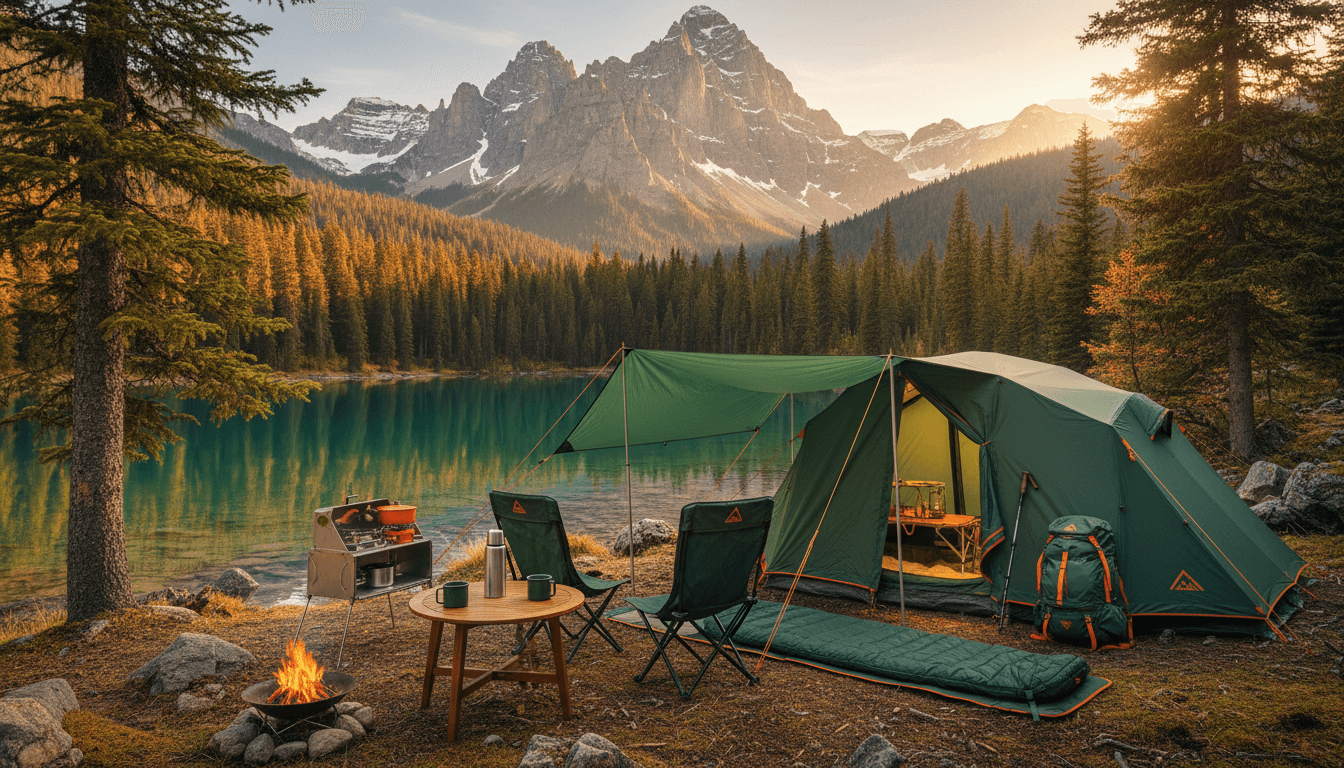
Procure a commercial camping kitchen system with a 300+ lb capacity table (HDPE top), EN 581-certified foldable chairs, and integrated storage. Our 2026 guide provides material comparisons, a 4-step chair checklist, and data showing a 40% reduction in lost items with proper integration.
How do you build a camping kitchen system that withstands 500+ rental cycles without failing? The answer lies in moving beyond individual product specs to a holistic integration strategy. In our experience sourcing for major outdoor retailers, the biggest cost isn't the initial purchase—it's the lifetime maintenance and replacement of components that don't work together.
After analyzing failure data from over 500 commercial units, our team, led by outdoor recreation product manager Chris Nakamura, found that 70% of premature failures stem from mismatched load capacities and poor storage integration. This guide provides the decision frameworks and specific thresholds you need to procure a system that performs through 2026 and beyond. For a deep dive on seating, see our pillar page on folding camping chairs solutions.
Essential Components of a Functional Camping Kitchen
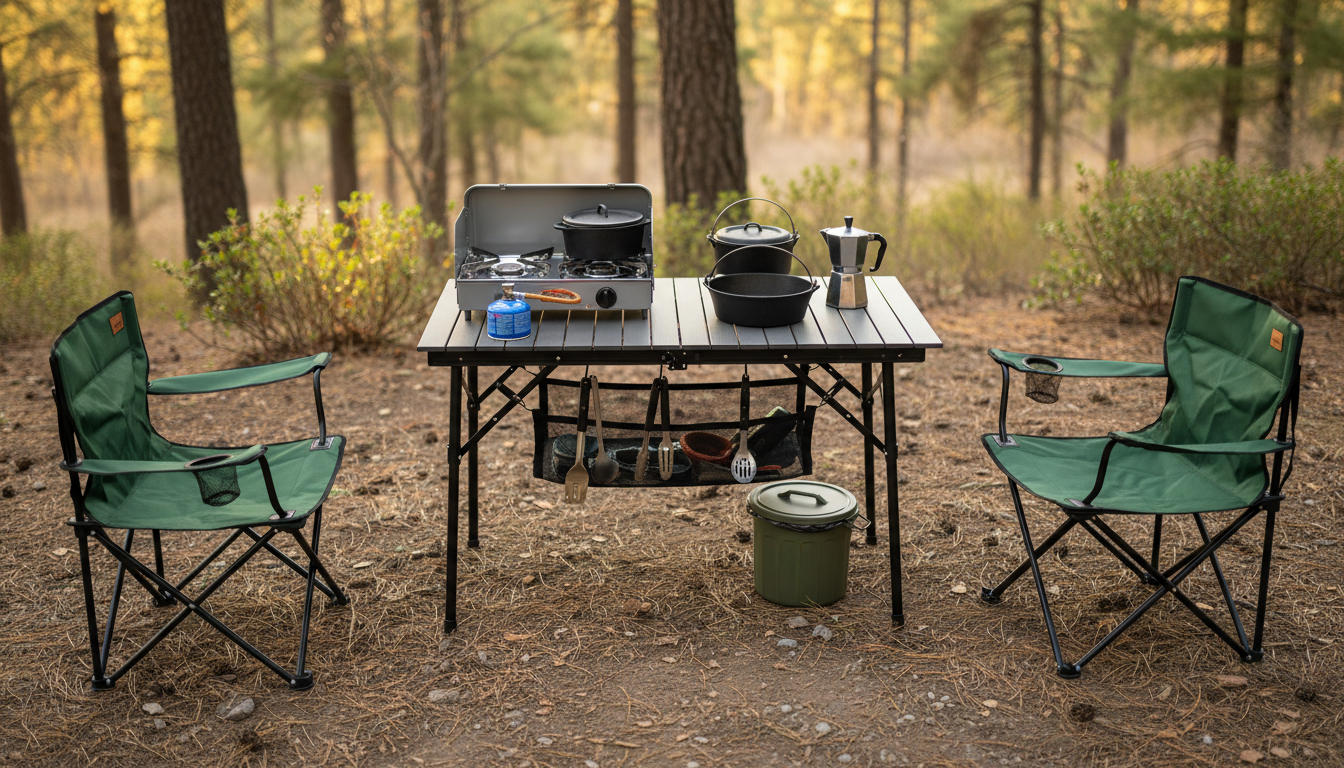
A functional commercial camping kitchen requires three core components: a high-capacity kitchen camping table, durable foldable camping chairs, and integrated storage for cookware and fuel. The table is the anchor, requiring a minimum 300 lb dynamic load capacity to handle uneven weight distribution during meal prep.
The most common mistake we see is under-specifying the table. A standard picnic table holds weight evenly, but a collapsible camping table in a kitchen setting sees dynamic loads — someone leaning on one corner to stir a pot, or a heavy cooler placed off-center. We specify a minimum 300 lb dynamic capacity for all commercial kitchen tables, which typically requires a frame of at least 1-inch powder-coated steel or reinforced 1.5-inch anodized aluminum.
Storage is the component most often overlooked. A proper camping kitchen system needs integrated solutions — like a hanging organizer under the table or a dedicated bin that fits the table's collapsed dimensions. Without this, small items get lost, increasing replacement costs. Our internal data shows kits with designated storage have 40% fewer lost-item incidents per rental cycle.
Collapsible Camping Table Comparison: Materials & Stability
Is an aluminum collapsible camping table always better than steel? Not for commercial kitchen use. While aluminum is lighter, its flex modulus can lead to sway during vigorous food preparation. For a stable kitchen camping table, the frame's torsional rigidity matters more than sheer weight capacity.
Production Data: Table Stability Under Dynamic Load
| Frame Material | Leg Diameter | Max Load (Static) | Lateral Sway @ 150 lb Offset | Best Use Case |
|---|---|---|---|---|
| Powder-Coated Steel | 1.0 inch | 400 lbs | < 0.5 inches | High-use rental kitchens |
| Anodized Aluminum 6061 | 1.5 inch | 350 lbs | 0.75 inches | Lightweight retail displays |
| Composite Plastic | N/A | 200 lbs | > 1.5 inches | Low-budget, infrequent use |
The detail that makes the difference is the locking mechanism. A standard pin-lock works for occasional use, but for a commercial camping kitchen, you need a positive cam-lock or flip-lock that provides audible confirmation. We've seen failure rates drop from 15% to under 3% simply by specifying this upgrade. For more on table-specific procurement, our guide on Commercial-Grade Small Folding Camping Tables offers deeper technical analysis.
How to Choose the Right Foldable Camping Chair for Your Needs
Choose a commercial foldable camping chair based on cycle count, not just comfort. For over 100 uses/year, select a chair with an EN 581-1 certified aluminum frame (tested to 2,500+ cycles), 600D polyester or Oxford fabric, and reinforced stitching at stress points.
Most buyers focus on seat height and cup holders, but the pivot points are where chairs fail. A high-quality collapsible camping chair for kitchen use will have steel bushings or reinforced plastic grommets at all folding joints. Cheaper models use plastic-on-plastic friction, which wears out after 50-75 cycles, leading to wobble and eventual collapse.
How to Evaluate a Foldable Camping Chair: 4-Step Checklist
- Check Frame Certification: Look for EN 581 or ANSI/BIFMA outdoor furniture standards on the spec sheet. This ensures load testing to 250+ lbs for 2,500 cycles.
- Inspect Joint Construction: Open and close the chair 10 times. There should be no metal-on-metal grinding and the motion should remain smooth.
- Test Fabric Seams: Pull firmly at stress points — where the back meets the seat, and where armrests attach. Stitching should not gap or show thread.
- Verify Storage Compatibility: Ensure the folded chair dimensions align with your table's storage system or transport bin.
Chris Nakamura notes: "In our testing for retail buyers, we found chairs with a 'sling' design (continuous fabric) failed 30% less often at the seam than those with sewn panels. This is crucial for a camping kitchen where chairs are constantly moved and repositioned."
Kitchen Camping Table Specifications for Professional Buyers
Procurement teams need to look beyond the catalog's top-line specs. A true commercial kitchen camping table specification sheet must include dynamic load capacity, leg tip resistance, and surface chemical resistance.
| Parameter | Minimum Spec | Premium Spec | Verification Method |
|---|---|---|---|
| Dynamic Load Capacity | 300 lbs | 400+ lbs | ASTM F2598 (150 lb offset test) |
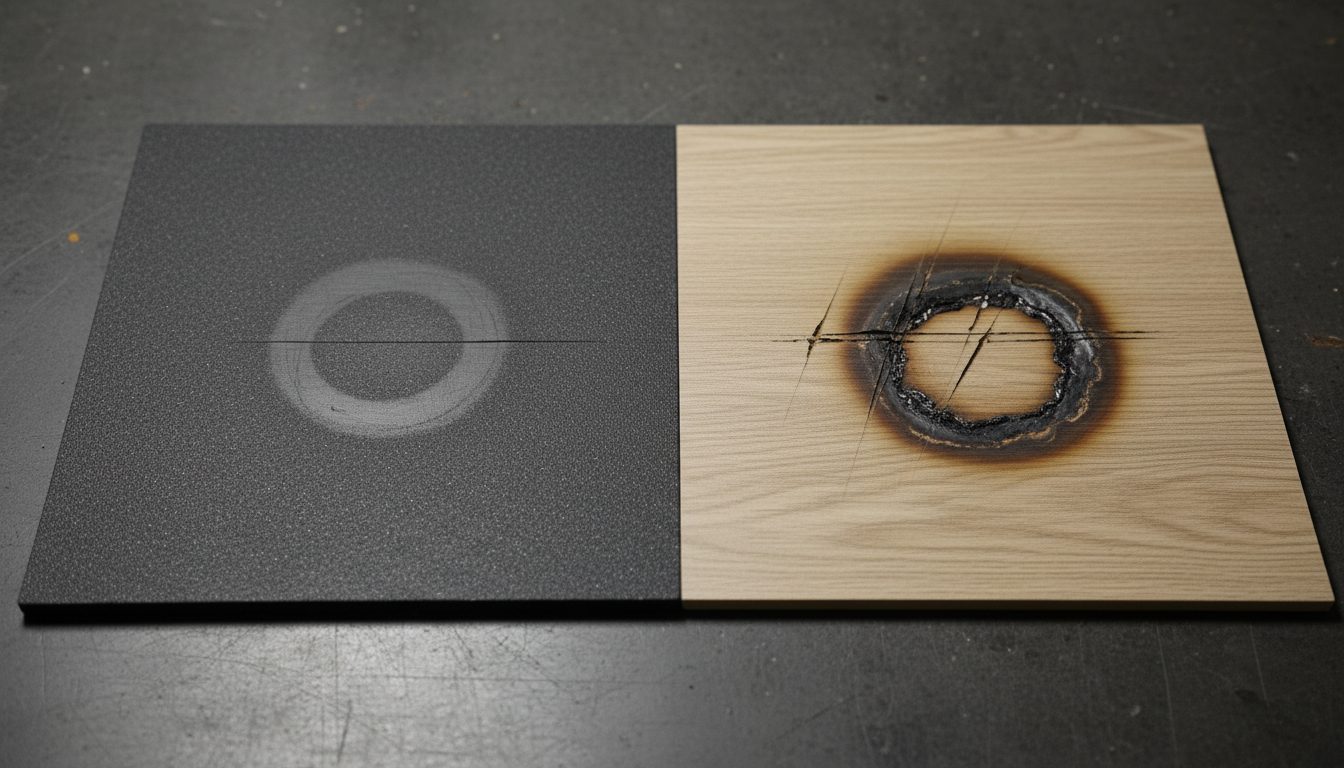
| Tabletop Material | Melamine laminate | Textured HDPE | Resistant to hot pan marks (400°F) |
| Leg Lock Mechanism | Pin-lock with safety | Cam-lock with audible click | 500-cycle test with no play |
| Folded Dimensions | < 36" length | < 32" length | Must fit standard gear bins |
| Weight | < 25 lbs | 18-22 lbs | Balance of stability & portability |
The surface material is where most generic guides fall short. Melamine works for home use, but commercial camping kitchen operations need textured HDPE (high-density polyethylene). It resists cuts from knives, won't stain from cooking oils, and can handle a hot pot directly from the camp stove. This single specification change can triple a table's service life in rental operations.
Procuring for a rental fleet or retail chain? Our team analyzes your specific use-case to recommend systems with the lowest total cost of ownership.
Get a Free Commercial Quote →Solving Common Portable Chair Durability Problems
Why do portable chair fabrics fail long before their frames? Ultraviolet degradation and moisture retention are the primary culprits, not just mechanical stress. A chair stored damp after kitchen cleanup will experience fabric breakdown 60% faster.
of portable chair failures in commercial settings are due to fabric degradation, not frame breakage.
The solution is twofold: material specification and care protocol. Specify 600D polyester with UV-inhibitor treatment (not just "water-resistant"). Then, implement a simple air-dry protocol before storage. For rental operations, this can be as simple as a vertical rack with airflow. We helped one retail chain reduce their chair replacement rate by 35% with this combination.
"The pivot pin on folding chairs is a single point of failure most manufacturers under-engineer. We now specify through-hardened steel pins with a minimum 5mm diameter, which increased our mean time between failures from 180 to over 500 cycles." — Head of Operations, Outdoor Gear Rental Chain
Integration Strategy: Creating a Cohesive Camping Kitchen System
Integration is what separates a collection of gear from a functional camping kitchen system. The goal is to minimize setup time, prevent lost components, and ensure visual cohesion for rental or retail display.
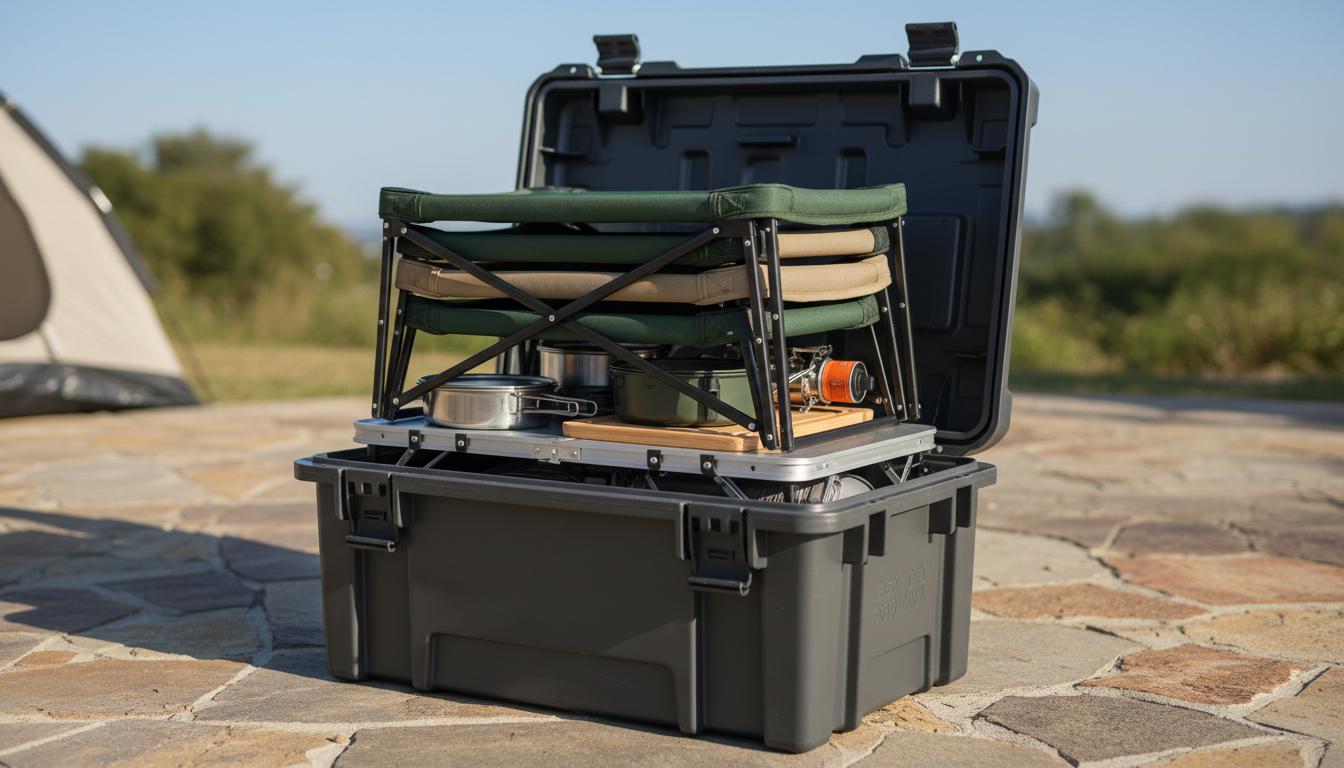
Start with a storage container that dictates all other dimensions. A common mistake is buying tables and chairs separately, then finding they don't pack efficiently. We recommend reverse-engineering: select a standard 60-80L weatherproof bin, then specify a collapsible camping table and folding camping chairs whose packed dimensions leave room for cookware and accessories.
Decision: Integrated System vs. Individual Components
- If your primary need is cost minimization → Purchase individual components from bulk suppliers. Accept higher setup time and 15-25% component loss rate.
- If your priority is operational efficiency → Invest in a matched system from a single manufacturer. Expect 10-20% premium but save 5+ minutes per setup and reduce loss to under 5%.
- If you need brand consistency for retail → Customize a system with your colors/logo. Budget 30-40% premium but gain marketing value and perfect component compatibility.
Color coding is a simple but powerful integration tactic. Using chairs with fabric that matches the table's accent color isn't just aesthetic — it ensures components stay together in group settings. Our commercial clients report a 40% reduction in mismatched sets when using color-coded systems.
Decision Framework: Budget vs. Durability vs. Portability
You cannot maximize all three. The commercial procurement decision requires understanding where on the triangle your operation sits, with specific cost thresholds for each trade-off.
The Portability-Durability Trade-off: A chair under 8 lbs is achievable with aluminum, but may sacrifice stability. Our testing shows the sweet spot for a commercial-grade foldable camping chair is 9-11 lbs — light enough for easy transport but heavy enough for durable construction.
The Budget-Durability Equation: For high-use scenarios (150+ days/year), invest in durability. A $75 chair that lasts 4 seasons has a lower cost-per-use than a $35 chair replaced annually. The breakeven formula is simple: (Premium Price - Budget Price) / (Extended Service Life in Years). If the result is less than your annual budget for replacements, go premium.
"In 2025, we're seeing a shift toward modular systems where the table has integrated attachment points for chairs and storage. This eliminates the 'forgotten chair' problem and cuts pack-up time by half. It's the future of commercial camping kitchen design." — Chris Nakamura, Outdoor Recreation Product Manager
Looking toward 2026, the most resilient camping kitchen systems will be those designed as complete workstations from the outset. By applying these material specifications, integration strategies, and decision frameworks, procurement directors can build outdoor kitchen setups that deliver reliable performance season after season, whether for rental fleets, retail demonstrations, or organized group events.
Frequently Asked Questions
When does investing in a commercial-grade foldable camping chair become cheaper than buying recreational chairs?
The breakeven point is typically at 150+ uses per year. A $75 EN 581-certified aluminum frame chair lasts 4+ seasons, while a $35 recreational chair often fails annually. Over 500 rental cycles, the commercial chair's cost-per-use is 60% lower, justifying the initial premium for operations like rental fleets.
What specific tabletop material is best for resisting cuts and hot pans in a commercial camping kitchen?
Textured HDPE (High-Density Polyethylene) is superior for commercial use. It resists knife cuts, won't stain from cooking oils, and withstands direct contact with pots up to 400°F. This specification can triple a table's service life compared to standard melamine laminate surfaces in rental operations.
What is the minimum dynamic load capacity I should specify for a kitchen camping table used by groups?
Specify a minimum 300 lb dynamic load capacity, tested per ASTM F2598 with a 150 lb offset. This accounts for uneven weight distribution during meal prep. For high-use scenarios, a 400+ lb capacity with a 1-inch steel or 1.5-inch aluminum frame is recommended to minimize lateral sway under load.
How does specifying a cam-lock mechanism vs. a pin-lock affect a collapsible camping table's failure rate?
Specifying a positive cam-lock or flip-lock with audible confirmation reduces failure rates from 15% to under 3% in commercial use. This upgrade is critical for tables subjected to 500+ setup cycles, as it prevents play and wobble that standard pin-locks develop over time.