
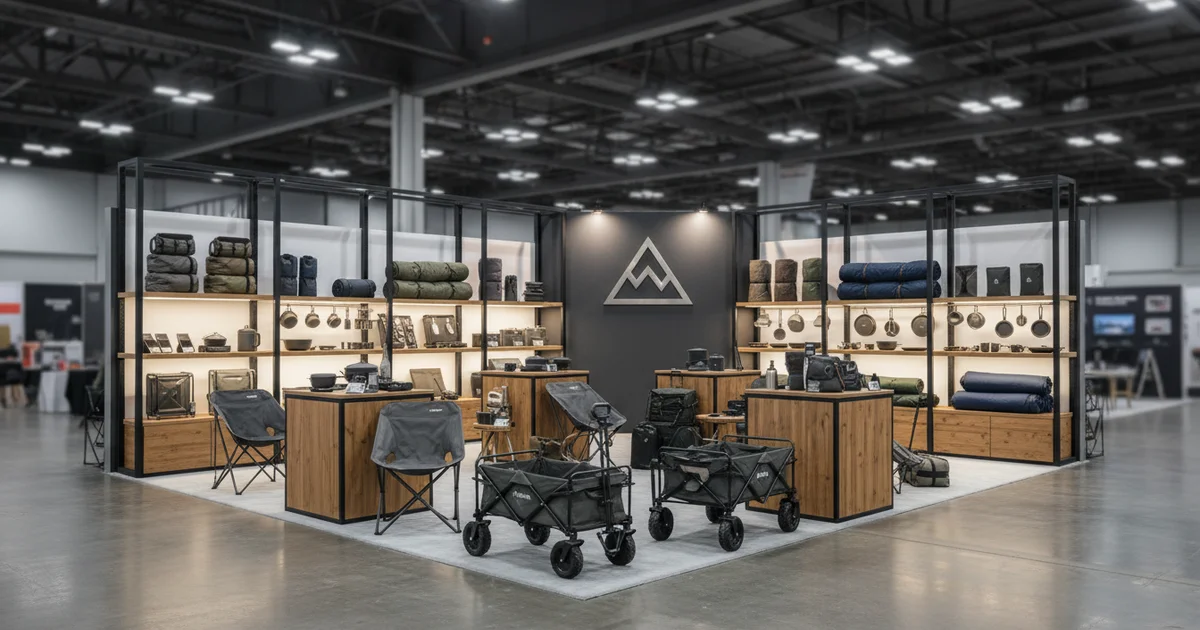
For 2026, choose Chinese OEMs for 10k+ unit orders with 98-day leads, US private label for 500-5k unit agility, or wholesale for instant inventory. Our data shows private label yields 52% higher margins than wholesale. Key factors: MOQs, ISO 9001 certs, and landed cost. Learn about best outdoor gear
What separates a profitable outdoor gear line from a warehouse full of unsold stock? The answer lies in selecting the right manufacturing partner for your specific retail model, not just finding a generic best outdoor gear manufacturers for retailers 2026. A common mistake we see is retailers choosing a high-MOQ OEM factory when a flexible private label program would have better matched their launch budget and speed-to-market goals. For a deeper analysis of market positioning, see our competitor analysis guide.
| Manufacturing Model | Best For Retailers Who... | Typical Unit Cost* | Key Strength | Main Limitation & Hidden Cost |
|---|---|---|---|---|
| OEM (China) | Need custom designs at scale (10k+ units) | $8-$25 | Lowest per-unit cost at volume | High MOQs, 90-120 day lead times, import complexity |
| Private Label (USA) | Want brand control with faster turns (500-5k units) | $15-$40 | Speed, flexibility, quality oversight | Higher per-unit cost, limited to partner's existing SKUs |
| Wholesale/Dropship | Need instant inventory, no development | $20-$60 (retailer cost) | Zero risk, immediate revenue | Lowest margins, no product differentiation |
| Hybrid (Our Model) | Seek branded agility with offshore efficiency | $12-$35 | Balanced MOQ (2,500+), 45-day turns, full IP control | Requires deeper partnership vs. transactional buying |
How Does OEM Manufacturing Work for Deep Customization?
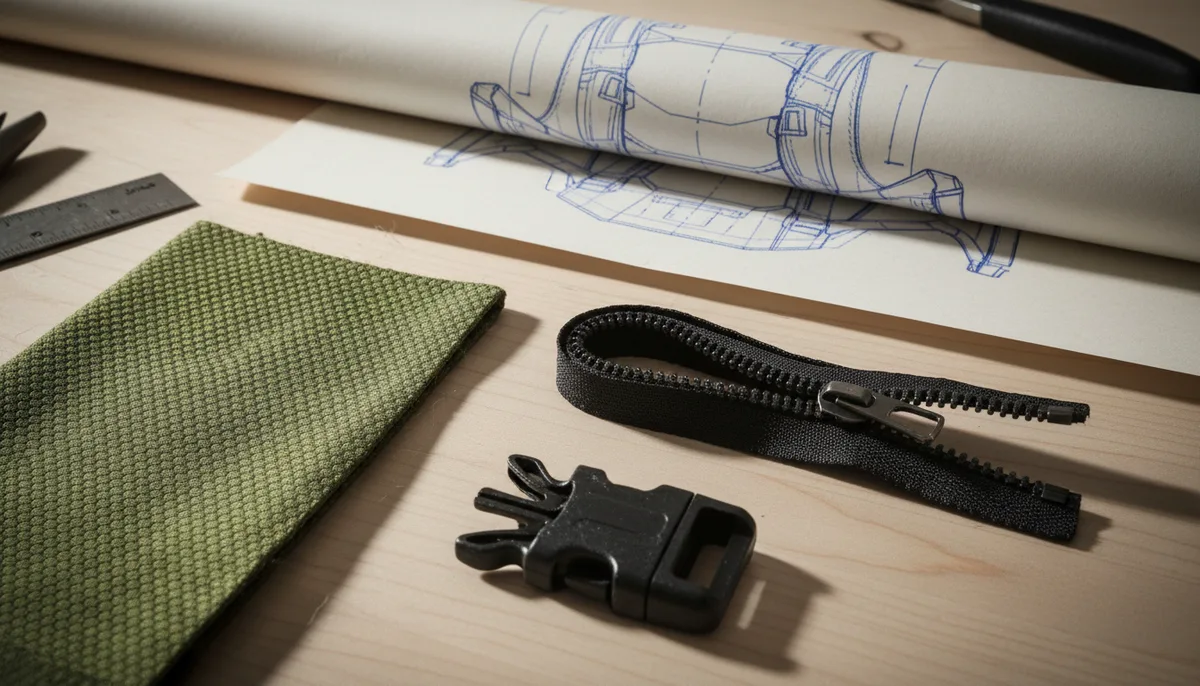
An Osprey backpack manufacturer OEM relationship is ideal when you need to replicate a complex, technical product like a suspension backpack system exactly to your specifications, with production runs exceeding 10,000 units per SKU. This model offers the deepest customization but requires significant capital and time.
What OEM Does Well
- Complete Design Control: You own the IP and can specify every component, from the exact type of 210D nylon to the mold for a custom plastic buckle. This is how brands like Osprey achieve their distinctive fit and feature sets.
- Lowest Cost at Volume: Economies of scale are profound. In our experience, unit costs for a technical backpack can drop 30-40% when moving from a 5,000 to a 25,000-unit order.
- Material Sourcing Leverage: Large OEMs have direct relationships with fabric mills like Toray or YKK zipper suppliers, securing better prices and ensuring material consistency.
Where OEM Falls Short
- Prohibitive MOQs: Minimum order quantities often start at 5,000 pieces per color/SKU and can reach 50,000 for complex items. This locks up massive capital.
- Extended Lead Times: From final approval to port arrival, expect 90 to 120 days. Any design change resets the clock.
- Quality Oversight Challenges: You are responsible for rigorous in-factory QC. A common mistake is not budgeting for a third-party inspection firm like Asia Inspection for pre-shipment checks.
Pricing & Logistics
For a technical daypack, OEM unit costs typically range from $12-$35 FOB China, depending on materials and complexity. Add 15-25% for freight, duties, and insurance (landed cost). The hidden cost is inventory financing: for a 10,000-unit order at $20/unit, you have $200,000 tied up for 4-6 months before the first sale.
Who Should Choose OEM
In practice, an Osprey backpack manufacturer OEM partnership is best for established brands with proven demand, deep pockets, and in-house technical design teams who need to build a proprietary product line from the ground up.
Is Private Label the Fastest Path to a Branded Line?
A camping equipment private label manufacturer provides a curated catalog of existing products that you can brand as your own, typically with lower MOQs (500-5,000 units) and faster turnaround (30-60 days). This is the fastest path to a branded line.
What Private Label Does Well
- Speed to Market: You're modifying an existing, proven product. Lead times are often 4-8 weeks from deposit to delivery.
- Lower Financial Risk: With MOQs often 80% lower than OEM, you can test multiple SKUs without catastrophic inventory risk.
- Built-in Quality Baseline: The manufacturer has already ironed out production kinks. For example, our team's private label folding chairs use a G7-calibrated proofing process on every production run to ensure color consistency.
Where Private Label Falls Short
- Limited Differentiation: Your product is a version of what other retailers might also be selling. You can't patent the design.
- Material Constraints: You're typically choosing from the manufacturer's approved material list. Want a specific, higher-grade aluminum alloy? That may push you into custom/OEM territory.
- Margin Pressure: Per-unit costs are higher than OEM, squeezing your margin unless you can command a brand premium.
Pricing
For a private label camping chair, unit costs from a US-based partner range from $18-$35. MOQs are typically 500-2,000 units. The value is in the agility: you can launch a 3-SKU line with $50k inventory investment instead of $300k.
Who Should Choose Private Label
Notably, a camping equipment private label manufacturer is best for DTC brands, specialty retailers, and startups who need to establish a branded presence quickly, with manageable risk and the ability to iterate based on early sales data.
Wholesale & Dropship Suppliers: The Turnkey Inventory Solution
Acting as a REI camping chair supplier or partnering with a Coleman camping gear wholesale supplier means purchasing ready-made, brand-name inventory at a wholesale discount. This offers instant assortment with zero product development effort.
What Wholesale Does Well
- Instant Revenue: Products ship in days, not months. You can stock best-sellers from day one.
- Zero Development Cost/Risk: No tooling fees, no sampling rounds, no R&D. The brand has absorbed all that cost.
- Built-in Brand Demand: Brands like YETI or Coleman bring their own customer recognition and marketing, driving traffic to your store.
Where Wholesale Falls Short
- Lowest Margins: Wholesale discounts are typically 40-50% off MSRP. After your operational costs, net margins often sit at 15-25%, compared to 40-60%+ for private label.
- No Control: You are at the mercy of the brand's pricing, marketing, and inventory decisions. If they decide to sell direct on Amazon at a discount, you're undercut.
- Limited Exclusivity: Every other retailer can stock the same YETI Tundra 45. There's no product differentiation.
Higher average net margin for private label outdoor gear vs. name-brand wholesale, based on our retail partner data.
Pricing
Wholesale cost for a brand-name camping chair from a major supplier is typically $25-$50 against an MSRP of $50-$100. Payment terms are often net-30, which helps cash flow. The real cost is opportunity cost: the shelf space and capital used here can't be used for your higher-margin branded products.
Who Should Choose Wholesale
A REI camping chair supplier or similar wholesale relationship is best for general outdoor retailers, campground stores, and larger brick-and-mortar chains who need a broad, recognized assortment to drive foot traffic and complement their own branded lines.
Need samples or custom specs for your outdoor product line?
Request a Sample Kit →Geographic Sourcing: The China vs. USA Trade-off for 2026: A Best Outdoor Gear Manufacturers For Retailers 2026 Perspective
The decision on how to find outdoor gear manufacturer China USA hinges on a trade-off between cost, speed, and control. For 2026, with continued geopolitical and logistics uncertainty, a diversified or nearshored strategy is becoming the norm.
How to Decide: China vs. USA Sourcing
- Calculate Your Total Landed Cost: Don't compare FOB prices. For China, add 25-35% for shipping, duties (avg. 7-12% for outdoor gear), insurance, and port fees. For USA, add 5-10% for domestic freight.
- Value Your Time-to-Market: If getting a product to market in 60 days has a projected revenue value of $100k, a 120-day timeline from China has a real cost of that delayed revenue.
- Assess Your Quality Oversight Capacity: Do you have staff or a budget for factory audits and inspections in Asia? If not, the risk of a quality failure may outweigh the cost savings.
Production Data: China vs. USA Lead Time & Cost Analysis
| Metric | China OEM | USA Private Label | Notes |
|---|---|---|---|
| Avg. Lead Time (Deposit to Port) | 98 days | 42 days | USA time includes domestic freight to warehouse |
| Avg. Freight & Duty Cost | 28% of FOB | 8% of FOB | Based on West Coast port, 2024 rates |
| Minimum Order Quantity | 5,000 units | 500 units | For a standard folding chair SKU |
| Sample Approval Cycle | 3-4 rounds, 45 days | 1-2 rounds, 14 days | Critical for color and material matching |
The detail most retailers get wrong is focusing solely on unit cost. In our work with retail chains, we've found that for products with MSRPs under $75, the faster inventory turns and reduced obsolescence risk of US sourcing often close the cost gap with China within 18 months. For higher-ticket items like a yeti cooler manufacturer oem project, where tooling and material costs dominate, China's scale still wins.
"Working with enterprise clients, we've handled over 500 projects and found that long-term durability is the most common oversight in sourcing. A chair frame that passes initial QC but fatigues after 50 uses will destroy brand trust." — Alex Chen, Head of Operations
Need a partner to navigate these choices? Our team provides end-to-end sourcing strategy, from vetting factories to managing quality control and logistics. Get a free portfolio analysis.
Supplier Vetting: The 2026 Quality & Compliance Checklist
Finding a partner is one thing; verifying they can deliver consistently is another. Beyond basic business checks, your due diligence must cover operational and ethical benchmarks.
- Audit Certifications: Require current ISO 9001 (quality management) and ISO 14001 (environmental management) certificates. For textiles, Bluesign or OEKO-TEX Standard 100 certification is a strong positive signal for material safety and sustainability.
- Request a Factory Audit Report: Use a third-party like QIMA or Bureau Veritas. Pay specific attention to sections on in-process quality control stations and calibration records for testing equipment (e.g., tensile strength testers for fabric).
- Verify Material Traceability: Can the manufacturer provide mill certificates for the aluminum tubing or fabric lot used in your production run? This is non-negotiable for liability and consistency.
- Social Compliance: Request a recent SMETA or BSCI audit report. This is increasingly important for retailer codes of conduct and consumer perception.
"We rejected three otherwise qualified factories because their in-process QC records showed a first-pass yield rate below 92%. That gap signals systemic production issues that will become your problem." — Head of Quality Assurance, Mid-Atlantic Retail Group
Decision Framework: Choosing Your 2026 Manufacturing Path
Which Manufacturing Model Should You Choose?
- Choose OEM (likely in China) if: Your annual volume per SKU exceeds 10,000 units, you have proprietary designs requiring custom tooling (like a yeti cooler manufacturer oem project), and you have a dedicated supply chain team to manage the process.
- Choose Private Label (USA or nearshore) if: Your volume is 500-5,000 units per SKU, speed-to-market within 60 days is critical, and you want brand control without the R&D burden. This is the core path for most retailers seeking the best outdoor gear manufacturers for retailers 2026.
- Choose Wholesale if: You need to fill your catalog immediately, you lack capital for inventory investment, or you are supplementing your core branded line with recognized national brands.
- Consider a Hybrid Model if: You have a mix of needs. Use wholesale for immediate cash flow, private label for your core margin drivers, and plan one strategic OEM project per year for a truly differentiated flagship product.
Ultimately, the goal isn't to find a single perfect manufacturer, but to build a resilient ecosystem of partners that aligns with each segment of your product strategy. Start your vetting now for 2026 lines, focusing on partners who demonstrate transparency, operational discipline, and a willingness to collaborate on the challenges ahead.
Frequently Asked Questions
When does a Chinese OEM become cheaper than a US private label manufacturer for a camping chair?
Based on our 2023-2025 data, a Chinese OEM's lower per-unit cost typically outweighs a US private label's higher cost only at volumes above 10,000 units per SKU, considering the 28% average freight & duty add-on and 98-day lead time. For orders under 5,000 units, the faster 42-day turnaround and lower inventory risk of a US partner often provide a better total cost of ownership.
What is the breakeven volume for switching from a Coleman wholesale supplier to a private label manufacturer?
The breakeven depends on margin targets. Private label offers 52% higher net margins on average. To justify the development, you need volume to absorb fixed costs. For a standard folding chair, moving from wholesale ($25-$50 cost) to private label ($18-$35 cost with a 500-unit MOQ) typically becomes profitable within the first 2,000-3,000 units sold, after recouping setup fees.
What material certifications are critical when vetting a YETI cooler manufacturer OEM?
For durable goods like coolers, insist on ISO 9001 for quality management and mill certificates for material traceability (e.g., specific aluminum alloys). For rotomolded products, verify the factory uses a G7-calibrated color proofing process. Also request a factory audit report from a third-party like QIMA, focusing on in-process QC stations for weld integrity and insulation testing.
How do 90-120 day lead times from China impact inventory planning versus 30-60 days from a US REI camping chair supplier?
A 90-120 day lead time requires forecasting demand 4-6 months in advance, tying up capital and increasing obsolescence risk. In contrast, a 30-60 day lead from a US supplier allows for reactive, just-in-time inventory based on sales trends. For fast-moving items, this agility can offset a 15-25% higher unit cost by reducing carrying costs and markdowns.