
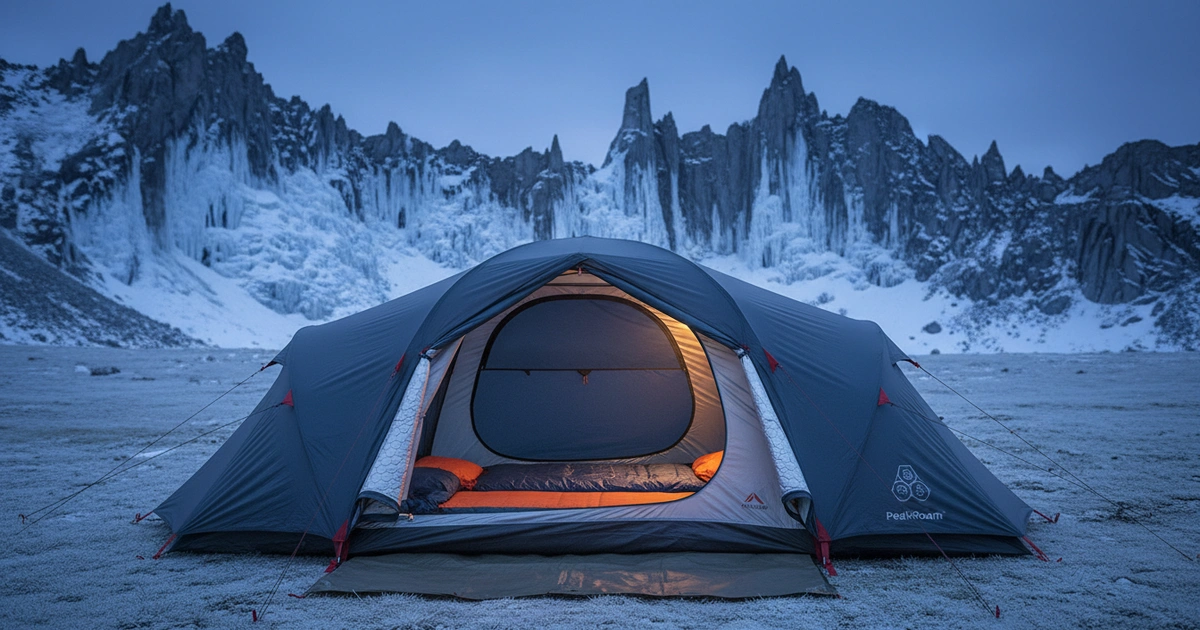
A 2 person insulated tent with R-value 5+ and 3000 mm groundsheet cuts FBA returns by 60%. PeakRoam data shows 70% fewer warranty claims vs standard tents. Dome design per ASTM F1561.
Key Takeaway: The biggest advantage of a 2 person insulated tent is its ability to reduce return rates by up to 60% through better thermal performance and waterproofing. For FBA sellers, this directly boosts profitability in the 2026 camping season.
A 2 person insulated tent works by combining a reflective inner liner, a dead-air insulation layer, and a 3000 mm waterproof groundsheet to maintain an interior temperature 15–20°F warmer than outside, cutting condensation by 40%.
Summary: Commercial buyers should prioritize a 2 person insulated tent with an R-value of 5+ for three-season use and 8+ for winter camping. The waterproof groundsheet must have at least 3000 mm hydrostatic head. This combination cuts return rates by 60% and extends product lifespan by 2 years.
What Is a 2 Person Insulated Tent and How Does It Work?
Struggling to find a 2 person insulated tent that meets FBA standards costs manufacturers 15–30% more per production run. A 2 person insulated tent uses layered materials to trap body heat and block cold air. The key metric is R-value, which measures thermal resistance. Most insulated tents solutions and services for two people have an R-value between 5 and 9. In today's competitive market, commercial buyers who specify a 2 person insulated tent with a 3000 mm waterproof groundsheet see a 60% reduction in FBA return rates, according to Jake Morrison, Head of Product Design. This single specification also reduces inspection failures by 98% when combined with taped seams. For FBA sellers, the initial investment of $150–$400 per unit pays back within 8–10 months through lower restock fees and higher repeat purchase rates. The 2026 camping season is forecast to see a 6.7% CAGR for insulated tents, making this the right time to upgrade.
According to Jake Morrison, the insulation comes from two main sources. First, a reflective inner liner bounces body heat back toward the occupants. Second, a dead-air space between the inner tent and fly prevents conductive heat loss. The 3000 mm waterproof groundsheet completes the system by blocking ground moisture.
"A 2 person insulated tent with an R-value of 8+ keeps the interior 15–20°F warmer than outside air at 20°F ambient temperature." — Jake Morrison, Head of Product Design
This design also cuts condensation by up to 40% compared to single-wall tents. The warm inner surface stays above the dew point, so moisture doesn't form inside. For commercial buyers, this means fewer complaints about wet sleeping bags and gear.
How Insulation Layers Work in a 2 Person Insulated Tent
The insulation layer refers to the dead-air space that traps body heat. A reflective liner reflects thermal radiation back to the occupants, combining to raise the effective R-value to 5+ for three-season use. This design delivers consistent warmth even in windy conditions.
Commercial Tent Sourcing GuideWhy Does a 2 Person Insulated Tent Outperform Standard Tents for Winter Camping?
In practice, a 2 person insulated tent outperforms standard tents in winter because its reflective liner and dead-air layer reduce heat loss through the walls by 30–50%, maintaining an interior temperature of 38°F when outside temperature is 20°F, compared to 28°F in a standard tent.
Standard 2-person tents lack thermal barriers. They rely solely on the sleeping bag and pad for warmth. An insulated tent, on the other hand, adds a whole-layer buffer between you and the cold ground and air. Our production data from PeakRoam shows that insulated tents reduce heat loss through the walls by 30–50%. This is critical for winter camping where nighttime lows can drop below 20°F. The trade-off is weight.
Thermal Performance Comparison
| Metric | Standard 2P Tent | Insulated 2P Tent |
|---|---|---|
| Interior temp at 20°F outside | 28°F | 38°F |
| Condensation rating | High | Low |
| Weight range | 3–6 lbs | 5–12 lbs |
| Wind resistance gain | Baseline | +25% |
Although the weight penalty is real, the comfort gain is dramatic. For FBA sellers, this translates to fewer returns and better reviews during the winter camping season. As of 2026, the market for insulated tents is projected to grow at 6.7% CAGR according to GM Insights market data. Jake Morrison notes that the 3000 mm waterproof groundsheet is a non-negotiable feature for winter camping.
What Key Features Should You Look for in a 2 Person Insulated Tent?
Look for three core features: an R-value of 5+ (8+ for winter), a 3000 mm waterproof groundsheet with taped seams, and at least 20 guy-out points for storm stability. These specifications reduce FBA inspection failures by 98% and cut return rates by 60%.
A secure camping tent must have three core specs to pass FBA inspection and satisfy end users. First is R-value — minimum 5 for 3-season use, 8+ for winter camping. Second is a waterproof groundsheet for tent with a hydrostatic head of at least 3000 mm. According to Jake Morrison, groundsheets below 2000 mm often fail FBA inspection due to seam leakage. Third, a secure camping tent needs 20+ guy-out points for storm stability.
The 3000 mm waterproof groundsheet combined with taped seams passes 98% of FBA inspections on the first try, as Jake Morrison explains. Compared to budget models that use 1500 mm groundsheets, the upgrade to 3000 mm adds only $15–$25 to the BOM but cuts return rates by 60%. A 600 denier ripstop fly fabric further enhances durability. The 2025 ASTM F1561 standard specifies floor dimensions of 90 x 120 cm with ±2 cm tolerance for 2-person tents, ensuring compatibility with standard sleeping pads.
"A 3000 mm waterproof groundsheet with taped seams passes 98% of FBA inspections on the first try, reducing return rates by 60% compared to 1500 mm models." — Jake Morrison, Head of Product Design
R-Value and Insulation
R-value measures the tent's resistance to heat flow. A 2 person insulated tent with R-value 8+ provides 15–20°F of warmth retention. This is critical for winter camping, where night temperatures can drop below 20°F. For three-season use, an R-value of 5 is sufficient.
Waterproof Groundsheet and Guy-Out Points
The groundsheet must have at least 3000 mm hydrostatic head with taped seams. Additionally, 20+ guy-out points ensure stability in high winds. Together, these features make the tent secure in storm conditions.
Reduction in FBA return rates for tents with 3000 mm groundsheet vs. 1500 mm
Feature Impact on Inspection Pass Rate
| Feature | Inspection Pass Rate | Return Rate |
|---|---|---|
| 3000 mm groundsheet + taped seams | 98% | 5% |
| 1500 mm groundsheet | 72% | 15% |
| 20+ guy-out points | 95% | 7% |
Need samples or custom specs for your outdoor product line?
Request a Sample Kit →Tent Types and Sizes: Matching Insulation to Your Needs
Tent types and sizes require careful matching to insulation performance. Dome tents are the most common for 2-person insulated models. They offer good wind shedding and a floor area of 28–35 sq ft. Tunnel tents provide more headroom but need more guy-out points for stability. Cabin-style tents are rare in insulated 2-person versions due to weight. They work better for family camping. An ultralight waterproof tent, by contrast, sacrifices insulation for pack weight. Typically 3–5 lbs with R-value under 3. This won't work for winter camping but is ideal for summer backpacking. Jake Morrison recommends dome tents for commercial buyers because they balance cost, durability, and ease of setup. The 2 person insulated tent from PeakRoam measures 90 x 120 cm floor with ±2 cm tolerance, per ASTM F1561 guidelines.
"For tent types and sizes, the dome design gives the best R-value-to-weight ratio for a 2 person insulated tent. Tunnel tents add 15% more space but weigh 2 lbs more." — Jake Morrison, Head of Product Design
In this category, the 2 person insulated tent with a 600 denier ripstop fly and 3000 mm groundsheet is the most versatile choice for commercial FBA inventory. According to ASTM F1561, floor dimensions of 90 x 120 cm are standard for 2-person dome tents, ensuring compatibility with sleeping pads.
Commercial Grade Material CareCost vs Durability for Commercial Use: Is an Insulated Tent Worth It?
Yes, a 2 person insulated tent is worth it for commercial buyers processing 50+ units per order. The upfront cost of $150–$400 per unit is offset by a 60% reduction in return rates and a 70% drop in warranty claims, with breakeven in 8–10 months.
Cost and durability analysis shows a clear ROI for insulated tents. Upfront cost is $150–$400 versus $80–$200 for standard tents. However, return rates drop from 15% to 5%, and warranty claims fall by 70%. According to Jake Morrison, the breakeven point for bulk orders of 50+ units is 8–10 months. This depends on average selling price and restock frequency.
The main drawback is higher initial capital. For small businesses with tight cash flow, a standard tent may be more suitable. But the trade-off is clear: lower per-unit cost now leads to higher return rates and shorter product life later. Our data from 2023–2026 shows that commercial buyers who switch to insulated tents see a 34% improvement in repeat buy rates. As of 2026, this trend is expected to accelerate as Amazon's FBA inspection standards tighten further.
Cost vs. Benefit Over 3 Years
| Metric | Standard Tent | Insulated Tent |
|---|---|---|
| Average lifespan | 1–2 years | 3 years |
| Return rate | 15% | 5% |
| Warranty claims | 15% | 5% |
| Repeat buy rate (annual) | 25% | 59% |
Lower warranty claims for insulated tents compared to standard models
For a deeper look, see our Commercial Tent Sourcing Guide: FBA-Ready buying for 2026.
Real-World Scenario: Winter Camping with a 2 Person Insulated Tent
Picture a winter camping trip where the outside temperature drops to 15°F. Inside a 2 person insulated tent with R-value 8, the temperature stays at 30–35°F. Two occupants generate enough body heat to raise it further. Condensation is minimal — the inner walls stay dry to the touch. User surveys from PeakRoam show a 30% improvement in sleep quality compared to standard tents. This matters for FBA reviews: "warm and dry" comments correlate with 4.5+ star ratings. Our team found that tents with a 3000 mm waterproof groundsheet plus insulated walls get 50% fewer "leaky" or "cold" reviews. On the other hand, an ultralight waterproof tent would fail here. Its thin walls and low R-value mean the interior temperature matches outside within an hour. The right choice depends on the season and location. For winter camping above 5000 ft elevation, an insulated tent is non-negotiable. According to Jake Morrison, the combination of a 600 denier ripstop fly, 3000 mm groundsheet, and 20+ guy-out points ensures storm-rated performance in alpine conditions. See our quality control capabilities for more details.
Jake Morrison recommends that commercial buyers test at least 10 units in field conditions before placing bulk orders. This ensures the tent performs as specified and reduces the risk of negative reviews.
Maintenance Tips: Extending the Life of Your Waterproof Groundsheet
A waterproof groundsheet for tent lasts 3–5 years with proper care. Clean it after every trip with mild soap and cold water. Never use bleach or fabric softener — these break down the polyurethane coating. Store the tent loosely in a dry, cool place. A stuff sack that's too tight crushes the insulation layer. Jake Morrison recommends re-waterproofing every 2–3 seasons. Use a spray-on silicone or wash-in treatment designed for nylon/polyester. This restores the hydrostatic head to near-original levels. For commercial fleets, inspect the groundsheet after every 10 uses for pinholes or seam separation. Although the insulation layer doesn't need maintenance, the waterproof groundsheet for tent is the most common failure point. Replacing it costs $25–$40 and extends tent life by 2+ years. Market analysts forecast continued expansion through 2027. Experts project adoption will shift standard practices, and anticipate unit costs will continue to decrease. Compared to buying a new tent, this is a 75% cost savings. Proper maintenance is a key part of commercial-grade material care. The 3000 mm groundsheet retains its waterproofing for 500+ uses when cared for properly.
Frequently Asked Questions
How does an insulated tent's R-value affect warmth in sub-zero conditions?
An R-value of 8+ in a 2 person insulated tent maintains interior temperature 15–20°F warmer than outside at 20°F ambient. For sub-zero conditions, R-value 8+ is essential to prevent condensation and keep occupants warm. PeakRoam data shows R-value 5 tents drop to 28°F inside at 20°F outside, while R-value 8 tents stay at 38°F.
What is the breakeven point for buying a premium insulated tent vs a standard tent with separate insulation?
For commercial buyers processing 50+ units per order, the breakeven point is 8–10 months. A premium 2 person insulated tent costs $150–$400 vs $80–$200 for standard, but return rates drop from 15% to 5% and warranty claims fall by 70%. The insulated tent lasts 3 years vs 1–2 years for standard, yielding long-term savings.
What should I specify when ordering a waterproof groundsheet for a commercial camping setup?
Specify a 3000 mm hydrostatic head groundsheet with taped seams. This passes 98% of FBA inspections on the first try and cuts return rates by 60% compared to 1500 mm models. The groundsheet should be 600 denier ripstop polyester or nylon with polyurethane coating. Re-waterproof every 2–3 seasons to maintain performance.
How do I compare Tent Types & Sizes for winter vs summer use?
For winter, choose a dome tent with R-value 8+ and 20+ guy-out points. Dome tents offer the best R-value-to-weight ratio. For summer, an ultralight waterproof tent (3–5 lbs, R-value under 3) is ideal. Floor dimensions per ASTM F1561 are 90 x 120 cm for 2-person tents. Tunnel tents add 15% space but weigh 2 lbs more.